
Destination Guide · Iceland
Iceland's coast:
lighthouses, black sand, and big sky.
The most alive coastline in the North Atlantic.
This is a guide to Iceland's coastline, told by someone who has spent days driving it, walking it, and coming back for more: the lighthouse cliffs of Látrabjarg in the Westfjords, the black-sand beaches of the south coast, the layered sea cliffs of the Snaefellsnes Peninsula, and the aurora-lit nights that make the whole island famous. If you love a coast with real weather, a huge sky, and a story around every bend, Iceland is the shore to plan next.
Below is the coast the way I met it: the lighthouses that watch over the loneliest headlands, the black beaches where the Atlantic rolls in without warning, and the nights when the sky turns green over the sea. I will tell you exactly where to go and what to pack, so your only job is the driving. Or, on a winter night, the watching.
Látrabjarg · Westfjords
A white tower where the land gives out.
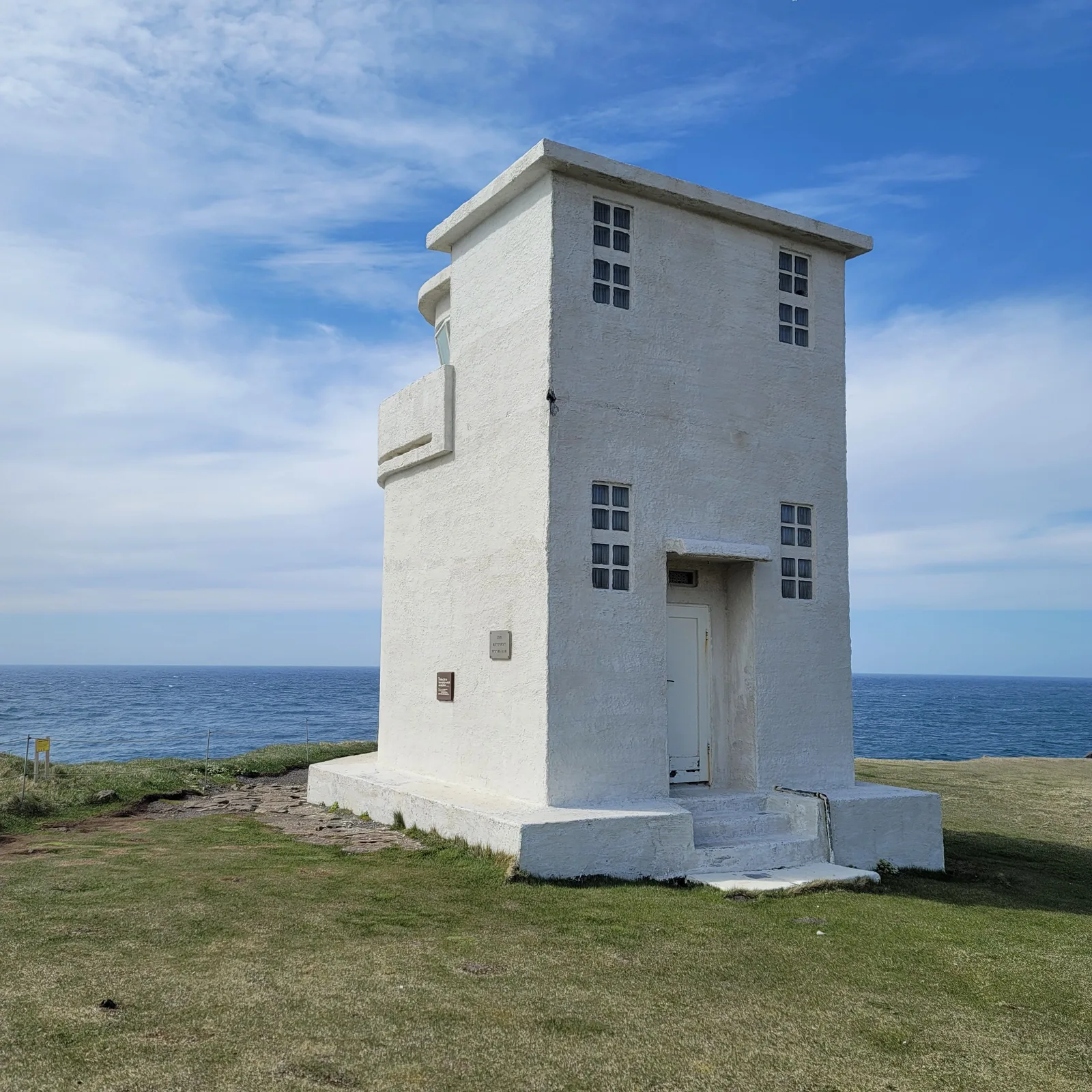
In the Westfjords, at the very tip of Iceland's northwestern finger, the cliffs of Látrabjarg drop steeply into the North Atlantic, and a small white lighthouse has watched over them since 1948. Bjargtangar, the point the tower stands on, is the westernmost point of Iceland and of mainland Europe. It is the kind of place you drive hours for, and the kind of place you never forget.
The road to Látrabjarg is long and gloriously empty, and the Westfjords feel like Iceland's best-kept secret. In summer the cliffs fill with seabirds, and the tundra right up to the cliff edge is carpeted in wildflowers. I sat above the water for a long time with nothing but the surf and the birds for company, and I have told every traveler since to make the drive.
Cliffs that run for miles
At Látrabjarg the cliffs run roughly fourteen kilometers in one unbroken rampart, rising close to four hundred and forty meters above the Atlantic. There are few places on earth with a longer clean drop from meadow to ocean.
At the edge of Europe
Bjargtangar, the headland where the lighthouse stands, is the westernmost point of Iceland and of mainland Europe. Standing there at the end of the road feels like the map is showing off.
Seabirds by the million
Látrabjarg is Europe's largest seabird colony. Puffins, gannets, guillemots, and razorbills nest here in their hundreds of thousands, and puffin season runs from May into August.
Basalt in the surf
The shore is volcanic to the core: black sand ground from lava, hexagonal basalt columns, and sea stacks that were once part of the cliff. Iceland's coast is geology you can touch.
South & West Iceland
The coast in two moods: black sand, then basalt cliffs.
Every black beach in Iceland is the same story told in a different light: volcanic rock, ground by the sea into sand as dark as charcoal. These are the two stretches I recommend to everyone, one famous, one for the slow savor of it.

01
Reynisfjara, the black-sand beach off the Ring Road
The most photographed black beach in Iceland is Reynisfjara, a few minutes off the Ring Road near the village of Vík. The sand is ground-up lava, black as coal and fine as dust, and the surf rolls in beside basalt sea stacks that stand offshore like a line of broken teeth. Legend says the Reynisdrangar stacks were trolls dragging a ship to shore when the sun caught them, and they have been stone ever since. It is a staggering place, and an honest one: the open Atlantic sends sneaker waves surging far up the sand without warning, and people have drowned here. You take the postcard photo, then you step well back from the water and you never turn your back on the sea.
02
The Snaefellsnes seaboard, cliffs and fishing coves
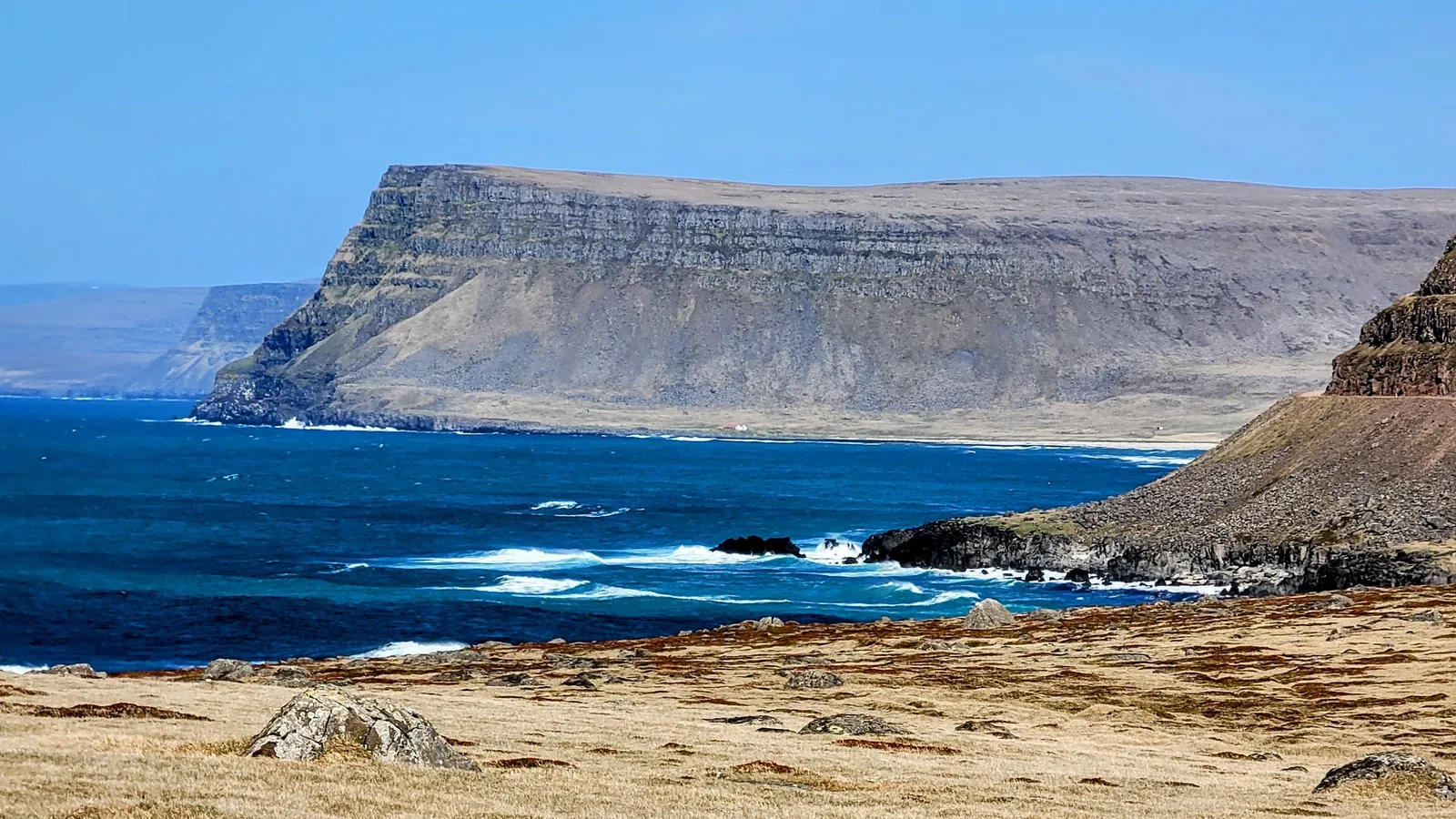
West of Reykjavík, the Snaefellsnes Peninsula pushes a dramatic coast into the sea: layered volcanic cliffs, black coves, and tiny fishing villages strung along the shore, with the glacier-capped volcano Snaefellsjökull watching over the peninsula's far tip. Icelanders sometimes call it Iceland in miniature, and that is not far off: it packs the whole coastline, cliffs, seabirds, a glacier, and the open Atlantic, into an easy drive you can take at a lazy pace, stopping whenever the light is too good to leave.
Northern lights season
When the coast is dark, the sky takes over.
Iceland's coastline is famous in daylight, but its second act starts after dark. The northern lights season runs from late August or September through mid-April, whenever the nights are dark enough for the show, and the darkest months, November through January, give you the longest windows. Many travelers find October, November, February, and March the sweet spot, when the sky is dark and activity is high.

Give yourself dark
Get away from the glow of Reykjavík and from town lights wherever you are. The coast offers huge, dark horizons, and that is exactly what the aurora needs.
Watch the forecast
Aurora forecasts and cloud-cover predictions tell you when to step outside. The lights follow their own schedule, but the forecast lets you be awake in the right place for the show.
Respect the sea after dark
If you chase the lights from a black-sand beach, keep the same rule as daytime: stay well back from the water and never turn your back on the ocean. The waves do not check the time.
Practical tips
The details that make the coast comfortable.
Dress for wind and weather
Icelanders say there is no bad weather, only bad clothing, and the wind is the constant. Pack layers you can shed: a wool or fleece layer, a windproof shell, a waterproof outer for the sea spray, and a warm hat and gloves even in July. The coast does not check the calendar.
Rent a car or join a tour?
The Ring Road circles the island in about 830 miles (1,332 kilometers) of paved two-lane highway, and a full circuit with stops usually wants seven to ten days. In summer I would rent a car and set your own pace; in winter, when roads close and the wind moves the car, a small-group tour or a driver takes the stress off. The gravel roads of the Westfjords reward a high-clearance rental and a careful driver.
When to chase the lights
Plan the aurora from September into April, lean on the darkest months for the longest windows, and pick dates away from the full moon. Clear, dark, away from town: those are the three ingredients, and the coast delivers all three.
Autumn into winter
What is happening in Iceland right now.
October is when Iceland's autumn turns to winter: the crowds are gone, the hills hold their gold, and the nights are long enough for the aurora to take the stage. Here is what is on the calendar and in the air this season.
Aurora season deepens
The northern lights have returned as the nights lengthen, and October remains among the strongest months of the year for the show, pairing genuinely dark skies with milder temperatures than deep winter. November through January give the longest windows of all, when the sky is dark by late afternoon and the lights can dance for hours. The best hours run from about 9:00 pm to 2:00 am, and the Icelandic Met Office's aurora forecast is the reliable first check before you head out.
The Peace Tower lights up
On October 9, John Lennon's birthday, Yoko Ono's Imagine Peace Tower on Viðey Island was lit for its 18th season, beaming light into the dark from an island a short ferry ride across Reykjavík's harbor. It stays lit until morning on the 9th, then each evening through October 31 from 8:00 pm to midnight, through November from 7:00 pm to midnight, and on into December until December 8, with a final lighting on New Year's Eve. It is one of the loveliest evening excursions of the season, and it pairs beautifully with a night in the city.
Iceland Airwaves, then Iceland Noir
Reykjavík stays loud into the dark months: Iceland Airwaves returns November 5 through 7, with opening and closing concerts on November 4 and 8, and bands from Iceland and around the world across the city's venues. Headliners include Shygirl, Daði Freyr with the Iceland Symphony Orchestra, and The Streets. A week later, the Iceland Noir literary festival, founded by crime writers Ragnar Jónasson and Yrsa Sigurðardóttir, gathers authors from November 11 through 14 for a warm, bookish counterpoint to all that music.
Jólabókaflóðið, the Christmas Book Flood
On November 16, the Day of Icelandic Language, Jólabókaflóðið begins: Icelanders buy books all season to exchange on Christmas Eve, and every café, bookstore, and newsstand turns over to the flood. It is one of the country's most beloved traditions, and a lovely, low-key way to experience Reykjavík between the festival crowds.
Christmas in Reykjavík
From late November the city dresses for the holidays: the Jólakvosin market with its ice rink opens at Austurvöllur on November 28 and runs through December 23, the Heiðmörk woods market fills three Advent weekends, and the giant illuminated Yule Cat takes over Laugavegur. The 13 Yule Lads begin arriving one per night from December 12, and Hafnarfjörður's Christmas Village opens its stalls through December 23. Þorláksmessa on December 23 turns Laugavegur into a last-minute shopping night, and New Year's Eve closes the year with a city-wide fireworks display over the harbor. It is a cozy, candlelit way to see Iceland at its most festive.
The Reykjavík Book Fair at Harpa
Late November brings the Reykjavík Book Fair to Harpa for a long weekend, where Iceland's writers and publishers gather under one roof to sign, read, and talk books. It is the perfect warm, lamplit companion to Jólabókaflóðið, and a lovely way to pick up a signed edition before the Christmas Book Flood begins in earnest.
Ready for Iceland's coast?
Iceland is one of the destinations we plan best: flights, Ring Road itineraries, Westfjords driving days, and aurora-season timing, all matched to how you like to travel. Tell us your dates and a Destination Engineer will build the trip around you.