
Destination Guide · Southeast Alaska
Cruising Southeast Alaska:
glaciers, Ketchikan, and Sitka.
The far edge of the map, by water.
This is a guide to cruising Southeast Alaska: quiet mornings on deck while the ship threads the Inside Passage, a slow day among glaciers and floating ice, and two harbor towns, Ketchikan and Sitka, that feel like the Alaska of postcards made real. I sailed this route on a summer cruise with a camera and a pair of binoculars, and it has become the trip I recommend first to anyone who wants wilderness they can feel, without giving up a hot shower and a good dinner.
Below is the journey in the order a typical itinerary meets it: the glaciers that make the route famous, Ketchikan's wooden boardwalk over the creek, Sitka's working harbor with a volcano keeping watch, and the practical details that make it all comfortable, especially from a cruise ship.
Three glaciers
Three glaciers, and the sound of ice.
Southeast Alaska is a coastline built of ice and mountains. On the way to the famous ports you meet three glaciers, each one different: a roadside walk, a national park showpiece, and a volcano wearing its own ice. Take all three if you can.
01
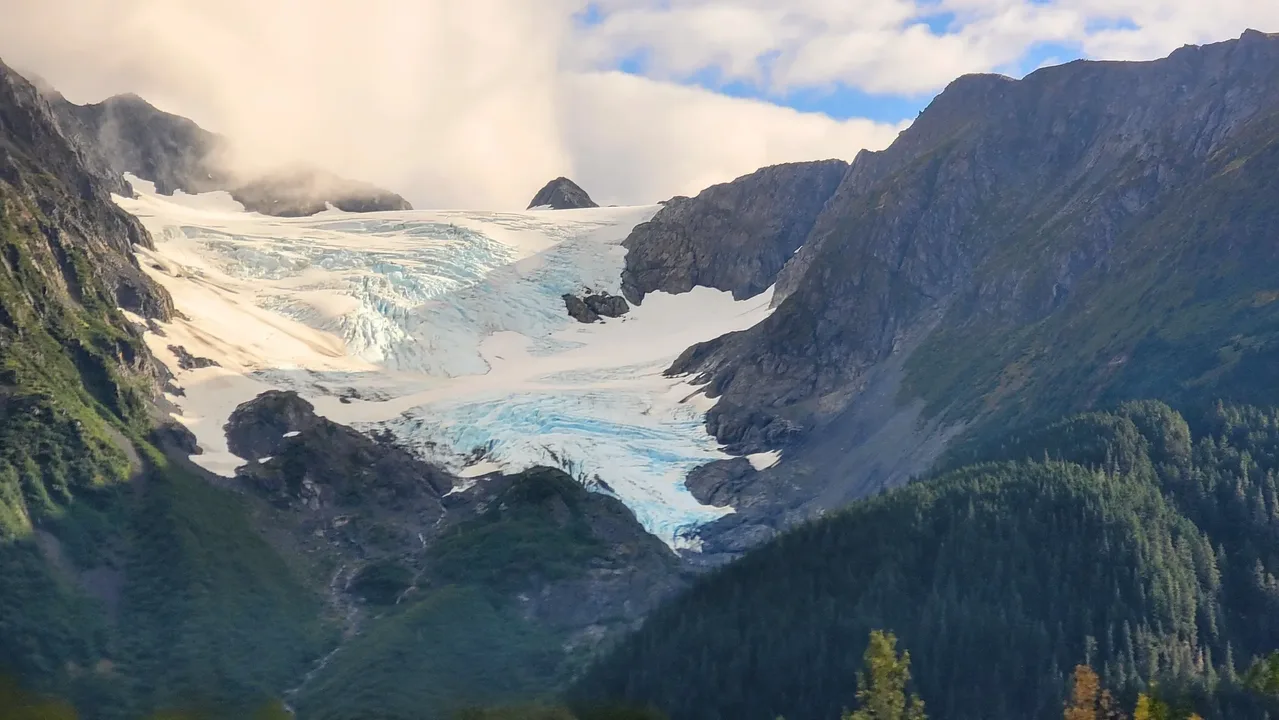
Byron Glacier, a walk-up glacier on the road to Seward
Before the ship ever leaves, one glacier belongs to the road. Byron Glacier sits in Portage Valley, a short turn off the Seward Highway between Anchorage and Seward, and the walk to it is one of the easiest glacier hikes in Alaska: under a mile of gentle trail to a broad viewpoint, with the glacier's blue-white snout spilling down between the peaks ahead. It is the glacier I always recommend as the warm-up. You hear it before you understand what you are hearing, the creak and pop of ice settling, and then a crack that means a piece has broken somewhere out of sight. The trailhead is right at Portage, across from the Begich Boggs Visitor Center, so it is an easy stop on the drive south or from a pre-cruise day in Anchorage.
02
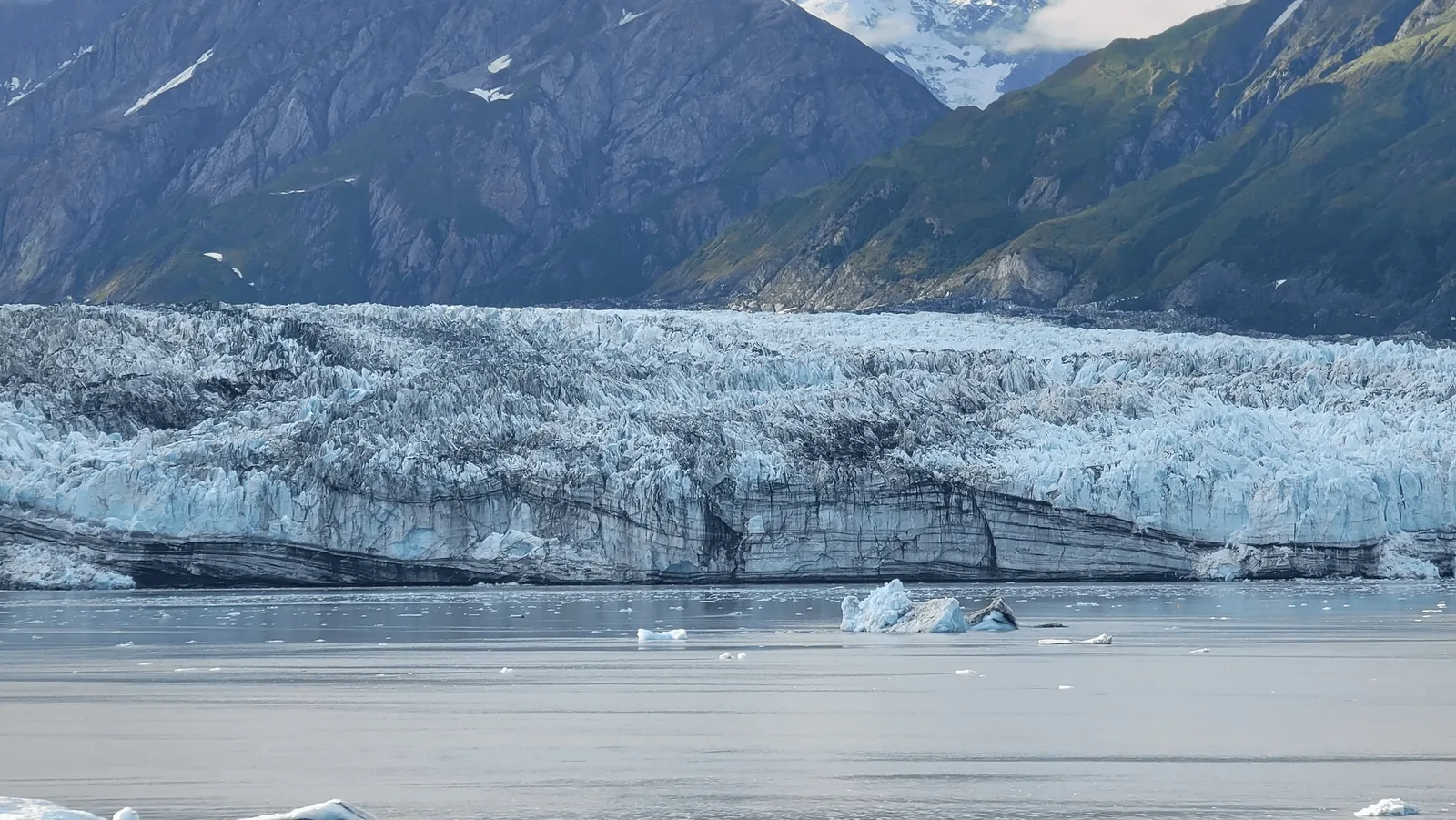
Margerie Glacier, Glacier Bay's grand finale
Then comes the one everyone waits for. In Glacier Bay National Park, ships sail to the head of Tarr Inlet and turn very slowly in front of Margerie Glacier, a tidewater glacier that pushes a wall of ice roughly two hundred and fifty feet out of the water. Park rangers come aboard for the passage and narrate over the ship's speakers, which is how you learn the names of the peaks and what to watch for. The ice calves constantly: you hear the thunder, look up, and watch a blue-white slab fall into the sea. Stay on deck even when the wind bites. The glacier does not keep a schedule, and this show is the reason the route exists.

03
Mount Redoubt, across Cook Inlet
Not all of the ice is at the end of a fjord. On the crossing up the top of the Gulf of Alaska, or on a clear drive down the Kenai Peninsula, keep an eye to the west: across Cook Inlet rises Mount Redoubt, a volcano of the Aleutian Range with a glacier of its own wrapped over its shoulders. It stands more than ten thousand feet tall and last erupted in 2009, which makes the view feel more alive than a postcard. From the water it reads as a white cone on the far shore, perfectly alone, and it is the moment the scale of Alaska announces itself.
Ketchikan
A boardwalk town over the creek.
Ketchikan is the first stop on most northbound itineraries, and it knows how to welcome a ship. The town spills up the hillside around Ketchikan Creek, and its most famous street is not a street at all: Creek Street is a wooden boardwalk built on pilings over the creek, with clapboard houses hanging above the water.
From the turn of the century until the 1950s the houses on Creek Street were Ketchikan's red-light district, visited by miners, loggers, and fishermen. Locals like to say it was the one place where both the men and the salmon went upstream to spawn. Today the boardwalk is full of galleries and small shops, and the creek below still fills with salmon in late summer.
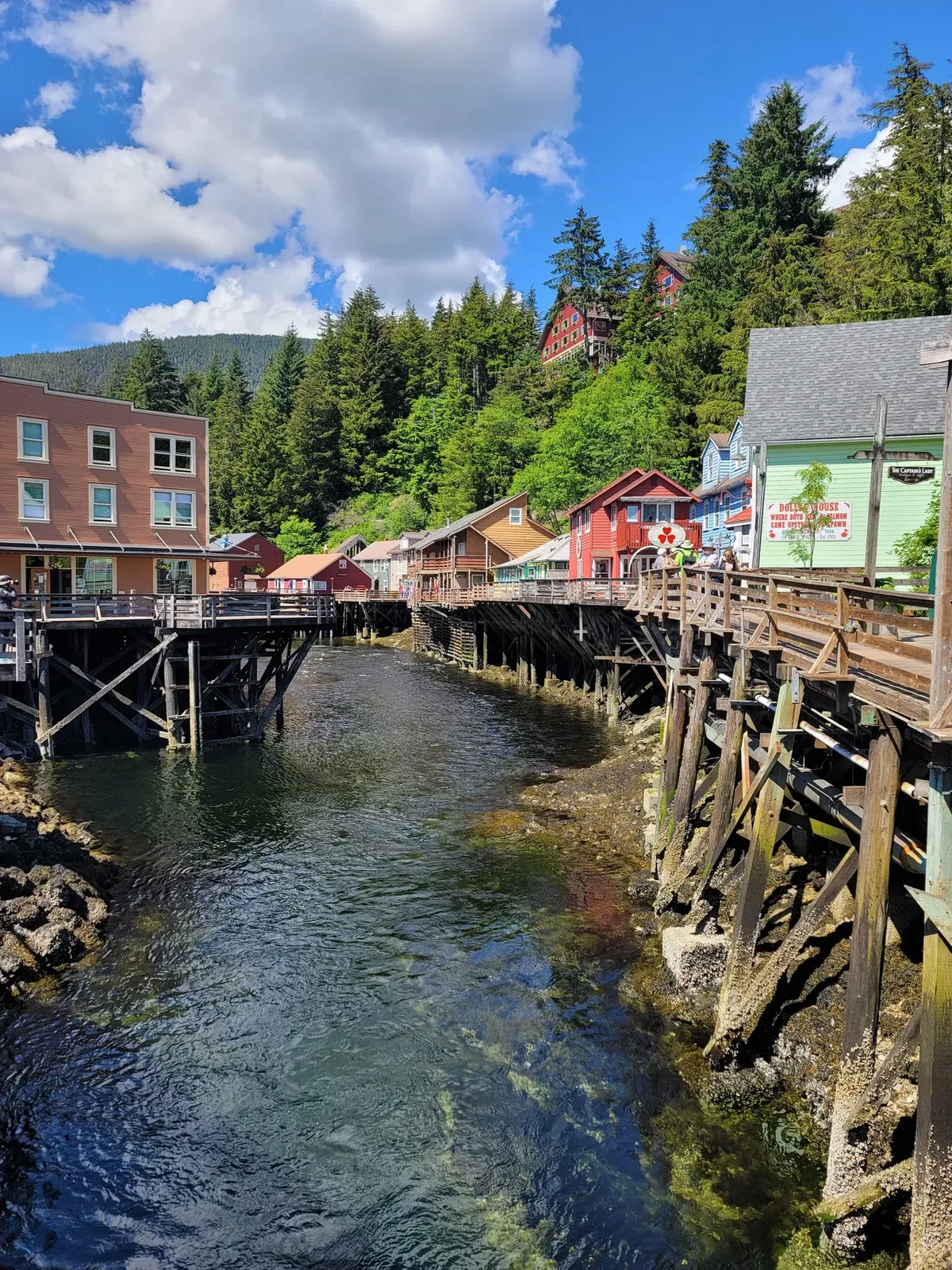
The Creek Street boardwalk
A plank walk on stilts over Ketchikan Creek, lined with the old painted houses that once made up the town's red-light district. Walk it slowly; the views down the creek and up the hillside are half the show.
Dolly's House
The preserved home and workplace of Dolly Arthur, who ran her house at the far end of the boardwalk from 1919 until the early 1950s. Now a small museum, wallpaper and all, and a genuinely human piece of local history.
The salmon ladder at the creek
Right beside the boardwalk, watch the fish ladder in late summer as salmon fight their way upstream. You can lean on the rail in the middle of town and watch the run below you.
The totem poles around town
Ketchikan is famous for totem poles, and you will see them the moment you leave the ship: Saxman Totem Village just south of town and the Totem Heritage Center downtown hold some of the finest carvings in Alaska.
Sitka
A harbor town with a volcano across the bay.
Sitka is the port that surprises everyone: a small, well-kept town on a bay, with a skyline of church spires and a volcano floating on the horizon. It was the capital of Russian America before the territory came to the United States, and the Russian past shows in the names and the onion domes. But the Sitka I love is the working one: the boats, the harbor, and the light.
01
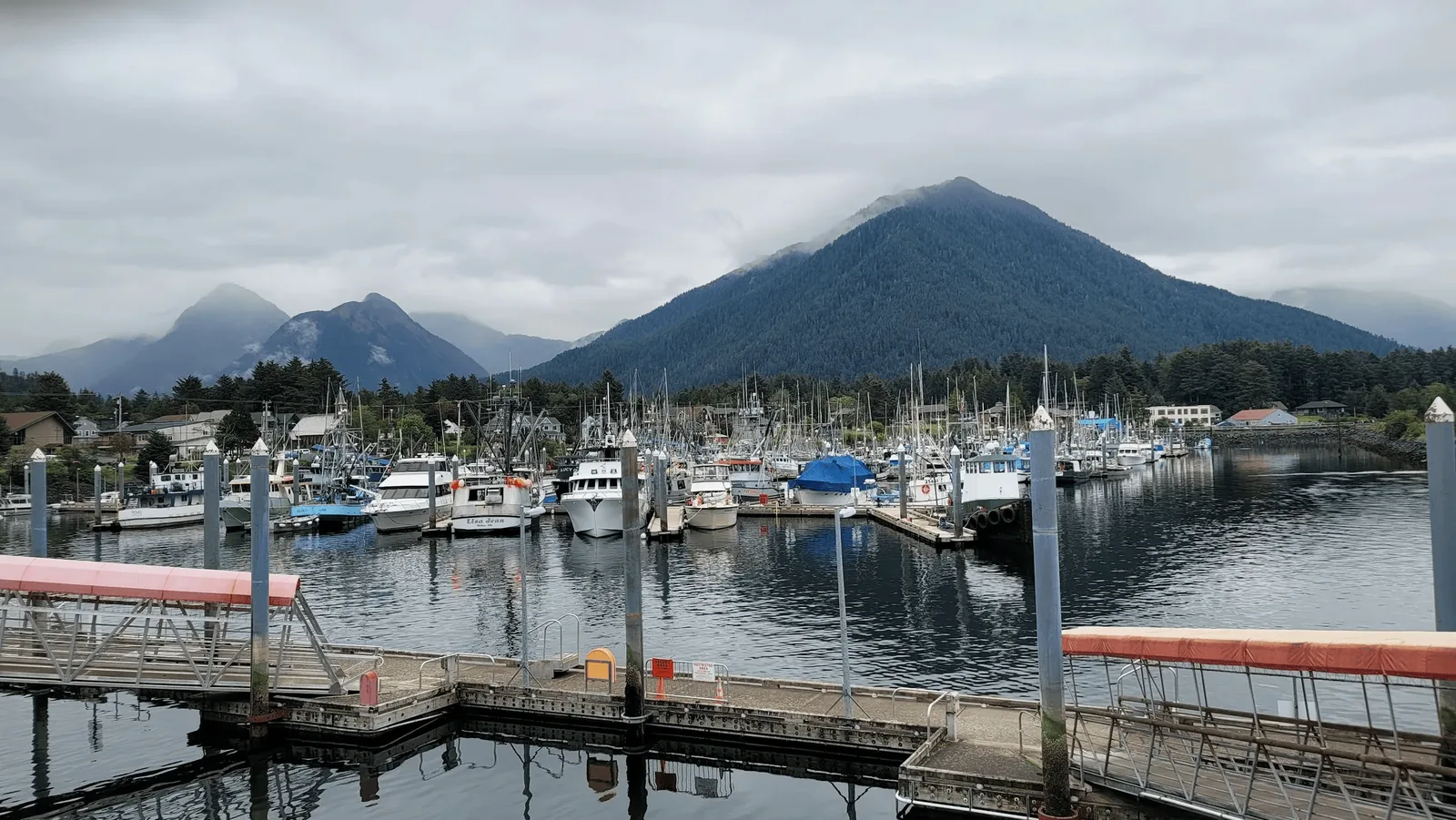
Crescent Harbor, the heart of town
Downtown Sitka wraps around Crescent Harbor, a city small-boat harbor where the town's daily life floats: fishing boats, skiffs, and charter boats tied along the floats, with the Centennial Building and St. Michael's Cathedral a short stroll away. I like to walk the floats and read the boat names, and to watch the harbor come alive early, when skippers head out to the fishing grounds. The Sitka SeaWalk footpath runs along the shore from here, so the best way to spend an afternoon is simply to start walking toward the forest at the edge of town.
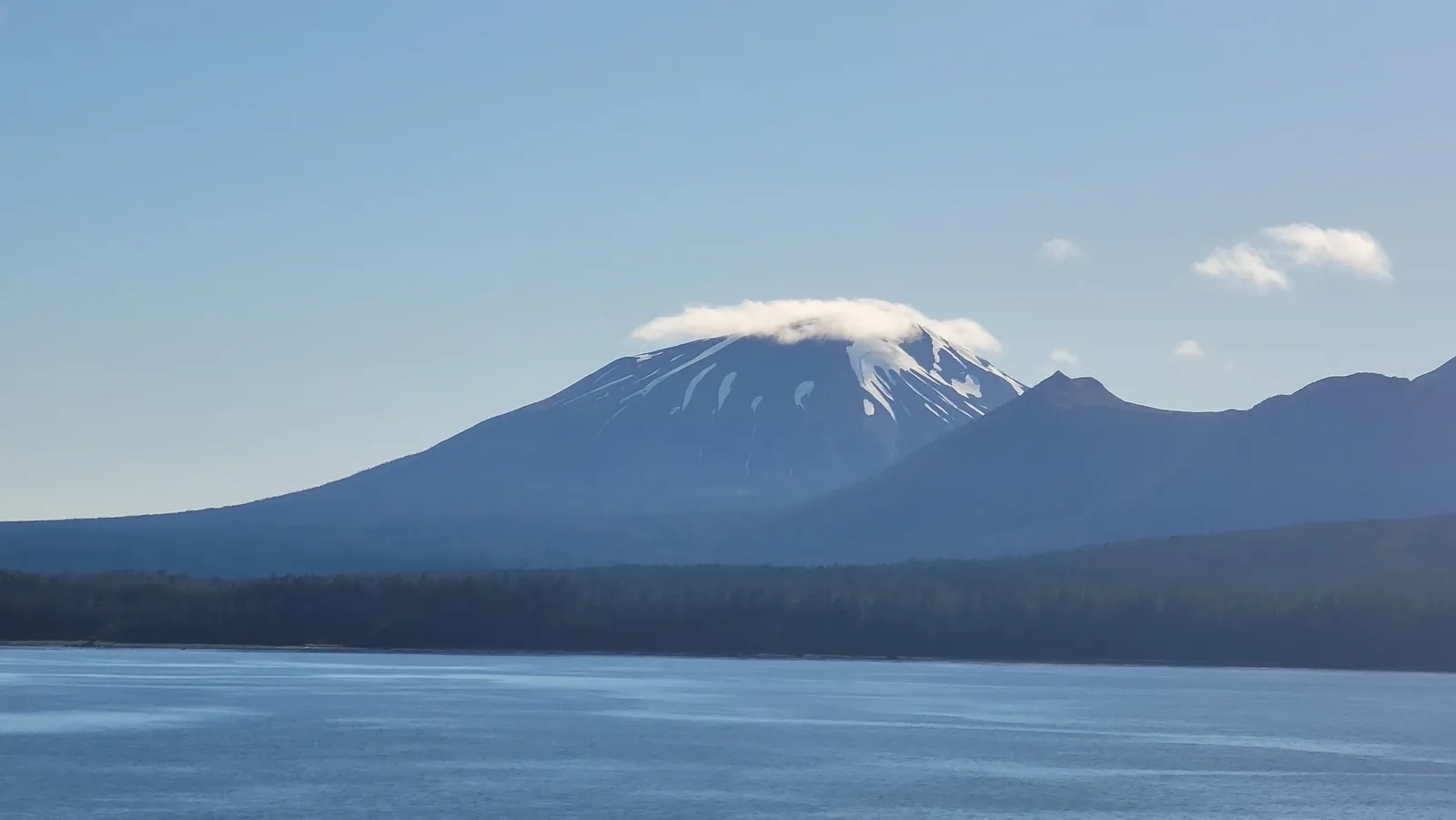
02
Mount Edgecumbe, across Sitka Sound
Sitka gives you a volcano for a neighbor. Across Sitka Sound, on Kruzof Island, rises the perfect cone of Mount Edgecumbe: 3,202 feet of dormant volcano named by Captain Cook in 1778, and known to the Tlingit as L'úx Shaa. From Crescent Harbor, and from almost anywhere in town, you look west across the water and there it is, catching the evening light. On my last visit I watched a low band of cloud slide around its base while I sat by the harbor, and I have considered that an adequate reason to return.
Practical tips
The details that make the voyage easy.
What should I pack for glacier deck time?
Glacier mornings are cold even in July: high forties on deck, and colder with the wind when the ship is moving. Bring a warm hat, gloves, and a jacket with a hood, and wear layers you can shed as the sun climbs. Keep the warm layer in the cabin the night before so it is ready when you wake, and bring binoculars for the calving walls.
When is the best time of day for whale watching?
Early morning is the classic window: the sea is calm, blows are easy to spot, and the Inside Passage feels like yours. Late afternoon runs a close second, with better light. Whales feed through the day in places like Icy Strait and Frederick Sound, so keep a lookout at every hour, but a still sea makes every sighting easier.
How does shore time work on a cruise itinerary?
Once aboard, set every watch and phone to ship time and trust that clock, not the town clock. The ship posts an all-aboard time, usually about thirty minutes before departure, and the gangway closes at the posted minute. Book excursions through the ship and it waits if a tour runs late; go exploring on your own, and be back with time to spare. In tender ports, expect a queue first thing in the morning and a shorter one later.
Autumn in the north
What is happening in Southeast Alaska right now.
The final sailings have come home, and Southeast Alaska's season has moved ashore: the ports are quiet, the nights are long enough for the aurora, and the autumn festival calendar is in full swing. Here is what the season is doing right now.
The season has come home
Alaska's cruise season runs May through September, and the final sailings have now returned to port. The towns are quiet, the daylight is shorter, and the season's energy has moved ashore to the autumn festivals and the returning aurora.
The lights come south
As the nights lengthen, aurora season opens across the north. With the cruise season done, the dark windows for the northern sky stretch longer, and the Interior around Fairbanks becomes the classic base for the show: December brings only about three and a half hours of daylight, so the aurora window stretches long and dark, best watched between about 10:00 pm and 2:00 am. Guides suggest planning five to seven nights for the best odds of a clear sky.
Whales first, then the great eagle gathering
If you love whales, note Sitka's WhaleFest, which returns November 5 through 9 for its 30th edition, this year under the theme Generations of Giants: 30 Years of Whales, Wisdom, and What Follows, with marine scientists, films, and the humpbacks that gather in Sitka Sound each fall, programmed out of the Sitka Sound Science Center. Just up the coast, Haines hosts the Alaska Bald Eagle Festival November 6 through 8, at the very start of the season's great wildlife spectacle.
The Chilkat River turns to eagles
By mid-November the largest bald eagle gathering in the world convenes along the Chilkat River north of Haines, where warm groundwater keeps a stretch of the river open and a late run of chum and coho salmon draws some 3,000 to 4,000 eagles from late October through the winter. Pullouts along the Haines Highway between mile 18 and 24 are the classic viewing spots, with numbers building through late October and peaking from late November into December. It is a quiet, wild, unmissable reason to visit Alaska after the season.
December brings the holidays north
In Juneau, the holiday season gets underway with the Juneau Public Market at Centennial Hall, a favorite stop for Alaskan-made gifts, and the First Friday Gallery Walk in December, just before the winter solstice on December 21 marks the year's shortest day. It is a cozy, well-lit counterpoint to the long dark: for travelers who love winter, Southeast Alaska after the cruise ships have gone is a quiet, inviting secret.
Ready to cruise Southeast Alaska?
Southeast Alaska is one of the routes we know best: cabins, itineraries, glacier timing, and the shore days that fit how you travel. Tell us your dates and a Destination Engineer will build the voyage around you.