
Destination Guide · Pompeii, Italy
Pompeii: the city
the volcano kept.
A city that kept its last day.
This is a guide to Pompeii, the Roman city that Mount Vesuvius buried in AD 79 and that the world rediscovered in 1748, and it is the plan I would hand anyone with a single day in the ruins: enter under the volcano, cross the open ground to the forum, then wander the frescoed houses, the planted gardens, and the vaulted baths before finishing where the human story is most direct, in the rooms of the plaster casts. I walked it on a bright autumn morning with more time than I thought I would need, and I still ran out of day.
Below is the walk itself, the four sights I would not skip, and the practical details that make the day easy: the train from Naples, the tickets worth booking ahead, and the seasons that treat you best. Roughly two-thirds of the city has been uncovered, which means a full third of Pompeii still sleeps beneath the ash and lapilli, ground that keeps giving.
A half-day route
Three to five unhurried hours, start to finish.
The route follows the geography of the city: in at the main entrance, across the open ground to the forum and the grand public buildings, then east through the houses, gardens, and baths, ending near the Nocera Gate where the human story is kept closest. Plan three to five hours, longer if you linger in the frescoes the way I did, and know that Pompeii will win either way.

01
Arrive under the mountain
The main entrance sits at the Porta Marina end of the site, across the road from the Pompei Scavi train stop, and the first view sets the whole visit: the city falls away in front of you, streets laid on a grid, with the volcano that ended it standing over everything and framed at the end of the site. Vesuvius only rumbles in stories now, but you feel its presence all day. From the high ground at the entrance the entire plan of the city reads below you, which is exactly what a first-time visitor needs before stepping into it. Stop, look, and get your bearings: the scale of Pompeii announces itself in the first ten minutes.
02
The forum, the city's open-air heart
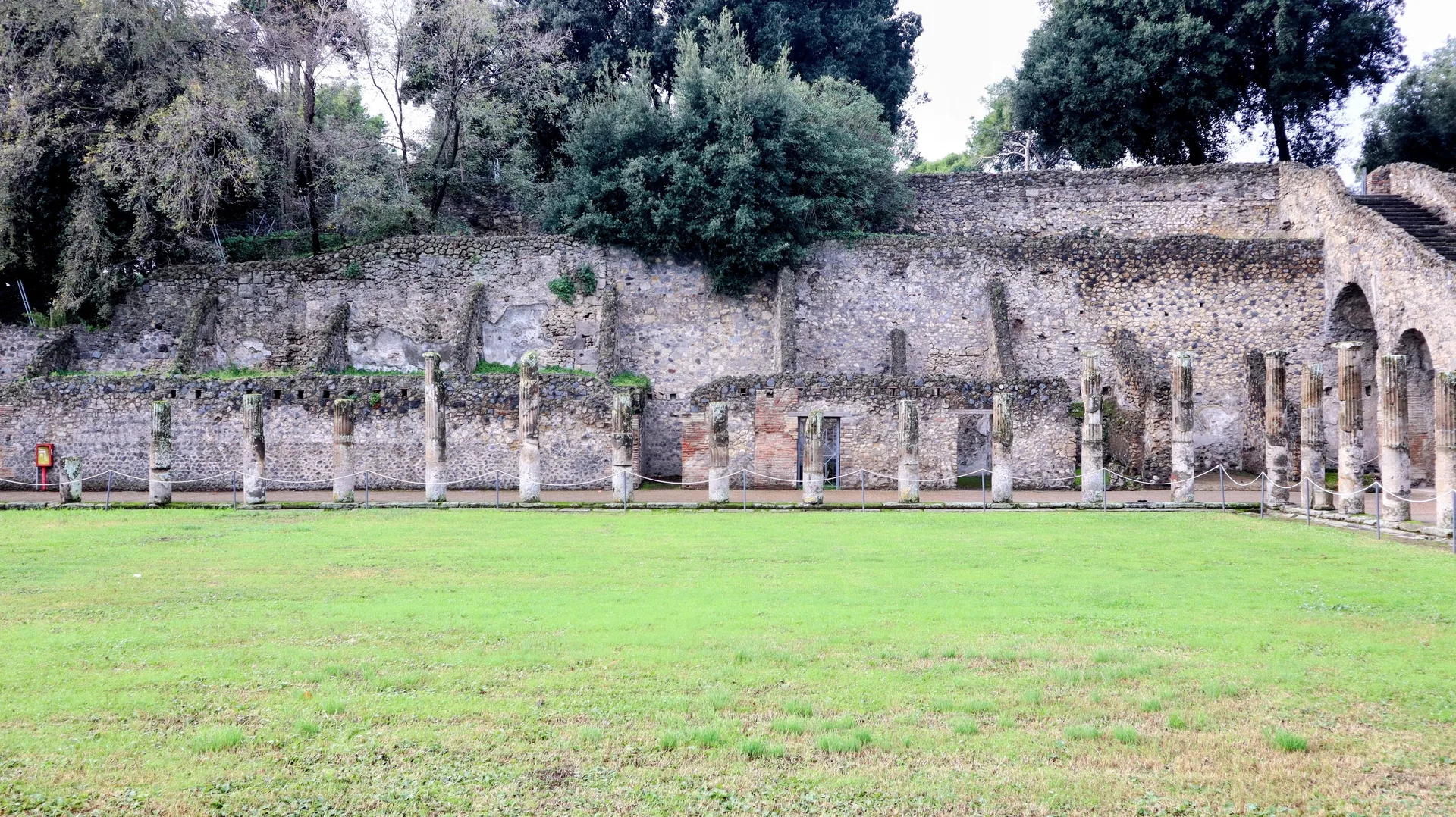
Pompeii was a working town, not a monument, and its working heart was the forum: a long open square lined with the bones of public architecture: the Temple of Jupiter at one end, the basilica where law and business met, and the market halls of the macellum across the way. On a quiet morning the square feels like a piazza the city simply walked away from, and in a sense it did, because this is where it cast its votes, argued its cases, and did its daily business. Give the forum its time before the tour groups fill it, because it is the one place that explains every other building you will see.
03
The houses: frescoes that survived the ash
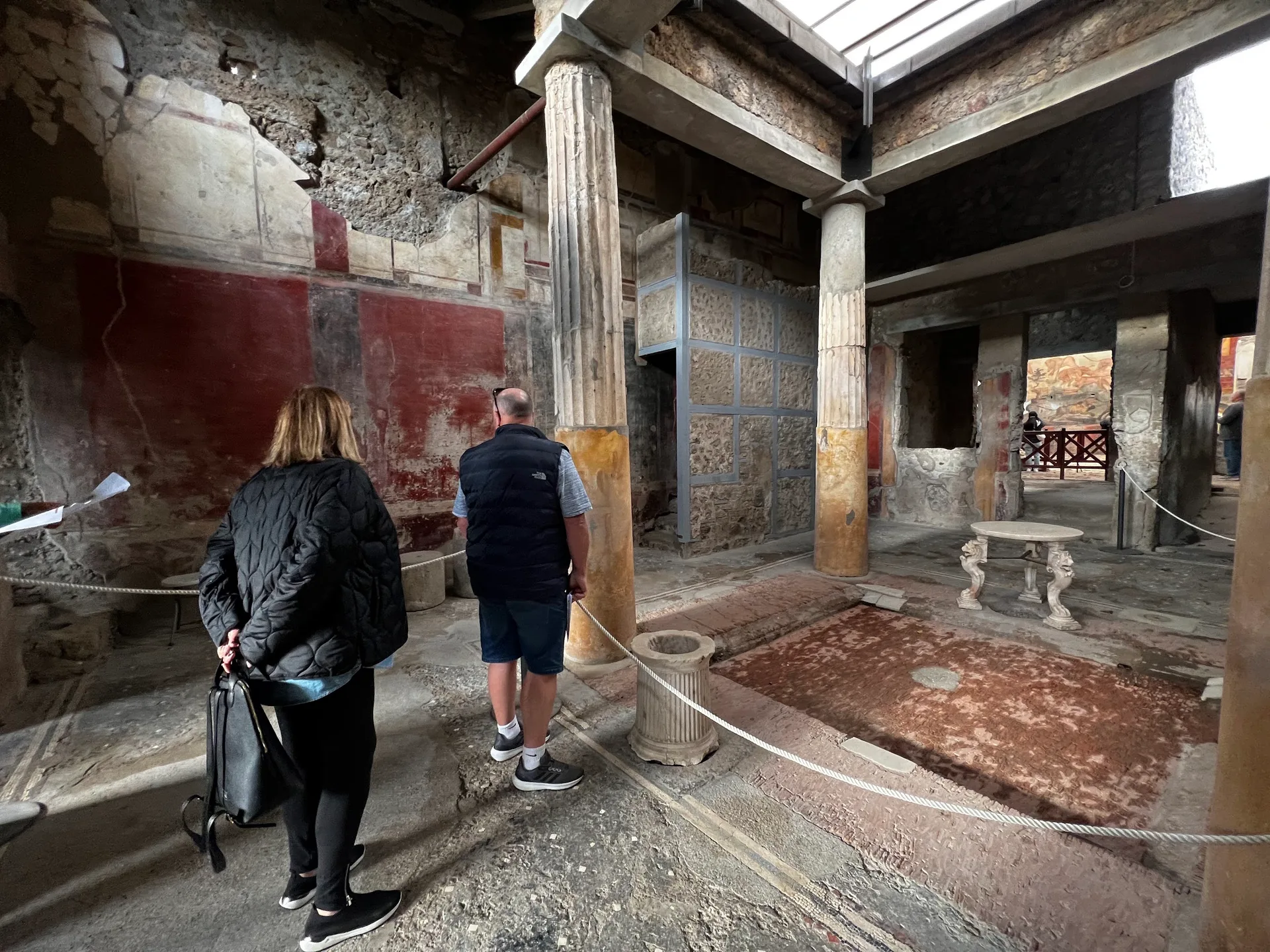
The grand houses of Pompeii survived with their walls, their ceilings, and their paint. The finest address on the standard route is the House of the Vettii, the home of two wealthy freedmen, Aulus Vettius Conviva and Aulus Vettius Restitutus, whose restored rooms, reopened in 2023 after a two-decade restoration, hold some of the liveliest Fourth-Style frescoes in the Roman world. At the entrance the god Priapus weighs his own attributes on a scale, which tells you immediately that Pompeian taste was no museum taste; inside, the rooms glow with red and gold panels and mythological scenes. Every house repays a slow look, the color still saturated almost two thousand years on.
04
The gardens, replanted from the ash
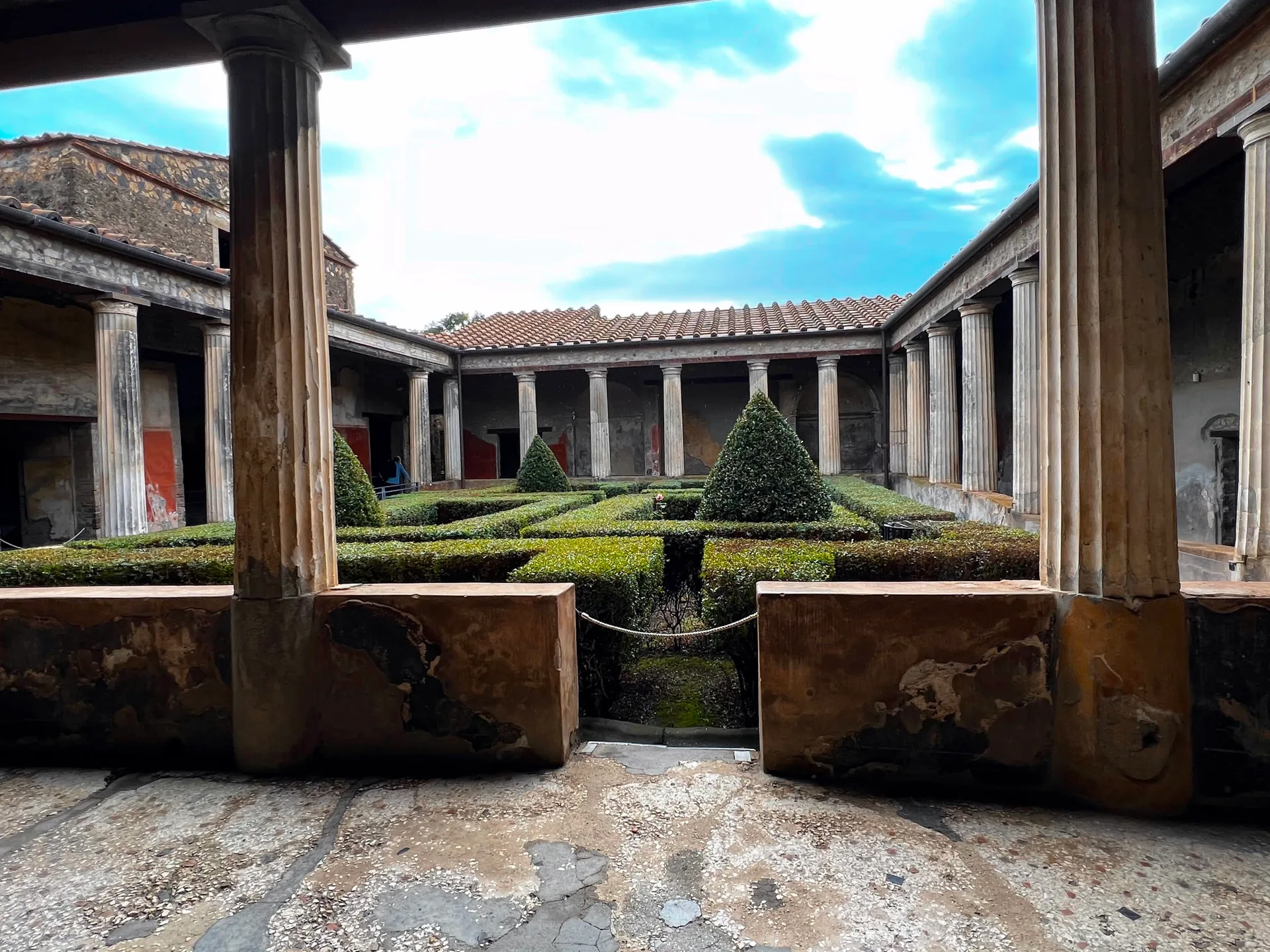
Pompeii's gardens are a quiet miracle of archaeology. When roots rotted, the cavities left in the hardened ash held the exact shapes of the plants, and archaeologists have repopulated many plots from those records, so the hedges and vines you walk past trace the original plantings. Atrium gardens like this one, with their clipped rows and tidy symmetry, show how seriously Romans took a garden: it was a room, just outdoors, with its own architecture and its own shade. On a hot day these green corners are also the best seats in the city.
05
Villa courtyards and the long afternoon
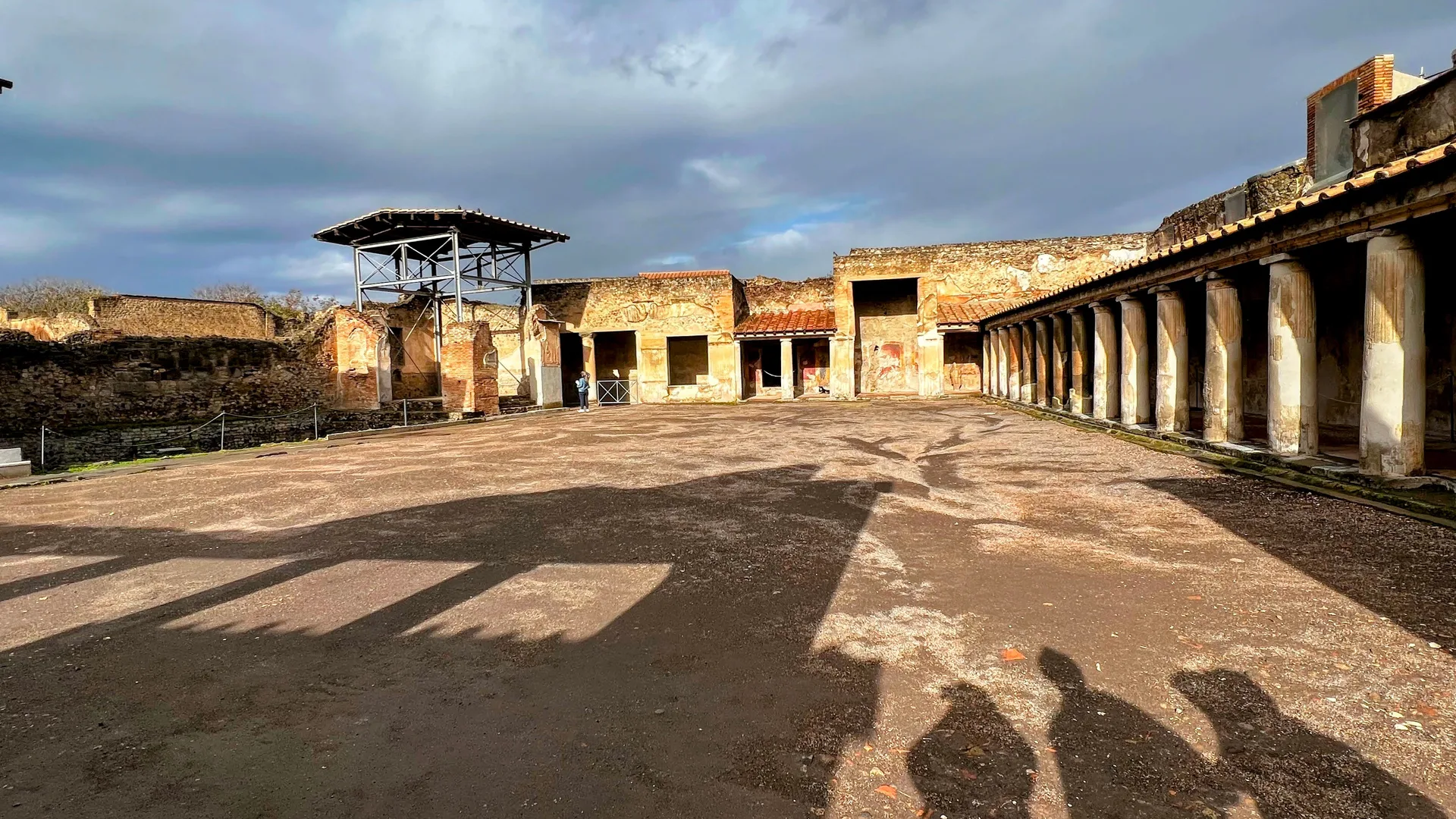
Beyond the forum, the residential streets hold the city's grandest houses, ringed with peristyles: columned gardens open to the sky that cooled the air, caught the light, and announced the household's standing the moment you entered. The largest of them, the House of the Faun, fills a whole block with two atria and two peristyles, and its great Alexander mosaic now lives in the National Archaeological Museum in Naples, so the courtyard is the part that stays in Pompeii. Walk the straight, stony lanes of Via dell'Abbondanza in the late light, when the long shadows make these colonnades sing.
06
The baths and the vaulted rooms of daily life
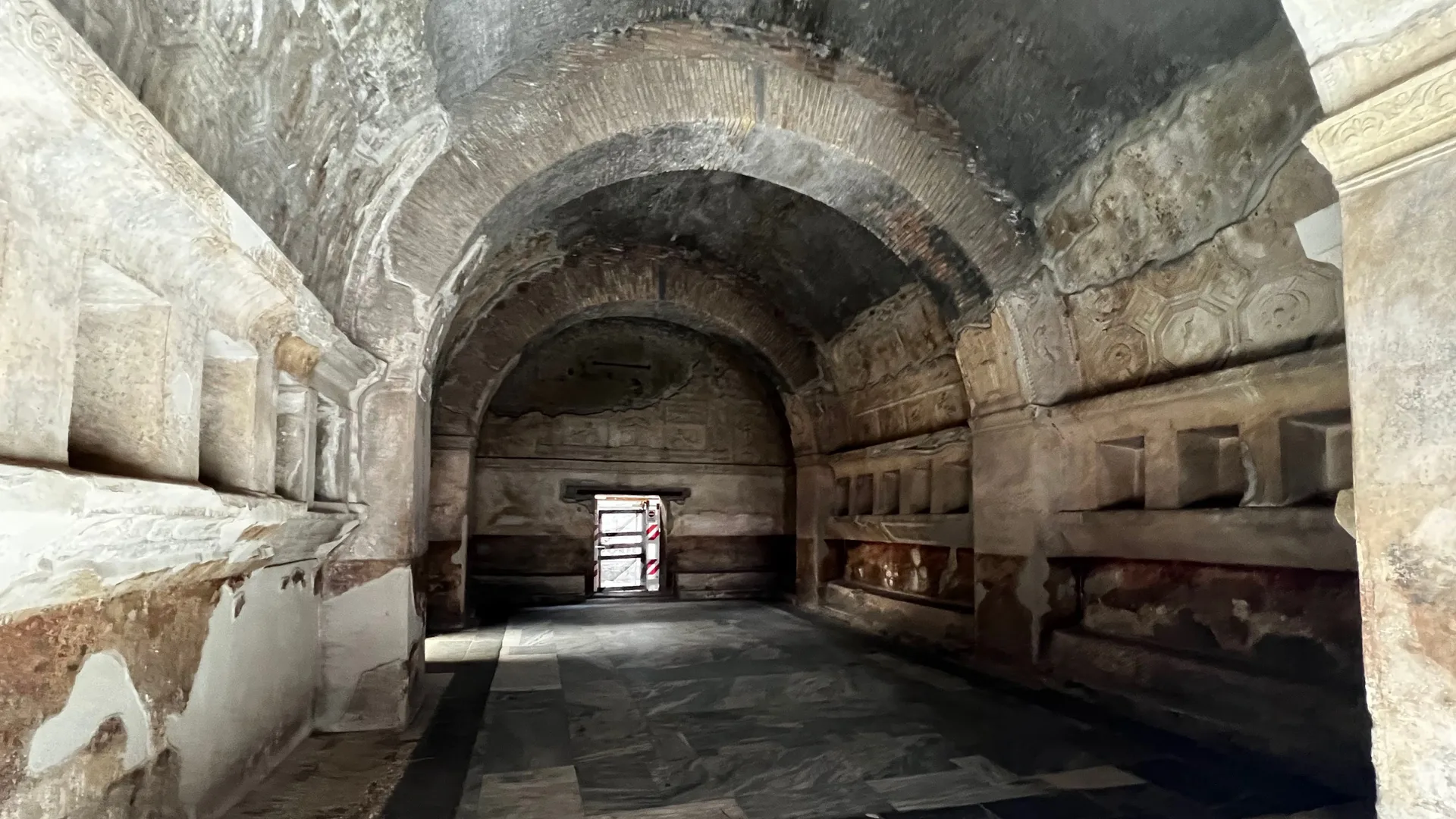
The public baths were the social heart of Roman daily life, and Pompeii's oldest, the Stabian Baths, still show the full circuit: the cold room, the warm room, and the hot room with vaulted ceilings that trapped the heat. Vaulted stone chambers appear all over the site over baths, cellars, and shops, and they are where the city's workaday life is easiest to feel, alongside the thermopolia, the fast-food counters with their big terracotta jars sunk into the counters still presenting the day's menu two thousand years later. Pompeii was not a museum city; it was a town, and these are its working rooms.
07
The casts: the human story, kept close
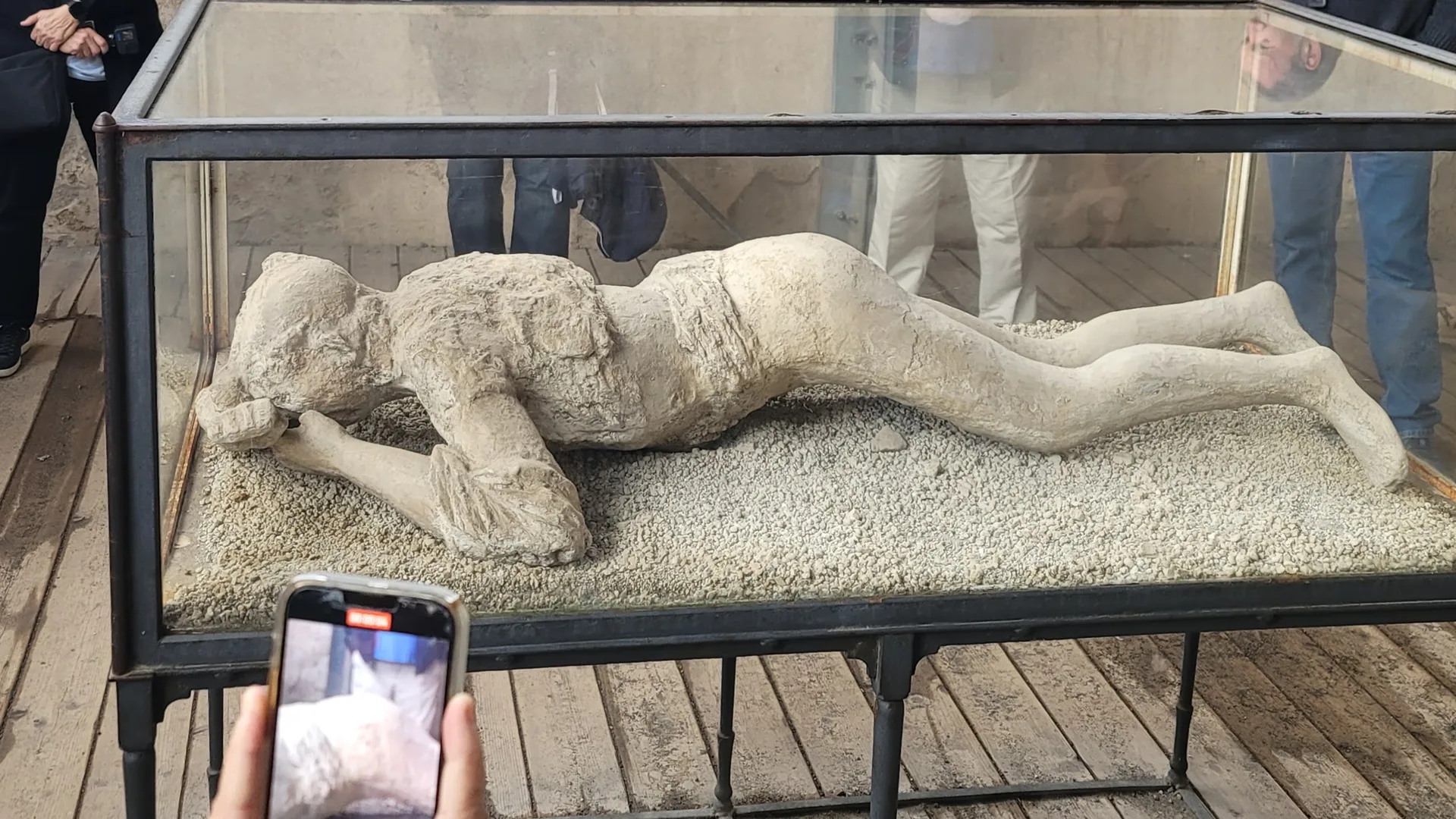
In 1863 the director of excavations, Giuseppe Fiorelli, found that the bodies of the victims had left exact cavities in the hardened ash, and that pouring plaster into those spaces recovered the final moment: postures, faces, the crease of a tunic. More than a hundred casts have been made since, and the most affecting stand at the Garden of the Fugitives near the Nocera Gate, thirteen men, women, and children displayed where they fell behind glass. It is a hard place, and an essential one. Everything else at Pompeii shows you the city; this is the part where you meet its people.
Can't miss
Four sights not to rush past.
The Forum
The long public square at the city's heart, lined by the ruins of temples, the basilica, and market halls. Arrive early, before the tour groups, and it feels like a piazza the city simply stepped away from.
The House of the Vettii
The house of two wealthy freedmen, with some of the finest and liveliest frescoes in the Roman world, reopened in 2023 after a two-decade restoration. The red rooms alone are worth the trip.
The Amphitheater
The oldest surviving Roman amphitheater, built around 70 BC with private funds, more than a century before the Colosseum in Rome rose in the capital.
The Garden of the Fugitives
The plaster casts of thirteen victims of the eruption, adults and children, displayed where they fell behind glass. It is the most moving place in all of Pompeii.
Practical tips
The details that make the day easy.
One train from Naples
The Circumvesuviana commuter line runs from Napoli Garibaldi and Porta Nolana to the Pompei Scavi stop in about half an hour, leaving every thirty minutes or so, with the station directly across from the main entrance. From Sorrento it is the same line in the other direction, which makes Pompeii an easy day from either coast. The air-conditioned Campania Express, a private driver, or a guided tour are the easy upgrades.
Book the morning and go early
Tickets are sold with entry slots, and in summer they sell out, so book online ahead and take the earliest time you can manage. The site opens at nine, and the first two hours are the quiet ones, which is when the forum and the houses are at their best. Plan at least half a day; three to five hours is the honest minimum for a first visit.
Dress for a city with little shade
The paving is basalt, uneven, and endless, so wear the walking shoes you would wear in the mountains, not the beach. Bring water, a hat, and sunscreen: summer days can pass 35 to 40 degrees Celsius with barely a tree inside the old city, and the hours between eleven and three are the ones to plan around, not through.
Autumn into winter
What is happening in Pompeii right now.
Autumn is Pompeii at its golden best: the crowds thin, the heat relents, and the vineyards of Vesuvius come into full song, with Naples dressing for Christmas as November turns. Here is what is on the calendar and in the air this season.
The best weeks of the year
April, May, September, and October are Pompeii at its finest: temperatures in the comfortable 18 to 25 degrees Celsius range and crowds a fraction of summer's, when the site can near its roughly 20,000-visitor daily cap in heat above 35 degrees. From October 15 the park shifts to winter hours through March 15, opening at 9:00 am with last entry at 3:30 pm and closing at 5:00 pm, and it closes on December 25 and January 1.
The vendemmia returns to the ruins
In mid-September the park gathered its autumn grape harvest among the ancient vines of the Vineyard of the House of the Triclinium, a project that revives the wine Pompeii made before AD 79. The vintage carries on through the autumn in the cellars down the mountain, where the 2026 pressing is poured well into October.
The cellars of Vesuvius pour
Down the mountain, the wineries of the Vesuvius slopes bring in their Piedirosso, Falanghina, and Aglianico through September and October, and most open their doors for tastings with the volcano in the glass in the fullest sense. A vineyard afternoon pairs naturally with a morning in the ruins.
Fresh rooms in Regio IX
Excavation continues to give Pompeii back its rooms: this year the park unveiled the reconstructed frescoed banquet-hall ceiling at the Bakery House, painted with scenes of Dionysus and Ariadne, and added a new group of domus to the visitor itinerary in August. The new finds keep the site feeling alive, and a good reason to return even if you have walked the Forum before.
Naples dresses for Christmas
From mid-November the famous presepe market on Via San Gregorio Armeno fills with its wooden stalls and handcrafted figurines, running through Epiphany on January 6, and the city's Natale a Napoli lights switch on around December 8. A little farther down the coast, Salerno's Luci d'Artista light-art festival runs from November 14 through February 1, the biggest illuminated display in the region, and Sorrento lights its Christmas tree in Piazza Tasso. A night in Naples after a day at Pompeii turns the ruins into a prelude to the most atmospheric season on the bay.
Ready to walk Pompeii?
Pompeii sits an easy half hour from Naples, pairs beautifully with Sorrento and the Amalfi coast, and makes a superb shore day on Mediterranean cruises that call on the Bay of Naples. Tell us your dates and a Destination Engineer will build the day, and the trip around it.