Penner Cruise & Travel logo

Destination Guide

The ultimate Alaska cruise guide.

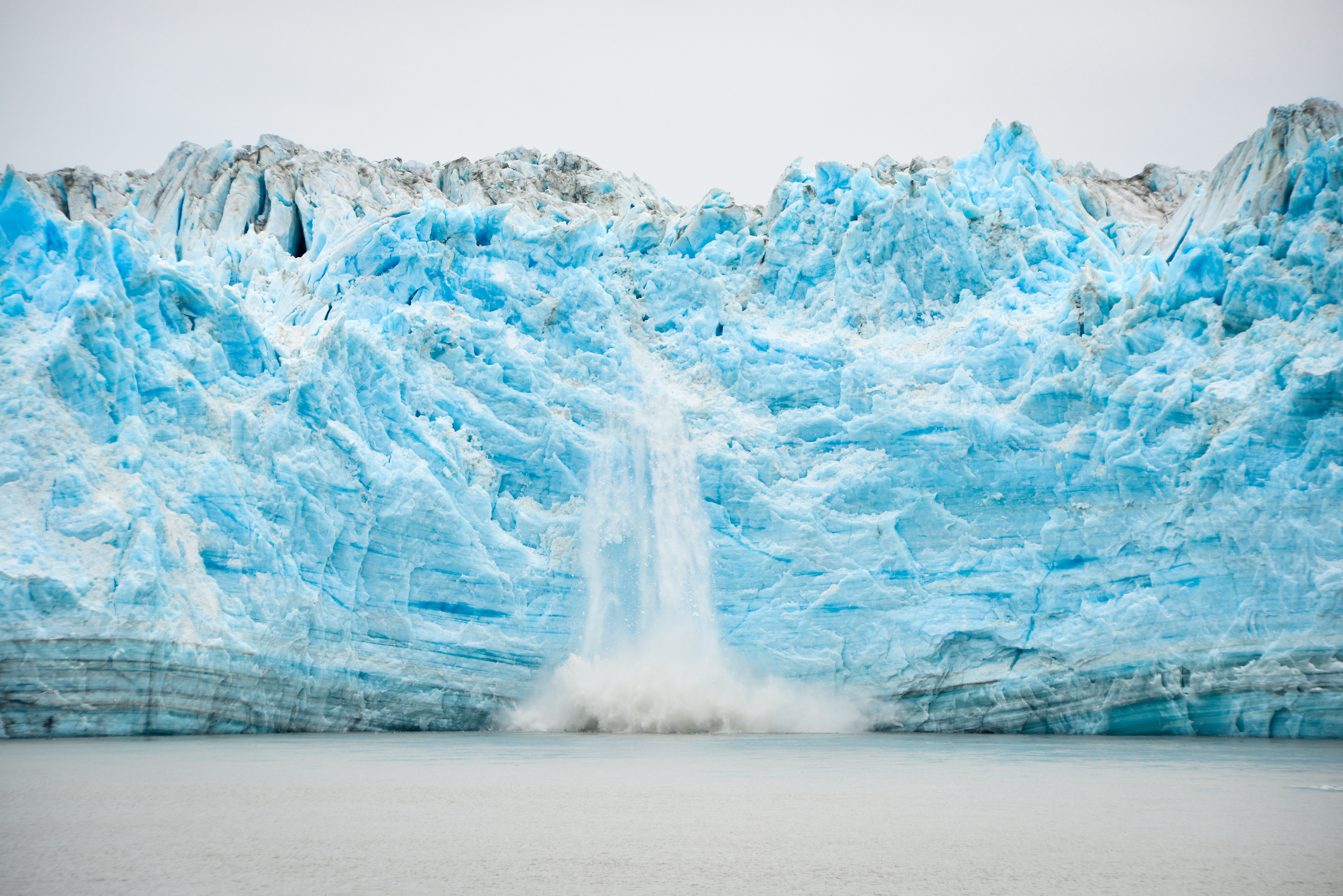
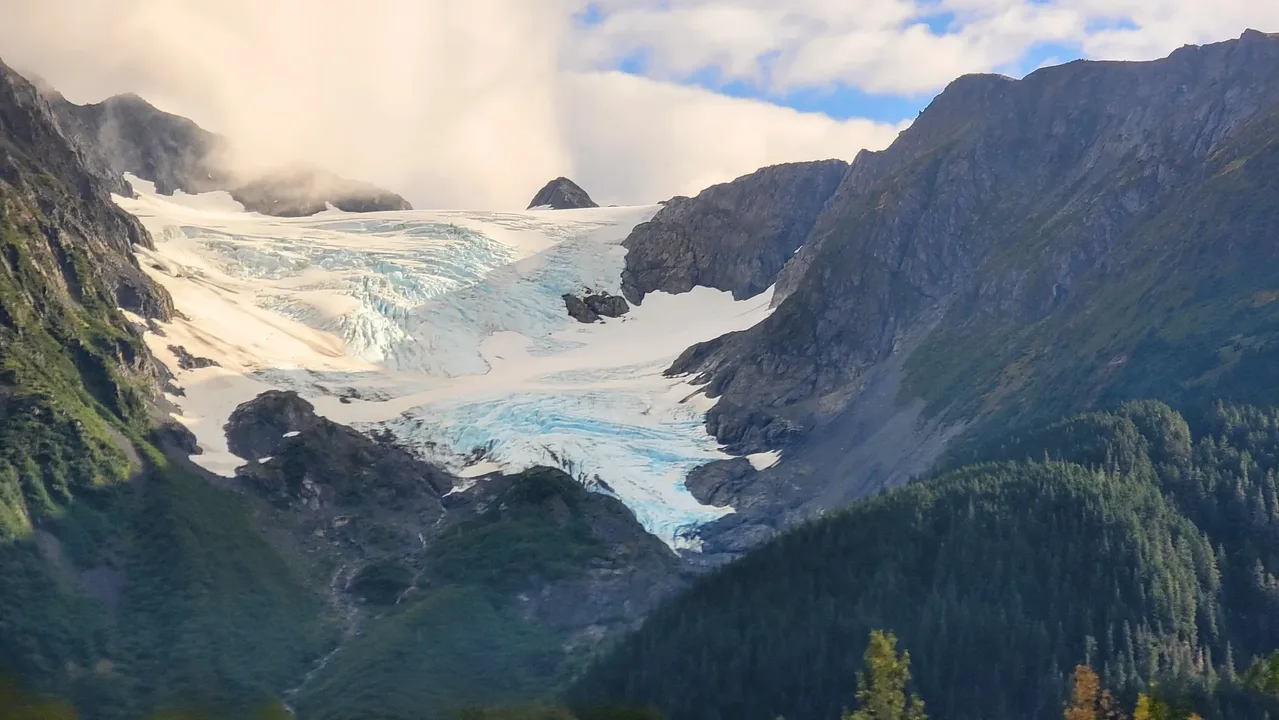
A tidewater glacier in Southeast Alaska, seen from the water

A bucket-list coastline, best seen from the water.

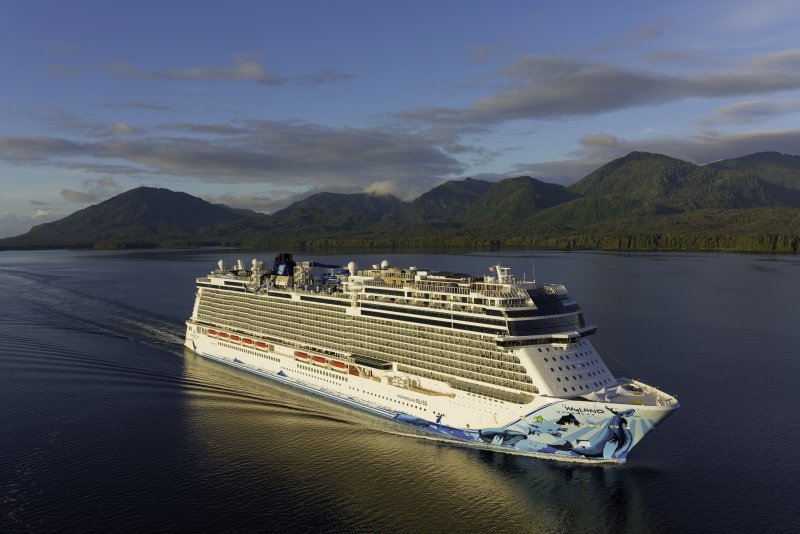
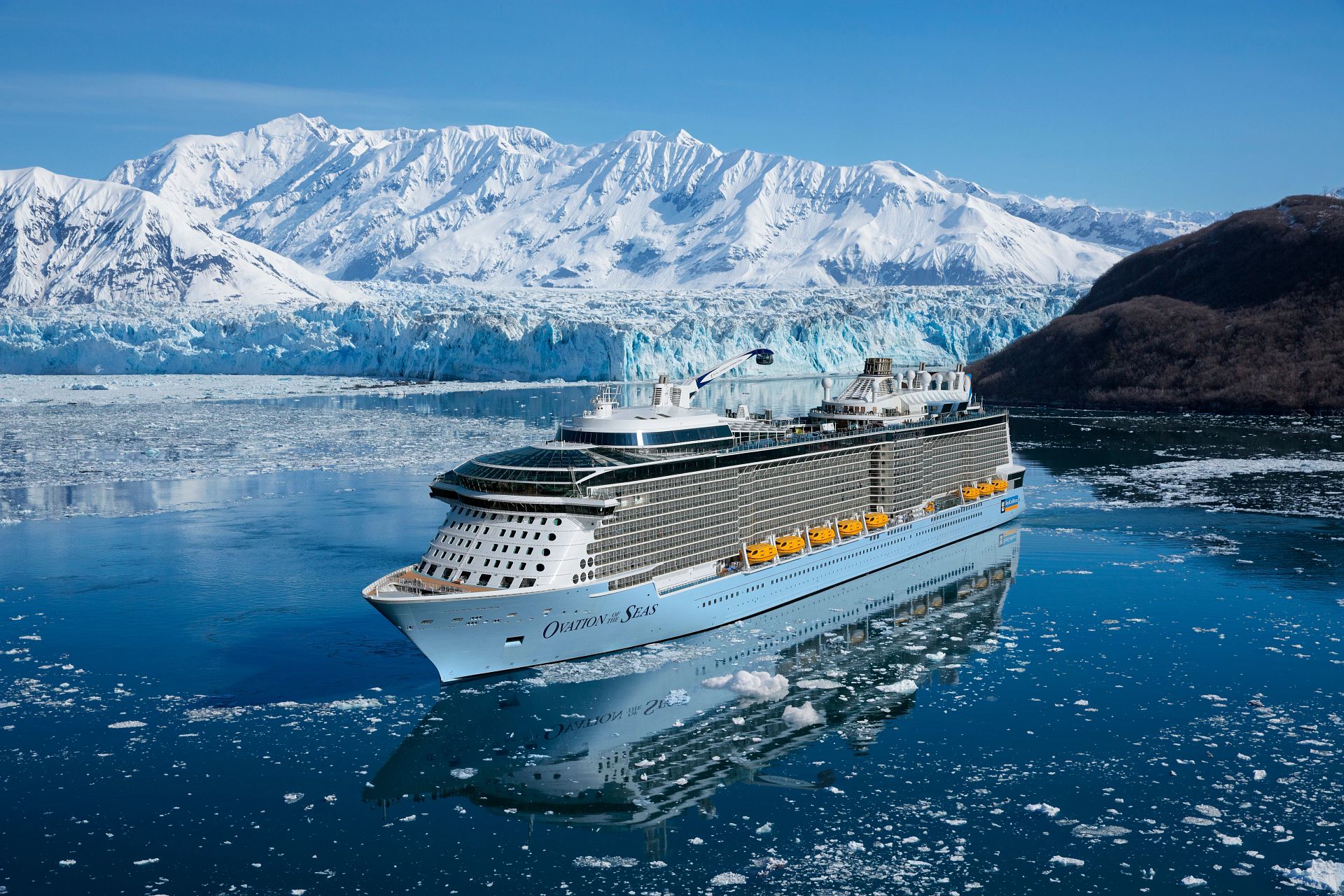
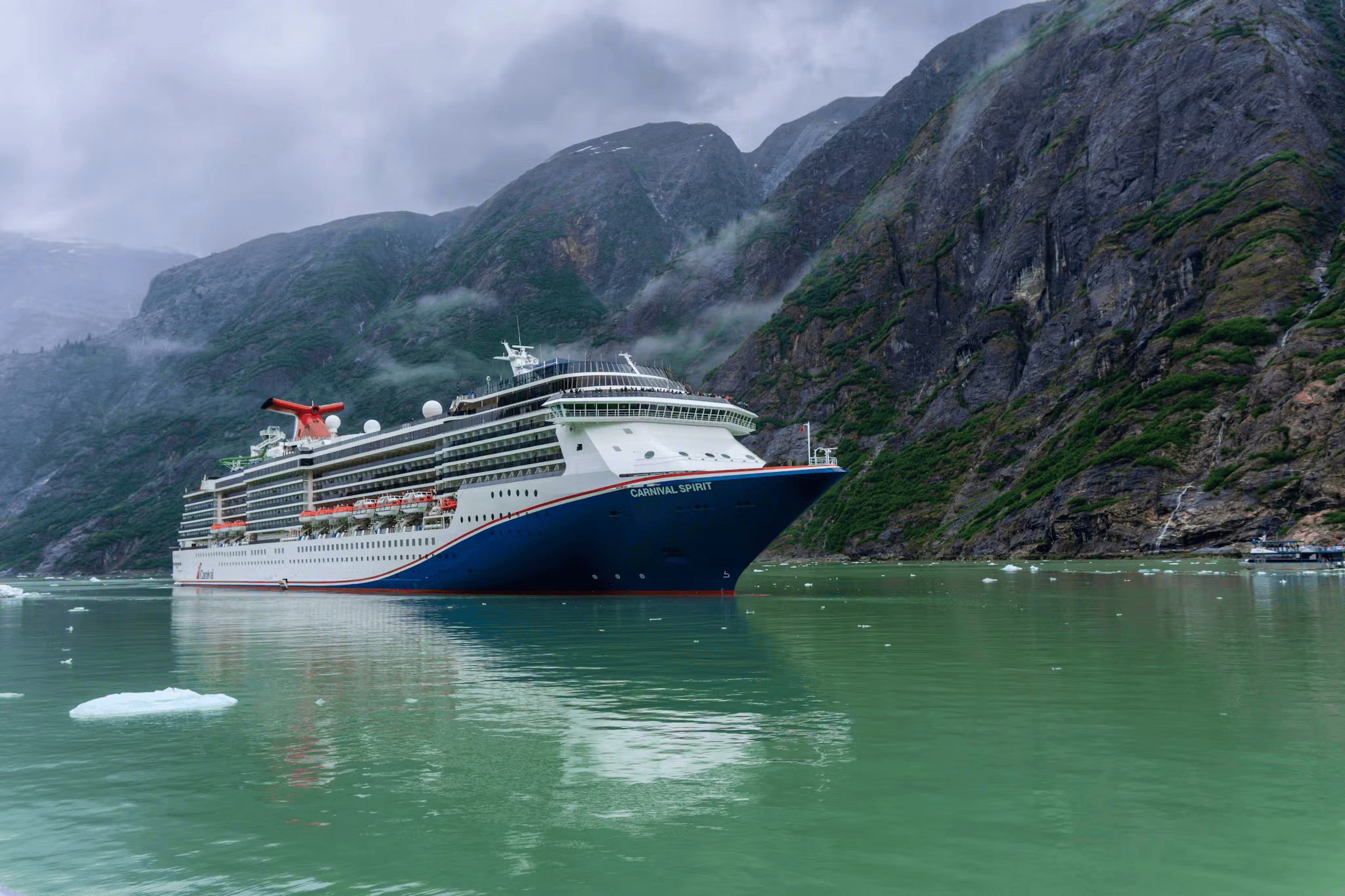
Alaska cruises run roughly May through September, when the weather is workable and the wildlife is at its most active. The voyage itself is the attraction: glaciers, fjords, whales, and pocket-sized port towns, all woven into a week at sea.

What makes Alaska different from other cruise regions is the scenery between ports. Glacier-viewing days, where the ship slows and the coastline turns to ice, are the heart of the experience, and they reward travelers who choose their itinerary and line with care. This guide covers the best time to sail, the two main route styles, the lines and ships that call here, and the ports you will remember longest.

Best time to visit

May through September, with a season for every traveler.

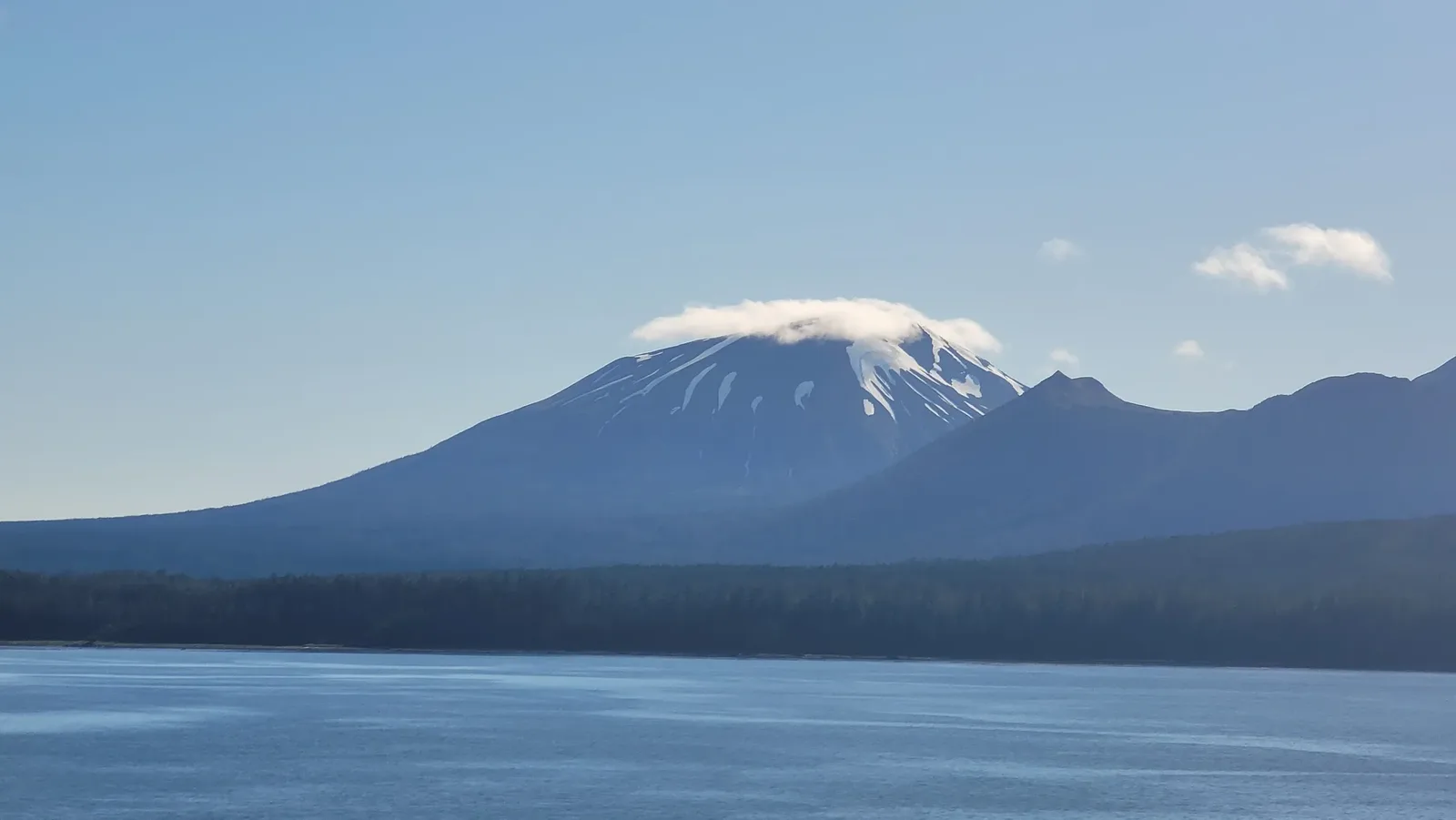
A scenic Alaska waterway with mountains and calm water in summer light

The Alaska cruise season runs from early May into late September. May and early June bring the longest daylight, snow still on the peaks, and the first whales arriving in the Inside Passage. July and August are the warmest and busiest months, with the most wildlife activity and the fullest ships.

September offers cooler, quieter sailings, autumn colors in the coastal forests, and often the season's best wildlife viewing as humpbacks feed heavily before migrating south. Glacier viewing is strong all season; the ice does not wait for summer.

Weather in Southeast Alaska is famously changeable, so plan for rain gear in any month. Inside Passage waters are protected and calm, while one-way Gulf routes cross more open sea, which matters if you are prone to motion.

Cruise itineraries

Inside Passage or Gulf of Alaska?

Nearly every Alaska cruise fits one of two shapes. Here is the easy way to tell them apart.

A small coastal Alaska port town ringed by forested mountains

01

Inside Passage (Round-trip)

Best for first-time Alaska cruisers

The Inside Passage threads a sheltered network of islands and channels between the mainland and the coast, so the sailing is calm and the scenery steep: forested fjords, waterfalls, and small coastal towns reached nearly every day. Glacier Bay anchors many of these itineraries, and the route is the classic Alaska introduction for first-timers.

Best for
A protected, scenic waterway sailed as a round-trip, usually from Seattle or Vancouver.
A tidewater glacier face meeting the water in Alaska

02

Gulf of Alaska (One-way)

Best for travelers who want more of Alaska beyond the ship

The one-way Gulf of Alaska route crosses the open Gulf rather than looping back, opening up different ports and glacier days, including Hubbard Glacier and Prince William Sound. It pairs beautifully with a Denali or interior land extension, and suits travelers who want both the coastline and the mountains in a single trip.

Best for
A one-way voyage, often between Vancouver and Seward or Whittier, with a land tour before or after.

Cruise lines

Which line should take you there?

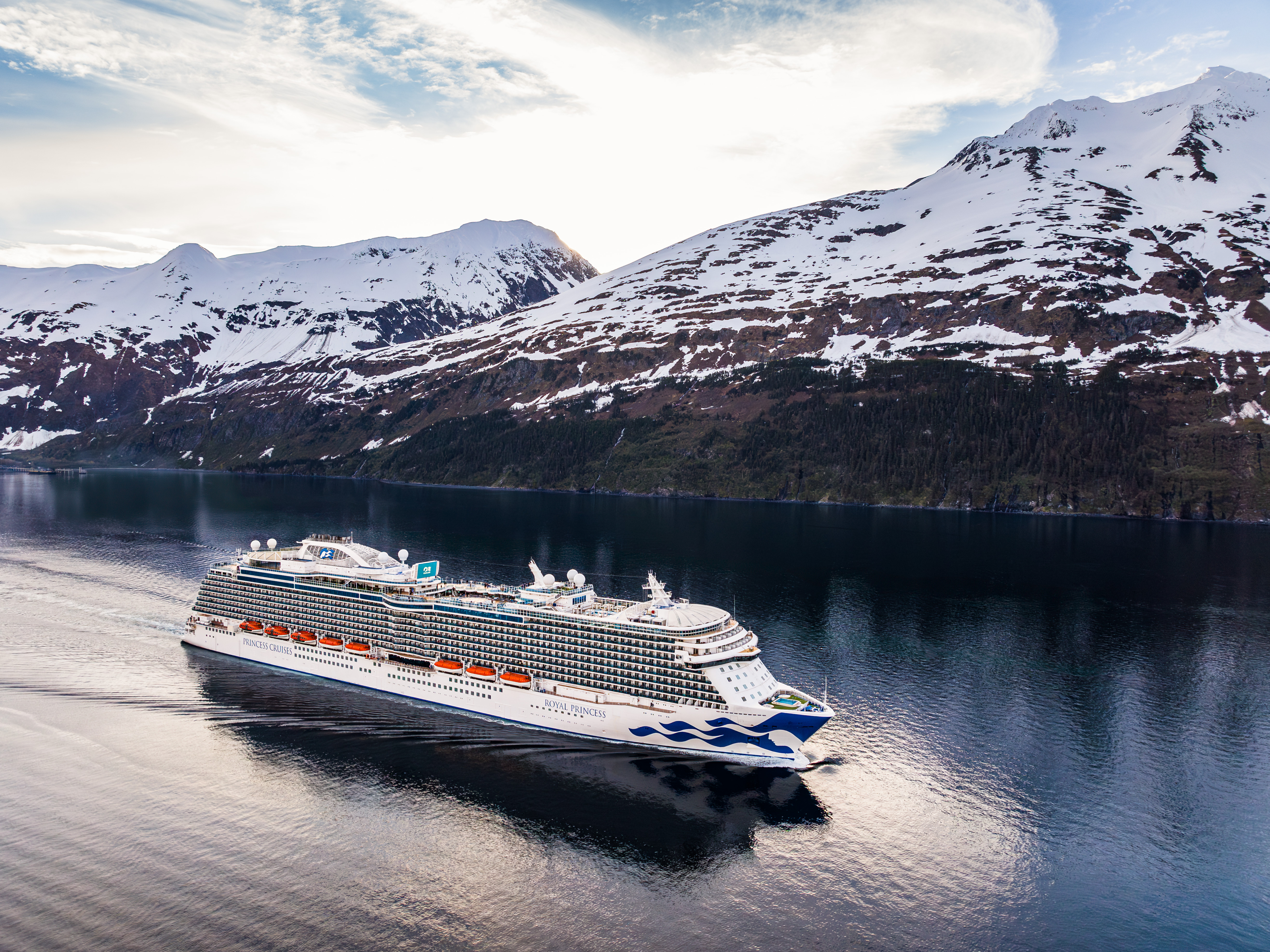
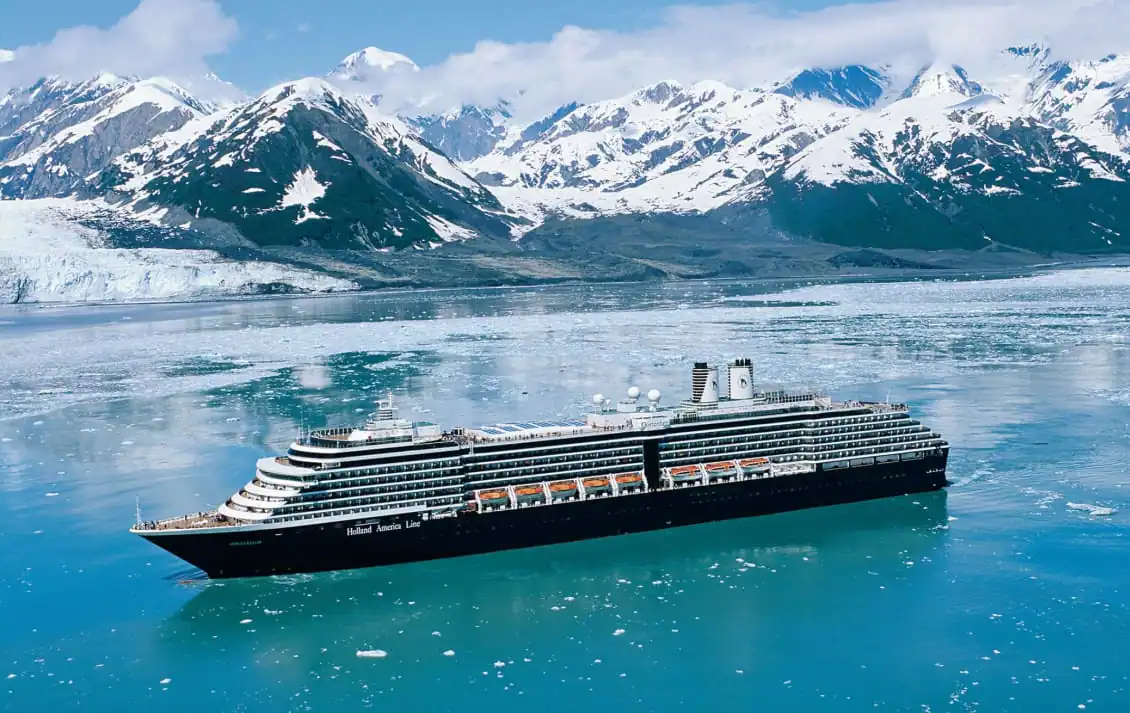
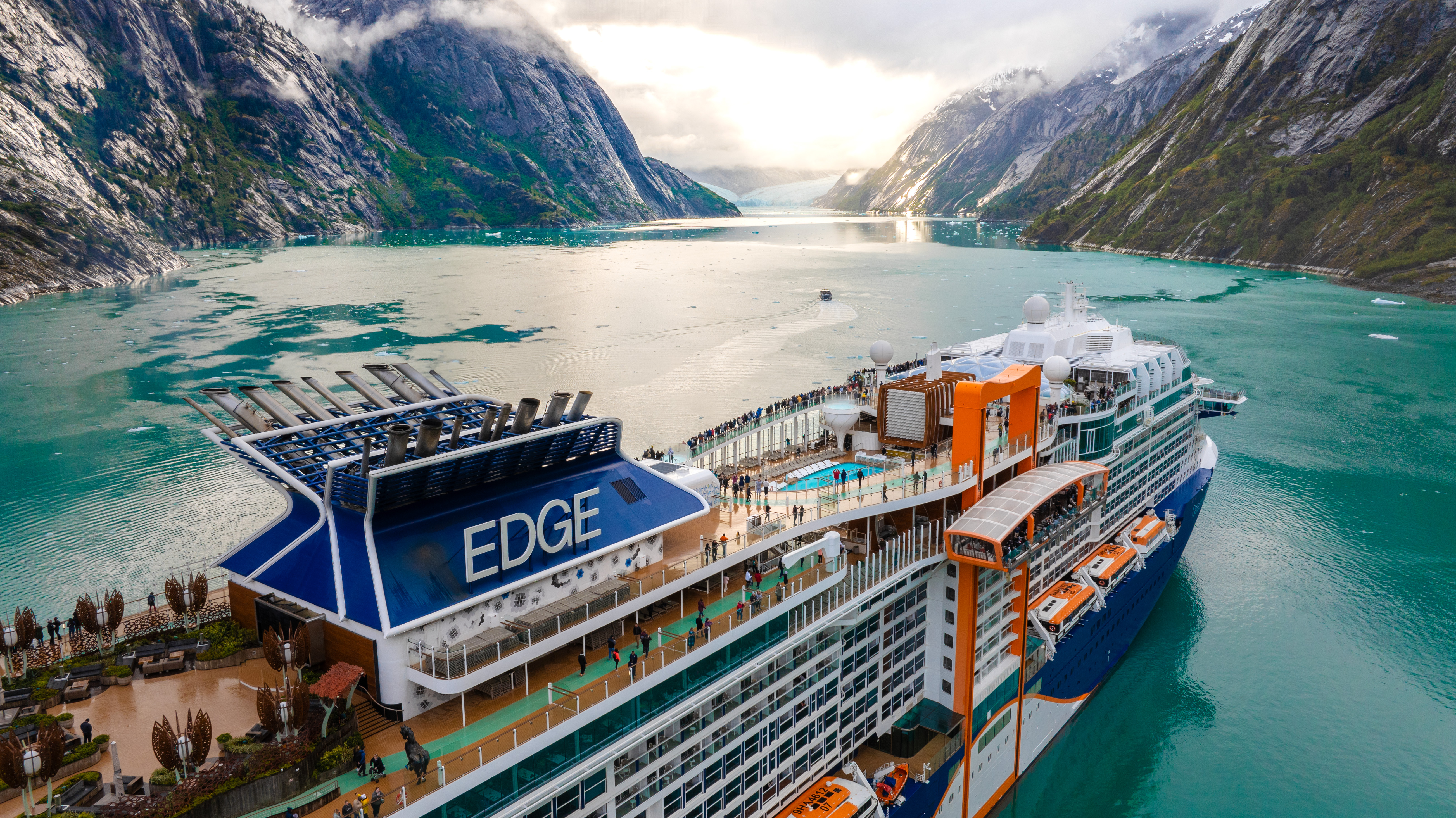
Six lines anchor this Alaska season, each with its own rhythm, from a quiet mid-size ship to a big-ship week with the family. Open any card for that line's ships, key specs, Alaska routes, and a schematic map of every itinerary it sails.

Smaller expedition and luxury options

Beyond the majors, a growing field of small ships sails Alaska with a different rhythm: fewer passengers, more time in the wilderness, and zodiac-led days at the waterline.

Lindblad Expeditions

Small-ship voyages with National Geographic, focused on wildlife and wilderness

UnCruise Adventures

Intimate expedition ships with kayak and zodiac-led days

Seabourn & Viking

Premium and luxury options that hold their own Glacier Bay access

Ports of call

Ten ports that make Alaska unforgettable.

Alaska itineraries mix small Southeast towns with big-city homeports. From the state capital to Icy Strait Point's zipline to the skylines of Vancouver and Seattle, here is what makes each stop worth the trip.

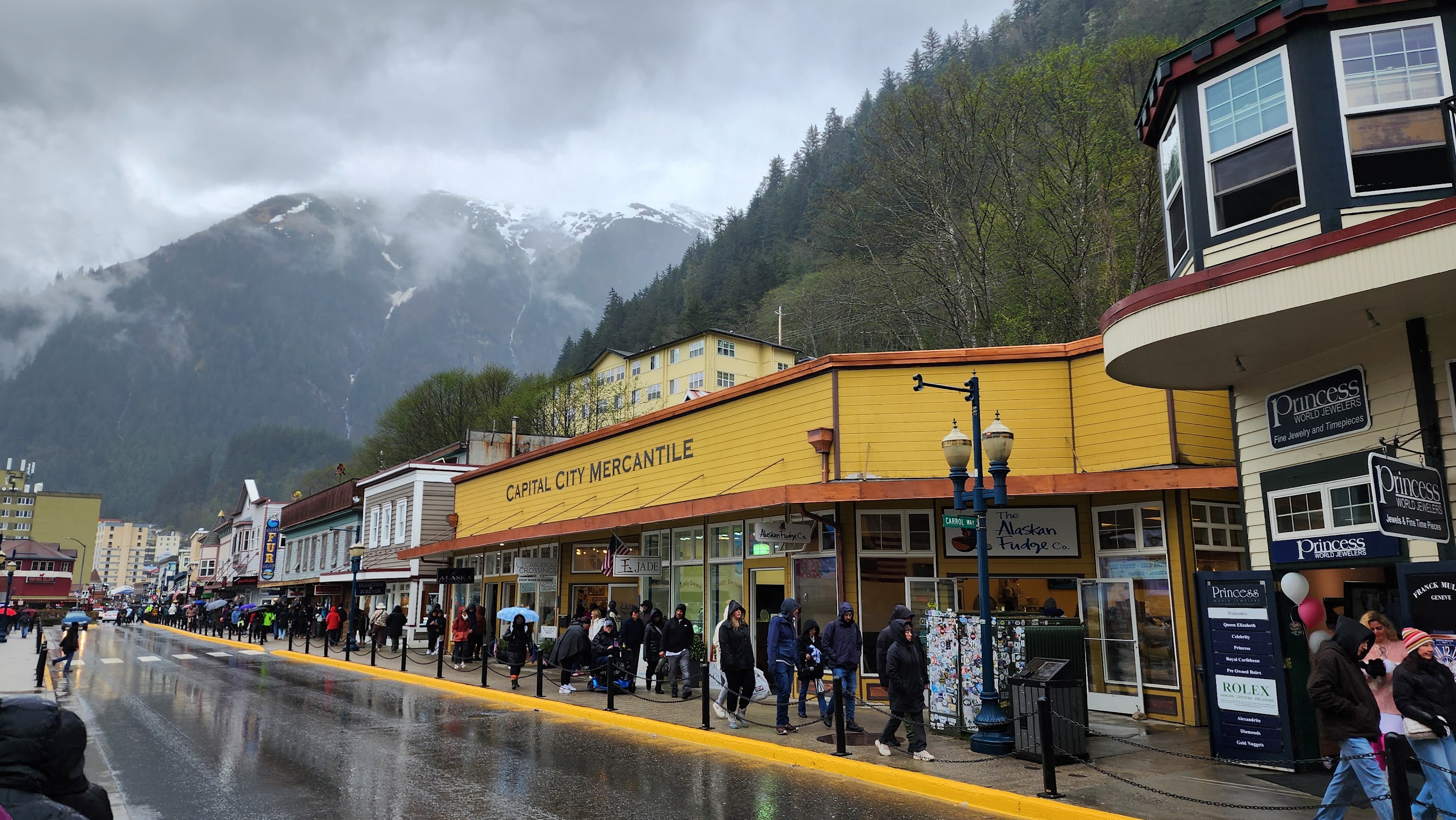
The waterfront and mountains of Juneau, Alaska

Juneau

Alaska's capital, reachable only by sea or air, with Mendenhall Glacier, whale-watching, and a walkable downtown waterfront as the headliners.

Port highlights

  • Mendenhall Glacier and Nugget Falls, a valley glacier about 12 miles from downtown and one of Alaska's most-visited natural sights.
  • Whale-watching in Stephens Passage and Favorite Channel, where humpback sightings exceed 90 percent at the peak of the season.
  • An easy stroll between the state capitol, the Gastineau Channel waterfront, and the floatplane docks that fly over the Juneau Icefield.

Interesting facts

  • Juneau is the only U.S. state capital, alongside Honolulu, that cannot be reached by road; everything arrives by air or ferry.
  • It has been Alaska's capital since 1906, when the territorial government moved here from Sitka.
  • More than 1.5 million cruise passengers visit in a typical season, docking right at the downtown waterfront.

Something not everyone knows

The city is named for Joe Juneau, a prospector who followed a local Tlingit chief, Kowee, to the gold that started the settlement in 1880. Before that hike, this waterfront was simply a Tlingit fish camp.
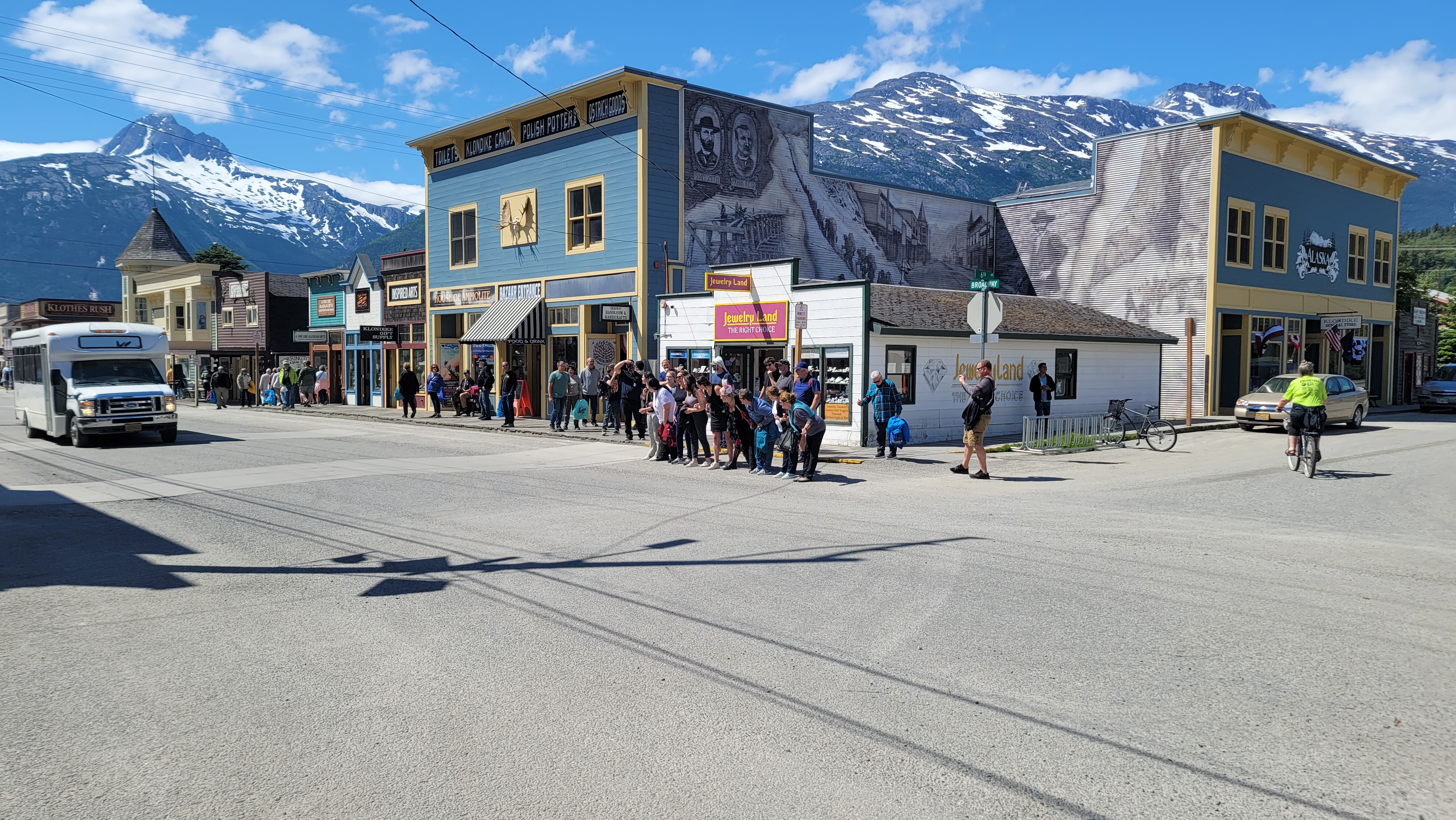
The frontier boardwalk streets of Skagway, Alaska

Skagway

A gold-rush town preserved in frontier style, and the gateway to one of cruising's great scenic rail journeys.

Port highlights

  • The White Pass & Yukon Route, a narrow-gauge railway that climbs from sea level to a 2,885-foot mountain pass and has been thrilling cruisers for over a century.
  • A walk through the Klondike Gold Rush national historic district, where downtown has kept its wooden boardwalks and false-front buildings.
  • The town's frontier saloons and the wonderfully shady story of Soapy Smith, the con man who once ran Skagway.

Interesting facts

  • At the height of the Klondike Gold Rush, Skagway swelled to roughly 10,000 people and was Alaska's largest city.
  • Today about 1,100 people live here year-round, yet more than a million visitors arrive in a single season.
  • The White Pass railroad was pushed through terrain engineers called impassable in barely more than two years, opening in July 1900.

Something not everyone knows

Soapy Smith's crew ran a fake telegraph office that charged stampeders for telegrams and then invented the replies. The nearest real telegraph connection was hundreds of miles away, so nobody could check.

Colorful buildings on pilings along Ketchikan Creek

Ketchikan

The salmon capital of the world: Creek Street's boardwalk on pilings, celebrated totem parks, and rainforest that makes it one of the wettest towns in North America.

Port highlights

  • Creek Street, a historic boardwalk of buildings raised on wooden pilings over Ketchikan Creek, now lined with shops, galleries, and breweries.
  • World-class totem viewing at Saxman Totem Park and Totem Bight State Park, part of the largest collection of standing totem poles on Earth.
  • Floatplane trips over Misty Fjords National Monument, plus salmon streams where the fish still run beneath your feet in summer.

Interesting facts

  • Ketchikan began in 1885 as a salmon cannery site and earned the title Salmon Capital of the World by the 1930s, when 13 canneries packed about 1.5 million cases a year.
  • All five species of Pacific salmon pass through these waters: king, sockeye, coho, pink, and chum.
  • The town averages roughly 150 to 165 inches of rain a year, among the highest totals in North America.

Something not everyone knows

During Prohibition, Creek Street's red-light district was served by a discreet wooded path called Married Man's Trail, so clients could come and go without being seen on the main boardwalk.

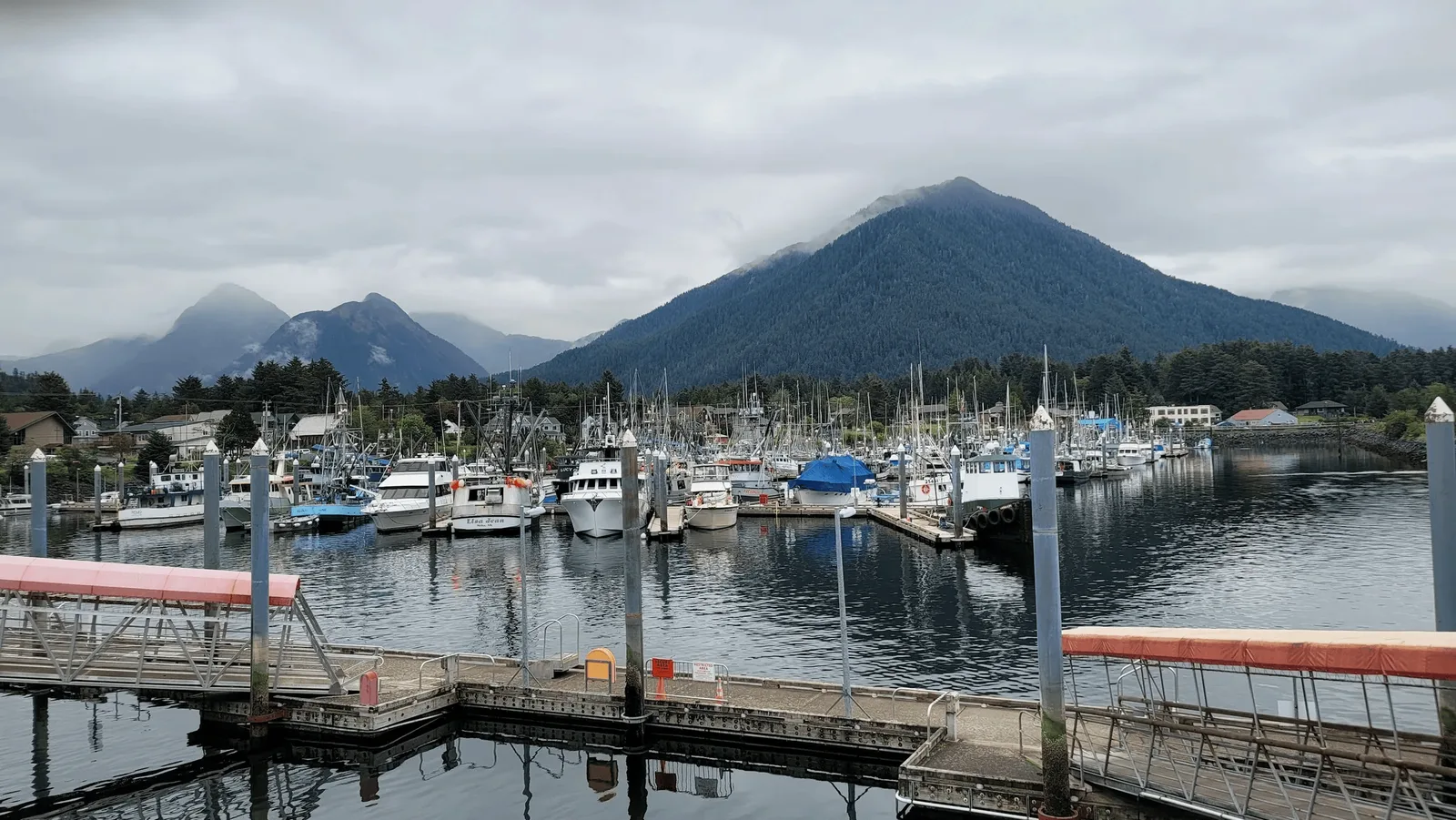
Boats in Crescent Harbor, Sitka, Alaska

Sitka

A seaside town that was once the capital of Russian America, where Alaska's history and a wild green rainforest meet the water.

Port highlights

  • Castle Hill, where the Russian flag was lowered and the American flag raised at the formal transfer of Alaska in 1867.
  • St. Michael's Cathedral, a faithful reconstruction of the first Orthodox cathedral in North America.
  • Sitka National Historical Park's totem trail through rainforest, plus the Alaska Raptor Center's rehabilitating bald eagles.

Interesting facts

  • Sitka was the capital of Russian America from 1799 to 1867, when it was known as New Archangel.
  • Ships often anchor in the harbor and tender passengers ashore, because the town has only a few deep-water berths.
  • It sits on Baranof Island with no road connection to the rest of Alaska; everything arrives by air or sea.

Something not everyone knows

When fire destroyed St. Michael's Cathedral in 1966, townspeople rushed in and saved most of the icons inside; the church was rebuilt as an exact replica and its treasures returned.

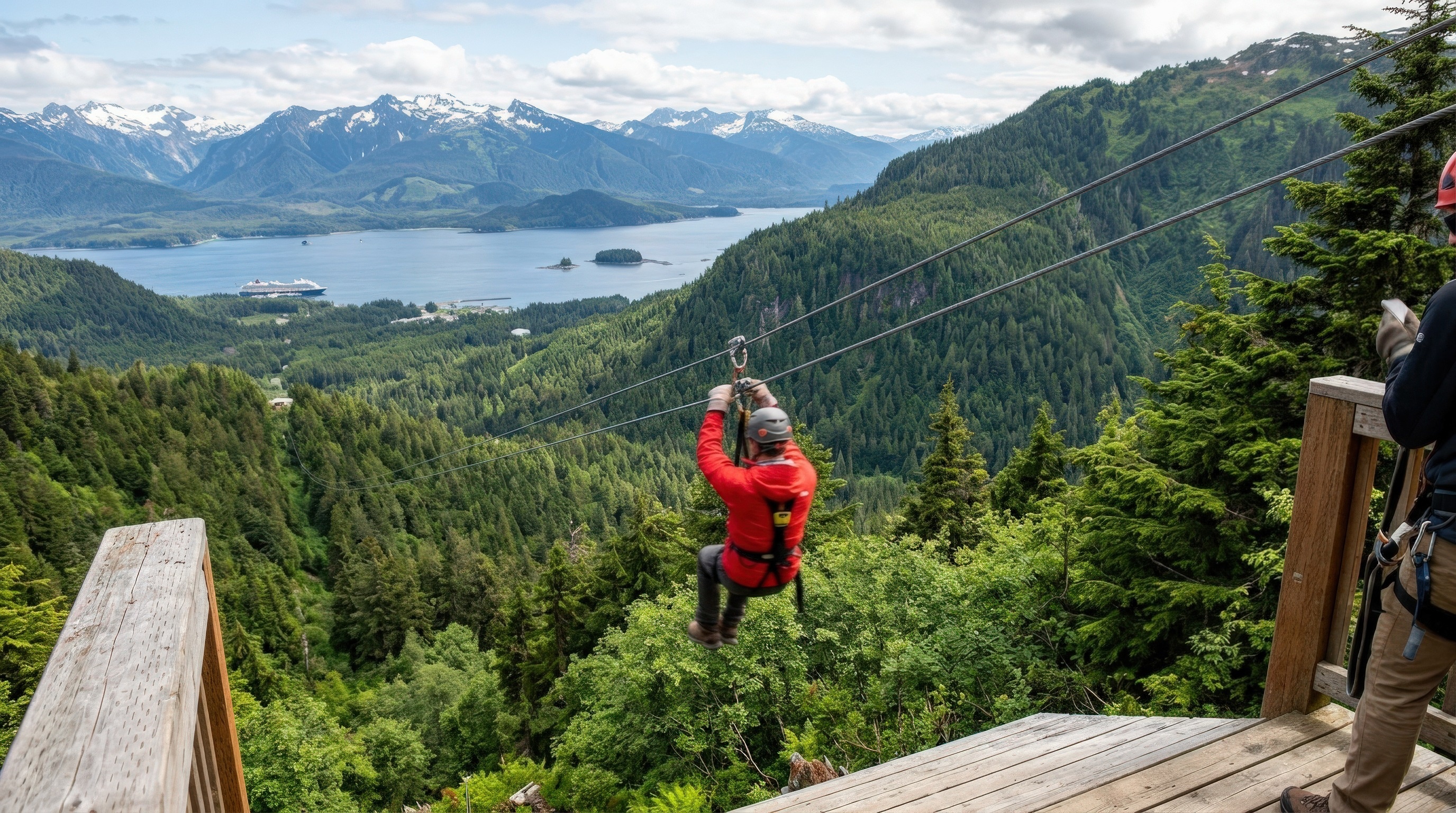
The ZipRider zipline at Icy Strait Point, Alaska

Icy Strait Point

A restored salmon cannery turned private cruise destination on Chichagof Island, owned by the Huna Tlingit people of Hoonah.

Port highlights

  • The ZipRider zipline, one of the longest and fastest in the world, with a 5,330-foot flight from Hoonah Mountain toward the beach.
  • The 1912 cannery turned museum, where a restored cannery line and boardwalk shops tell the story of Southeast Alaska's salmon industry.
  • Whale-watching in Icy Strait, a renowned humpback feeding ground, with Point Adolphus just across the water.

Interesting facts

  • Icy Strait Point is the only privately owned cruise destination in Alaska, opened in 2004 and developed by Huna Totem Corporation, the Alaska Native corporation of Hoonah.
  • Hoonah, a few minutes up the road, is the largest Tlingit village in Alaska.
  • The restored cannery dates to 1912, when Hoonah Packing Company began canning here; the last full canning year was 1953.

Something not everyone knows

The zipline's launch deck sits roughly 1,300 feet above sea level, higher than the Empire State Building, and six riders launch side by side at once.

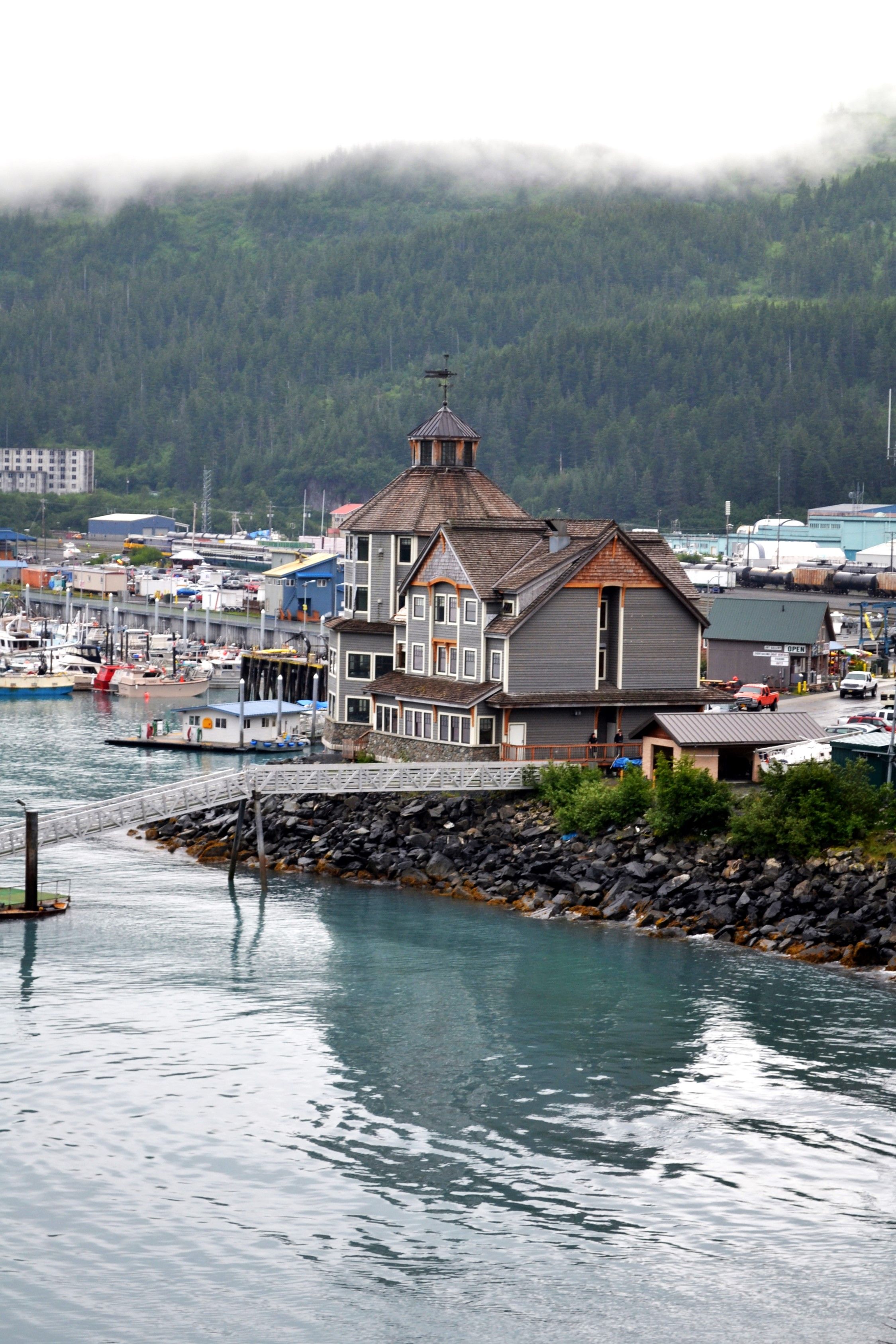
The harbor and mountains around Whittier, Alaska

Whittier

A quiet, often fog-wrapped port that serves as the gateway to Prince William Sound and the turnaround for many Gulf of Alaska cruises.

Port highlights

  • Glacier day cruises into Prince William Sound: College Fjord, Portage Glacier, and the celebrated routes that count 26 glaciers from one deck.
  • The Anton Anderson Memorial Tunnel, a 2.5-mile bore through the mountains that is an adventure in itself.
  • Begich Towers, the 14-story building where most of the town lives, works, and shops.

Interesting facts

  • Nearly all of Whittier's roughly 270 residents live in a single building, Begich Towers, which holds the post office, a small market, and the city offices.
  • The Anton Anderson Memorial Tunnel is the longest combined highway-and-railroad tunnel in North America, running one-way traffic on a schedule.
  • Whittier is the main turnaround port for one-way Gulf of Alaska cruises, about 60 miles from Anchorage.

Something not everyone knows

Whittier did not exist as a town until 1943, when the U.S. Army quietly built a supply port here, hidden by peaks and cloud cover. For the next 57 years, its only land link was the railroad tunnel.

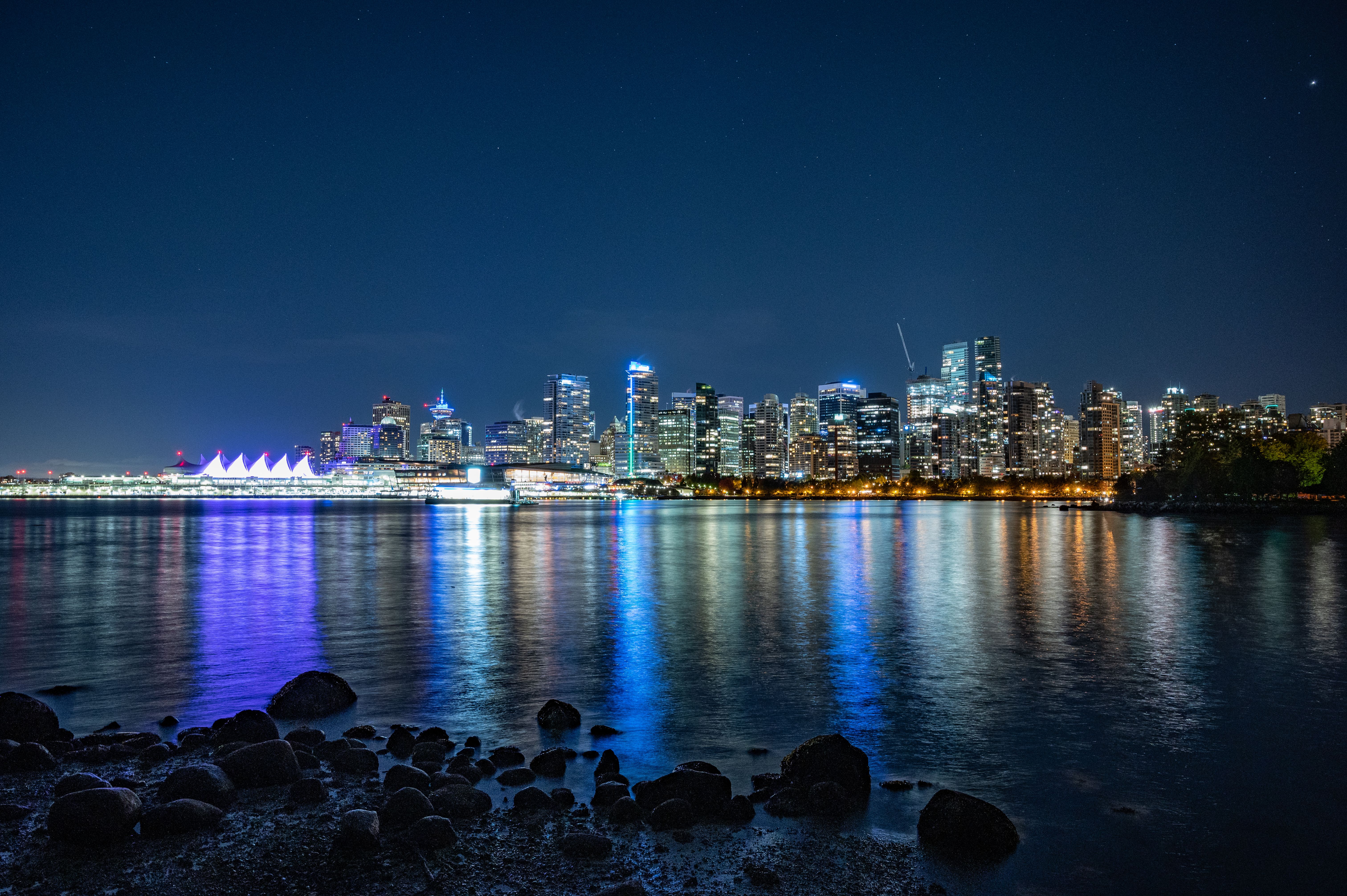
The skyline and waterfront of Vancouver, British Columbia

Vancouver

One of the great Alaska homeports and a gateway city in its own right: a glass-and-mountain skyline, Stanley Park's cedar rainforest, and a cruise terminal crowned by the white sails of Canada Place.

Port highlights

  • Canada Place, the white-sailed landmark on the downtown waterfront, where most Alaska voyages begin or end; at the peak of the season the terminal often hosts three ships at once.
  • Stanley Park's 400-hectare rainforest ringed by the Seawall, one of the easiest great urban nature escapes anywhere, minutes from the terminal.
  • Gastown's cobblestones and steam clock, Granville Island's public market, and lookout views over the harbour from the city's vantage points.

Interesting facts

  • Vancouver has been an Alaska cruise homeport for more than 30 years, sailing both round-trip Inside Passage voyages and one-way Gulf of Alaska routes.
  • Canada Place moves well over a million cruise passengers a year; in 2026 it set a record of roughly 1.4 million travelers across 358 ship calls.
  • U.S. cabotage law keeps many Seattle round-trips looping through a Canadian port, which is one reason Vancouver and Victoria appear on so many Alaska itineraries.

Something not everyone knows

Canada Place was built for Expo 86, the world's fair that put Vancouver on the map; the terminal's soaring white sails are actually the roof of the convention centre next door.

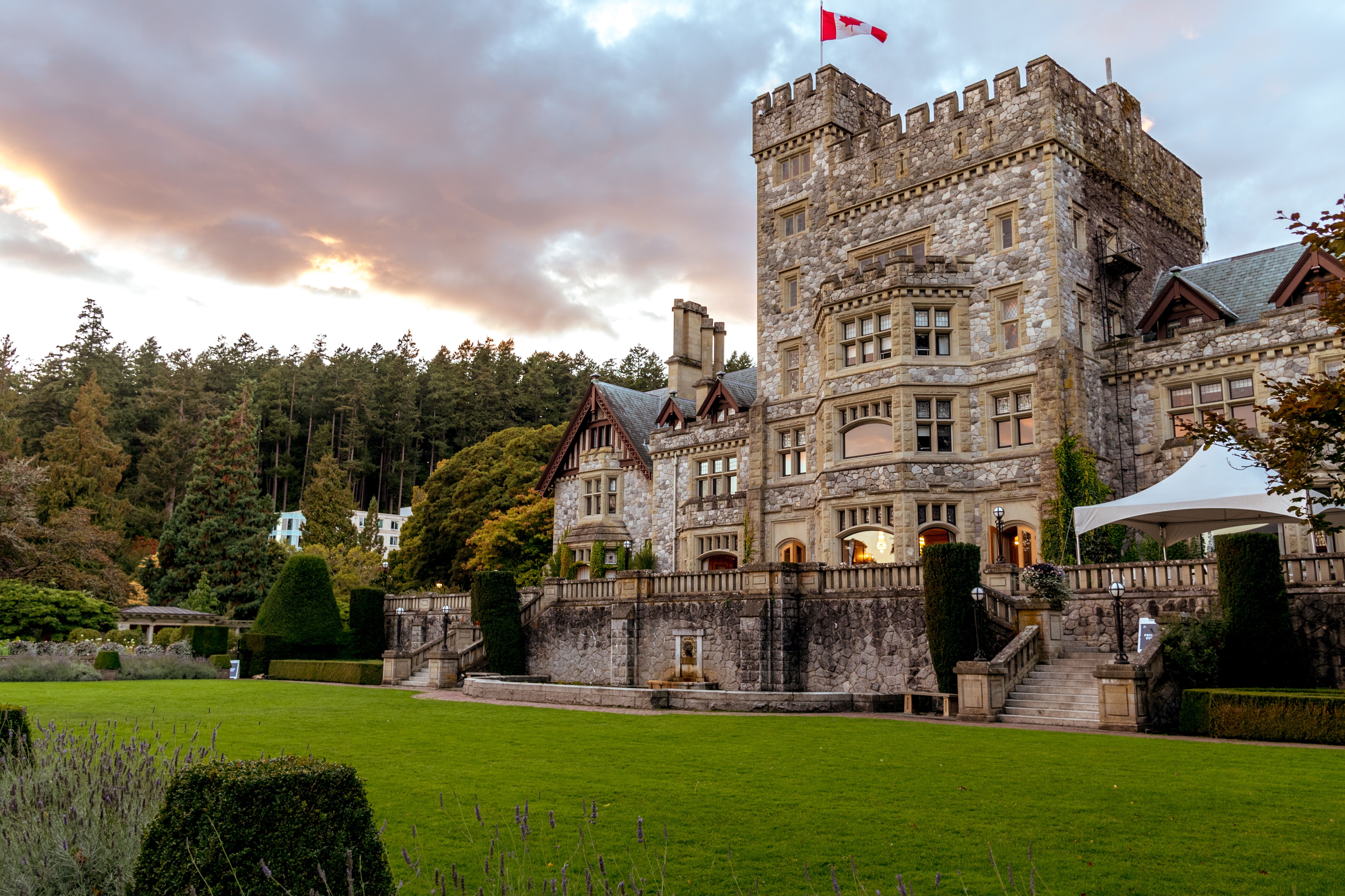
Hatley Castle at Royal Roads University, Victoria, British Columbia

Victoria

British Columbia's capital on the southern tip of Vancouver Island, and a favourite early- or late-season call on many Alaska round-trips.

Port highlights

  • The Inner Harbour's parade of landmarks: the ivy-clad Fairmont Empress, opened in 1908, the BC Parliament Buildings, and the Royal BC Museum, all walkable from the dock.
  • Butchart Gardens, the 55-acre National Historic Site in nearby Brentwood Bay, whose celebrated Sunken Garden fills the quarry of a family cement works.
  • Afternoon tea at the Empress, a Victoria ritual since 1908, and the little harbour ferries that dart across the Inner Harbour.

Interesting facts

  • Cruise ships berth at Ogden Point, a deep-water dock about two kilometres from the Inner Harbour, so Victoria is a walk-off port with no tendering.
  • Victoria is the busiest cruise port of call in Canada; the Greater Victoria Harbour Authority reported 316 vessel calls and roughly 970,000 cruise visitors in 2024.
  • Many Seattle round-trips call here on the way home to satisfy U.S. cabotage law, which is why the city often shows up as an evening stop on the return leg.

Something not everyone knows

The castle that stars in the X-Men films is Hatley Castle, built in 1908 for coal baron James Dunsmuir; it later served as a naval officers' training college and today anchors Royal Roads University.

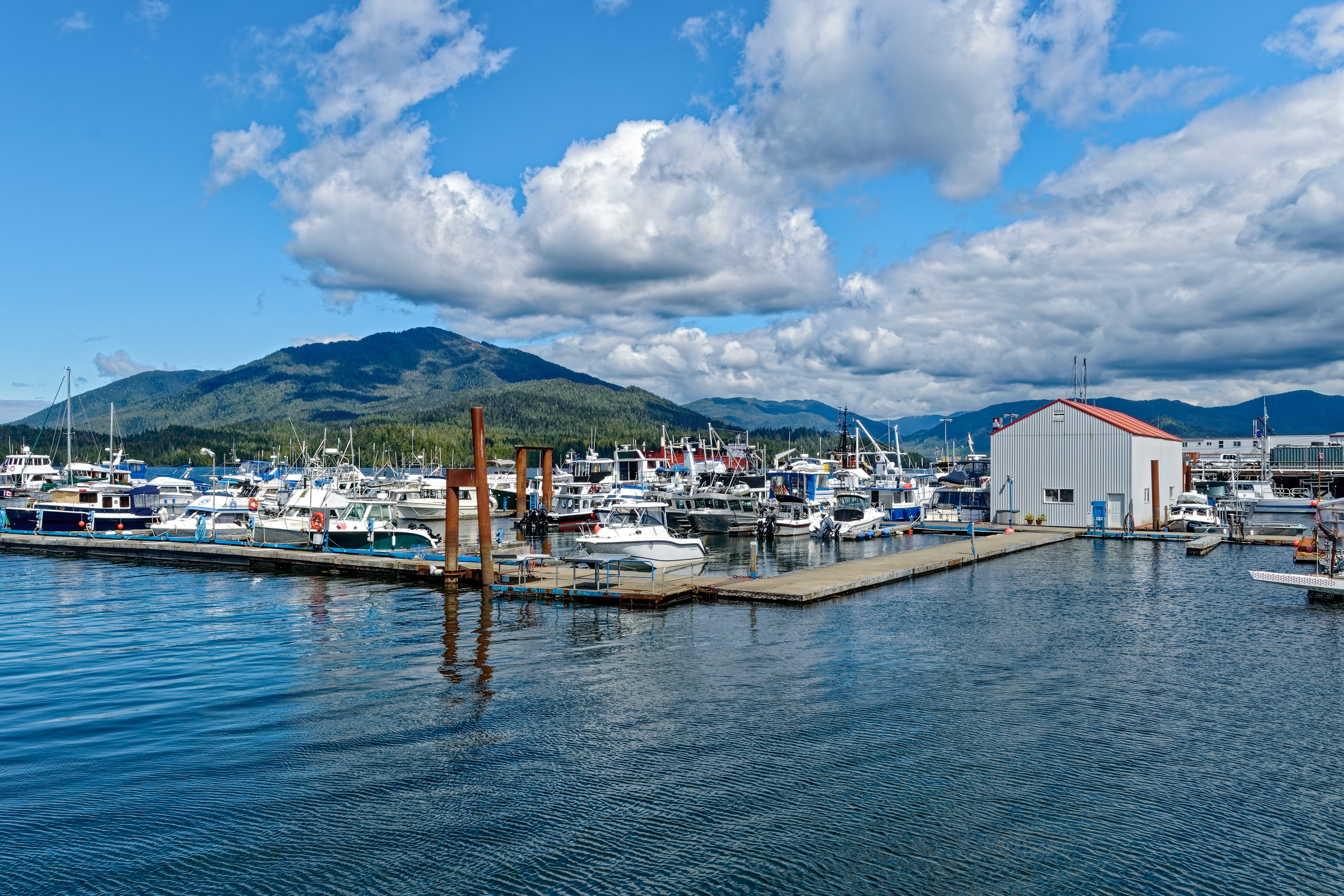
The working harbour and fishing boats at Prince Rupert, British Columbia

Prince Rupert

A small, scenic port on British Columbia's North Coast near the northern end of the Inside Passage, and a genuine off-the-beaten-path call: a working harbour, grizzly-bear wilderness, and a longhouse-shaped museum reached by ferry as well as cruise.

Port highlights

  • Khutzeymateen Grizzly Bear Sanctuary, Canada's first and only grizzly bear sanctuary, a protected inlet roughly 45 kilometres from the city and reachable only by boat or plane.
  • The working Rushbrook Harbour, a large small-craft and commercial fishing facility a short walk from downtown, from Cow Bay's seafood eateries, and from the whale-watching and fishing charters that leave from its floats.
  • The Museum of Northern BC, styled after a cedar longhouse, with Ts'msyen, Haida, and Nisga'a artifacts, totem poles, and a gallery of regional art.

Interesting facts

  • Prince Rupert sits on Kaien Island, about 64 kilometres south of the Alaska-Canada border, making it one of the northernmost Canadian ports of call on Inside Passage itineraries.
  • Ships berth at the Northland Cruise Terminal on the edge of downtown, so it is a walk-off port with no tendering.
  • The city is also the northern terminus of BC Ferries' famed Inside Passage route from Port Hardy on Vancouver Island.

Something not everyone knows

Cow Bay was once called Cameron Cove; it was renamed after a dairy opened there in 1908, and the district still keeps the cow theme today, from painted bollards to the shop fronts that line the docks.

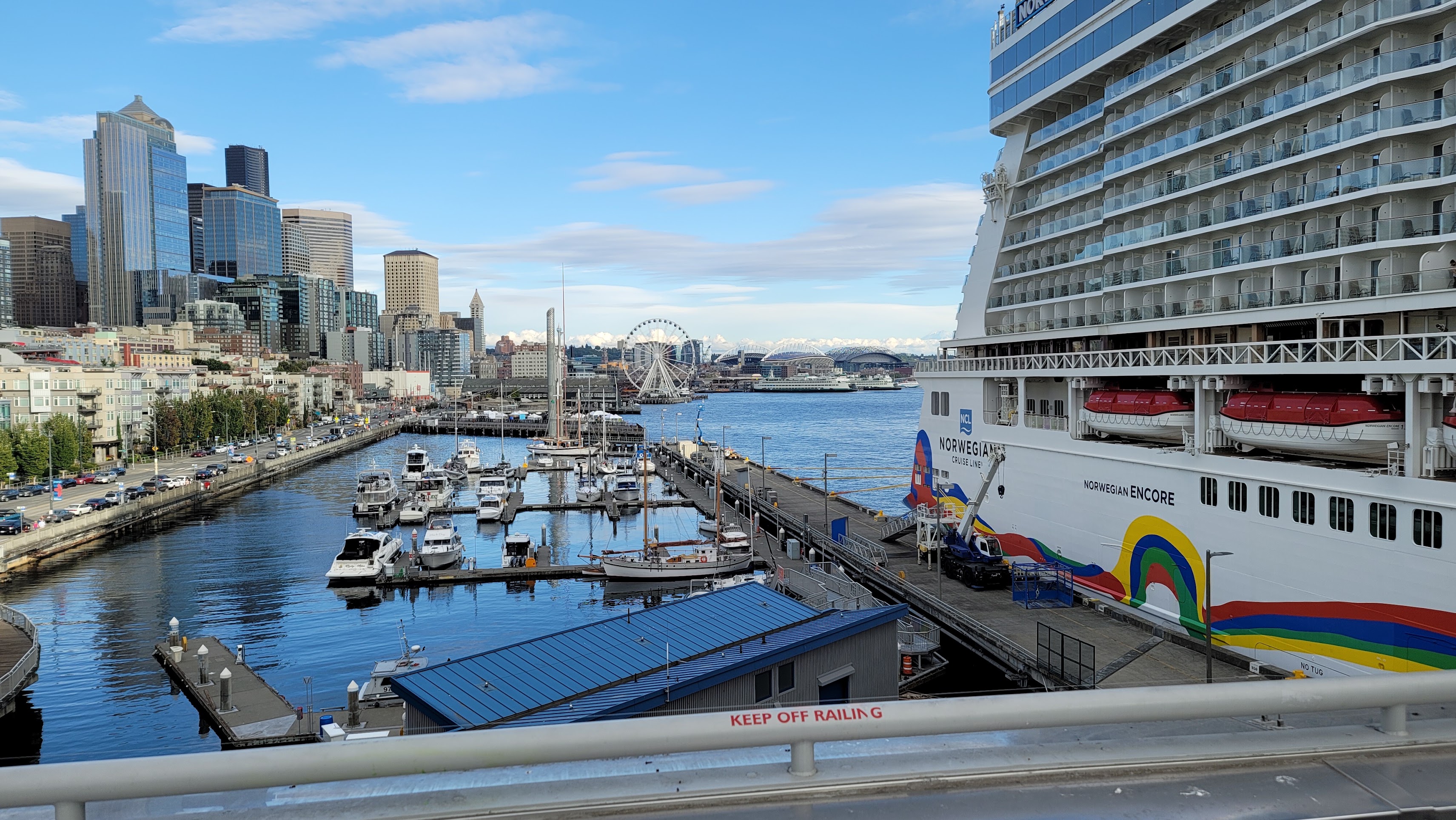
The Seattle skyline with the Space Needle and the waterfront

Seattle

The biggest U.S. gateway to Alaska, where the Space Needle frames a working waterfront and more than two million cruise passengers board each season.

Port highlights

  • Pike Place Market's fish throw and food stalls, a short walk from the Bell Street pier where Norwegian and Oceania ships are homeported.
  • The Space Needle and Seattle Center, built for the 1962 World's Fair, with the Chihuly Garden and Glass exhibition at its base.
  • Ferry rides across Elliott Bay and the waterfront's Great Wheel for post-cruise views of the skyline, and of Mount Rainier on clear days.

Interesting facts

  • Seattle runs two Alaska cruise terminals: Pier 66 at Bell Street and the larger Pier 91 at Smith Cove, serving a season that runs roughly April through October.
  • In 2026 the port set records with 330 vessel calls and about 2.1 million revenue passengers, including brand-new Alaska seasons for MSC Cruises and Virgin Voyages from Seattle.
  • Most of the big-ship lines homeport here, from Carnival, Celebrity, and Princess to Holland America, Royal Caribbean, Cunard, and Norwegian.

Something not everyone knows

Pier 66 opened in the year 2000, and Norwegian Cruise Line was the first line to homeport a ship there; Alaska cruising from Seattle has since grown into a two-million-passenger season.

Sea days

Sea Days Glacier Watching.

Some of Alaska's most spectacular scenery never involves a port call. On glacier-viewing days the ship slows to a crawl, the captain narrates over the public address system, and passengers trade the lounges for the outer decks. These are the days to dress in layers, stake out a rail position early, and let the ice put on the show.

A tidewater glacier at the head of Tracy Arm fjord

Tracy Arm

Not a town at all, but one of the most dramatic scenic-cruising days in Alaska: a narrow fjord that ends at the twin Sawyer Glaciers.

Sea day note

Tracy Arm is sailed, not docked: the ship threads the narrow fjord at slow speed past waterfalls and drifting icebergs, pauses at the Sawyer Glaciers, and turns around. The captain's narration marks the highlights, and the best rail positions go early, so bring gloves, a hat, and a warm layer even in August.

Port highlights

  • A day of scenic cruising through a fjord walled by sheer granite cliffs that rise as much as 3,000 feet from the water.
  • The twin Sawyer Glaciers, where ice calves directly into the water and harbor seals haul out on drifting icebergs.
  • Waterfalls, mountain goats on the cliffs, and some of Alaska's largest and bluest icebergs, colored a signature electric blue.

Interesting facts

  • The fjord runs more than 30 miles from Stephens Passage to the glacier face, staying under a mile wide for most of its length.
  • It is named for Benjamin F. Tracy, U.S. Secretary of the Navy in the late 1800s.
  • There is no dock: ships cruise in, pause at the ice, and turn around, spending four to six hours inside the fjord.

Something not everyone knows

The water at the glacier face is nearly 600 feet deep, so most calved ice stays submerged until it rolls to the surface. That is why the icebergs here surface so huge and so blue.

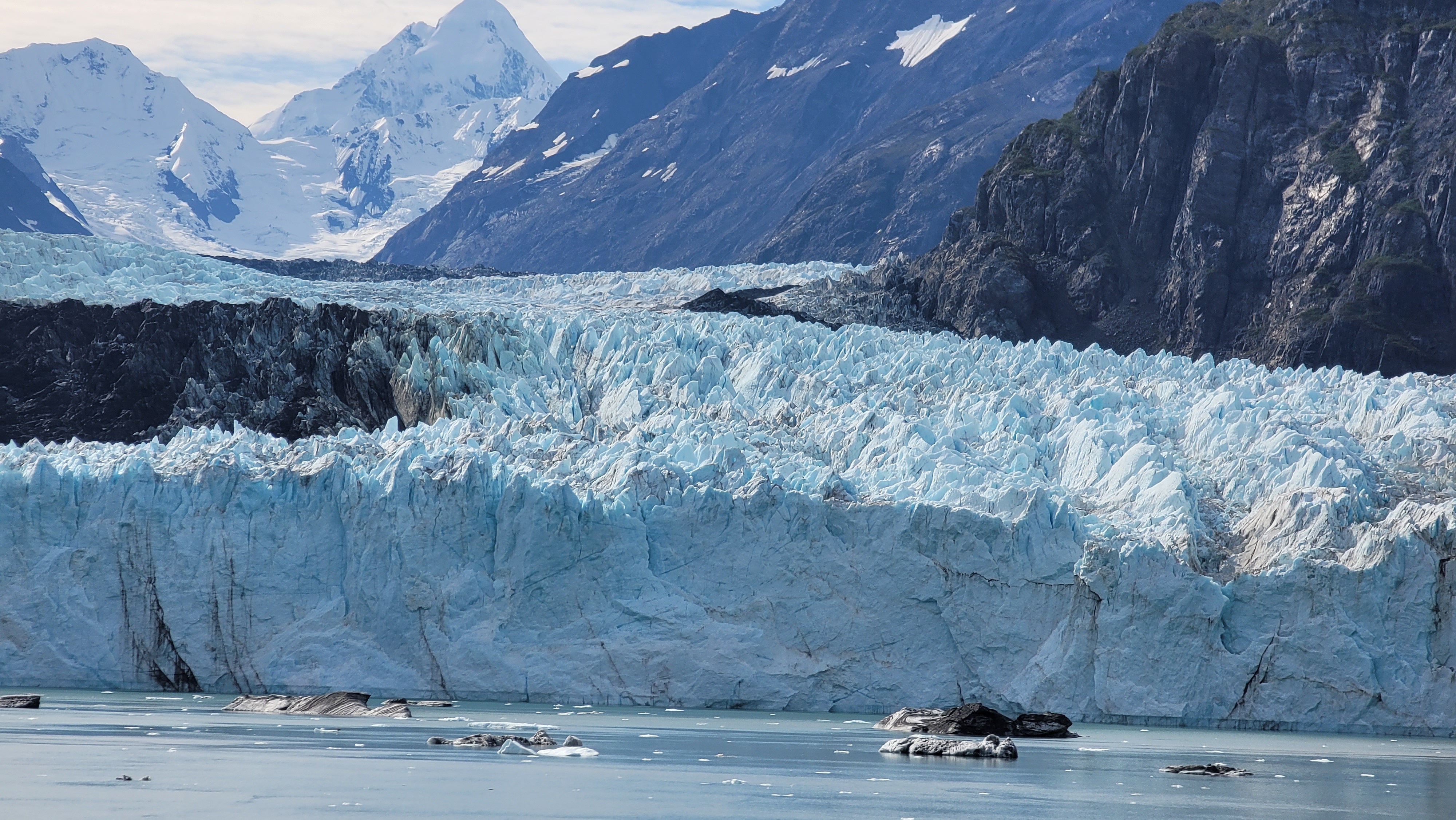
Margerie Glacier in Glacier Bay National Park, Alaska

Glacier Bay

A national park and preserve where the ice, not a town, is the destination: ships spend a full day inside the bay, far from any dock.

Sea day note

On Glacier Bay day, claim a spot on the bow or an open deck early. The captain slows the ship as Margerie comes into view, and the rangers' commentary keeps the whole day on the forward decks. Dress in layers; the air near the ice stays cold even at the height of summer.

Port highlights

  • Margerie Glacier, the park's most celebrated tidewater face, where ships linger so passengers can watch ice calve into Tarr Inlet.
  • National Park Service rangers who board each ship to narrate the bay, staff an information desk, and point out wildlife along the way.
  • Wildlife-rich waters: humpback and killer whales, sea otters, and Steller sea lions are common sights on the run up the bay.

Interesting facts

  • Cruise-ship entries are strictly limited, with a daily vessel quota of two and a seasonal quota set by the park's vessel management plan.
  • Glacier Bay became a national monument in 1925 and is part of a transboundary UNESCO World Heritage site shared with Wrangell-St. Elias and Canada's Kluane parks.
  • Ships never dock here; a Glacier Bay day is nine to ten hours of scenic cruising, with no shore excursions on park land.

Something not everyone knows

Margerie Glacier flows roughly 2,000 feet a year, fast for a glacier, and its ice face stands about 200 feet above the waterline while reaching a similar distance below it.

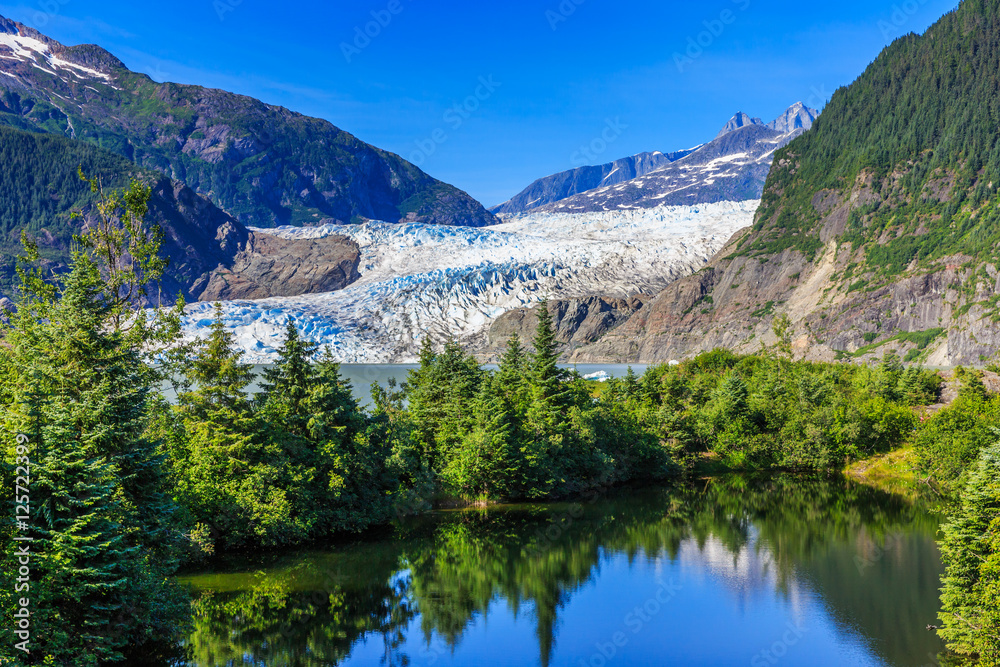
Mendenhall Glacier, Alaska

Mendenhall Glacier

Alaska's most visitor-friendly glacier: a valley glacier about 13 miles long that spills from the Juneau Icefield toward Mendenhall Lake, reachable by road from the state capital.

Sea day note

Mendenhall is a port-day excursion from Juneau rather than a sea-day viewing: plan a shore tour or take a shuttle the roughly 13 miles from downtown. Dress for the rainforest drizzle and bring a warm layer; the air beside the ice stays cool even under bright sun.

Port highlights

  • Nugget Falls, the 377-foot waterfall that pours into Mendenhall Lake beside the glacier's face.
  • The Mendenhall Glacier Visitor Center, the first interpretive center in the U.S. National Forest System, with floor-to-ceiling glacier views since it opened in 1962.
  • Lakeshore trails and the chance to watch icebergs drift across Mendenhall Lake, with the glacier's blue face towering above.

Interesting facts

  • It is the only glacier in Southeast Alaska you can reach by paved road, about 12 miles from downtown Juneau.
  • The glacier has retreated roughly 1.75 miles since 1929, when Mendenhall Lake formed as the ice pulled back.
  • The visitor center sits in the Tongass National Forest, the largest national forest in the United States, which blankets most of Southeast Alaska.

Something not everyone knows

In late 2025, for the first time in recorded history, the glacier's face pulled back from Mendenhall Lake, a reminder of how quickly this landscape is changing.

Hubbard Glacier, Alaska

Hubbard Glacier

A wall of ice at the head of Disenchantment Bay near Yakutat, and the largest tidewater glacier on the continent: ships stop and drift so you can watch it calve.

Sea day note

Hubbard is a scenic-cruising day: the ship turns on the bay and holds position near the face, often for an hour or more, while the captain keeps the bow angled for the best view. Announcements call you out whenever ice calves. Go up in layers, gloves included, and choose your rail position early.

Port highlights

  • The glacier's roughly six-mile-wide face, where icebergs as tall as buildings break away with a sound like thunder.
  • Disenchantment Bay's floating ice garden, with seals hauled out on bergs and black-legged kittiwakes wheeling overhead.
  • Rare bragging-rights scenery: Hubbard sits outside Glacier Bay's permit system, so it appears on many itineraries that missed a Glacier Bay allocation.

Interesting facts

  • Hubbard is roughly 76 miles long and the largest calving glacier in North America, about a quarter larger than the state of Rhode Island.
  • Unlike most Alaskan glaciers, it has been advancing for more than a century, since at least 1895, thickening even as its neighbours retreat.
  • It lies in Wrangell-St. Elias National Park and Preserve country, beside the small community of Yakutat.

Something not everyone knows

In 2002 the advancing ice briefly dammed Russell Fiord, trapping a lake that rose about 15 metres before the moraine dam gave way in August, releasing about 3 billion cubic metres of water in roughly 30 hours.

Planning advice

Costs, cabins, and packing for Alaska.

Alaska fares generally run higher than Caribbean sailings of similar length, because the season is short and the region is expensive to operate in. Book early for the widest choice of cabins and glacier-viewing itineraries.

A balcony cabin is the classic Alaska splurge: glacier days are spent on deck, and having a private view makes them effortless. Oceanview cabins are the value pick on the same routes.

Pack layers, not just sunscreen. A waterproof shell, a warm mid-layer, and comfortable base layers handle a single day that swings from sun to drizzle to a glacier breeze.

Consider a cruisetour: Princess and Holland America pair their ships with Denali-area lodges and rail tours, and Canadian Rockies extensions via the Rocky Mountaineer add Banff and Jasper to the same vacation.

Your Destination Engineer can tailor every choice, from which glacier day matters most to you, to the right cabin and the right shore excursions for your group. Planning is always complimentary.

Featured offers

Current deals, checked for you.

Alaska fares and promotions change through the season. Our team tracks the offers that matter and can match them to your dates.

Personal travel planning

Plan a Trip.

This guide gives you the ideas; the best vacation starts with a conversation. Tell us who is traveling, when you would like to go, and how you prefer to travel, and we will shape every detail around you.

  • No obligation and no planning fees. A travel advisor will follow up with you to plan a personalized vacation.
  • A dedicated travel advisor, not a call center.
  • Itineraries, lines, hotels, and excursions chosen and booked for you.

Tell us about the trip you have in mind

Travel style

No obligation and no planning fees. A travel advisor will follow up with you to plan a personalized vacation.

Ready to see Alaska by sea?

Tell us who is traveling and what a dream Alaska day looks like, and a Destination Engineer will match you to the right itinerary, line, and cabin, at no cost and with no obligation to book.

Request a personalized quote