The Caribbean is cruising\'s home turf: warm water, short flights from the United
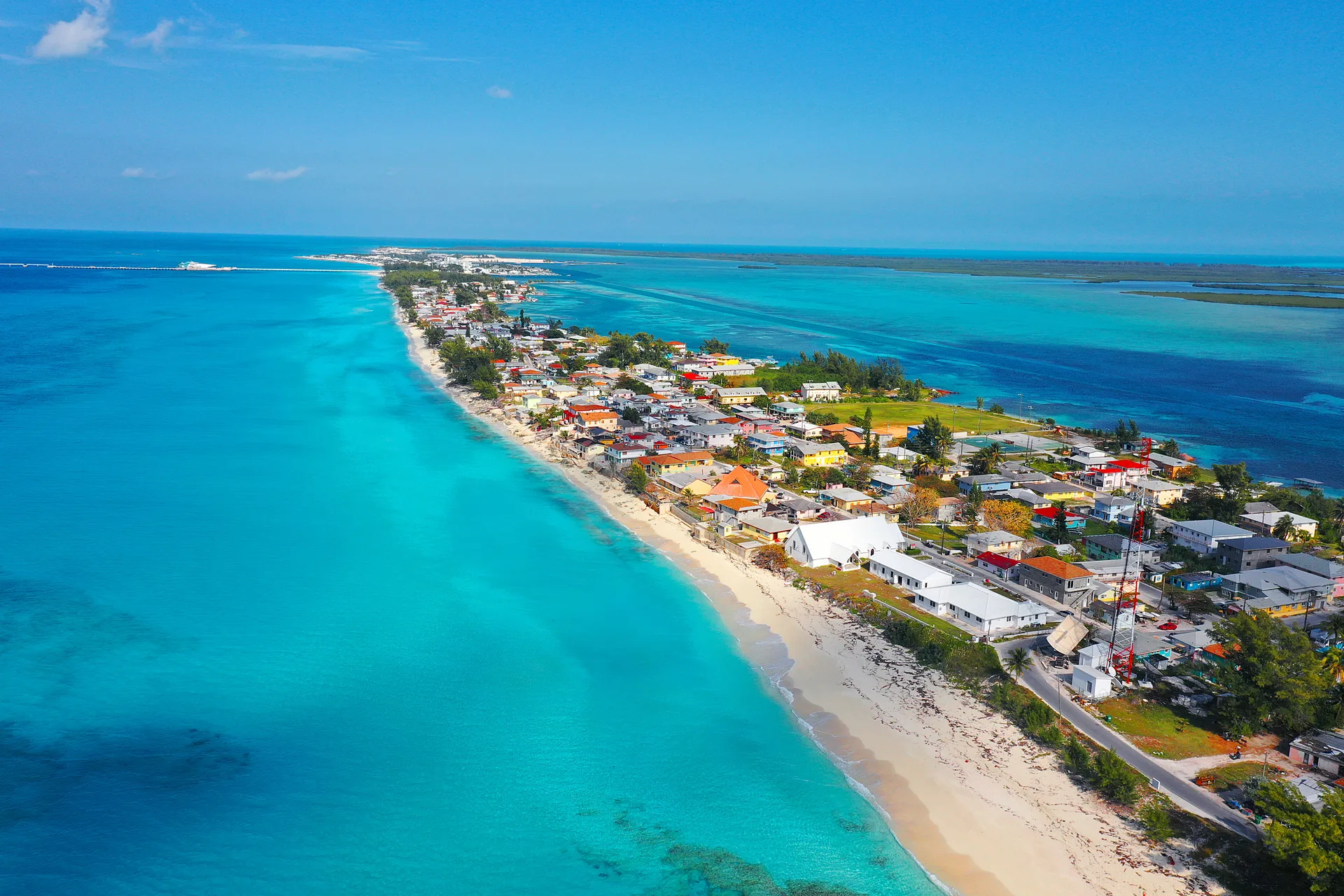
States, and a port almost every morning. It is where most first-time cruisers
begin, and where seasoned travelers return year after year.
The region divides into a few classic routes, each with its own personality. The
Eastern route is the beach-forward first cruise; the Western route packs in ruins,
reefs, and lively ports; the longer Southern route reaches the Dutch ABC islands
and beyond. This guide sorts out the routes, the ports, and the best time to go.
Best time to visit
Year-round sailing, with a sweet spot in winter.
The Caribbean sails every month of the year. Mid-December through April is the
classic peak: drier, calmer weather and the lowest hurricane risk, with higher
fares and fuller ships to match.
Hurricane season officially runs June 1 through November 30, with September and
October the most active stretch. Fares are at their lowest then, and modern
weather tracking lets lines reroute around storms rather than cancel.
The shoulder months of late November and early May balance good weather, smaller
crowds, and better value, which makes them a favorite for repeat cruisers.
Cruise itineraries
Eastern, Western, or Southern?
Most Caribbean cruises leave from Miami, Fort Lauderdale, or Port Canaveral and
follow one of three shapes. Here is how to choose.
01
Eastern Caribbean
Best for first-timers and beach lovers
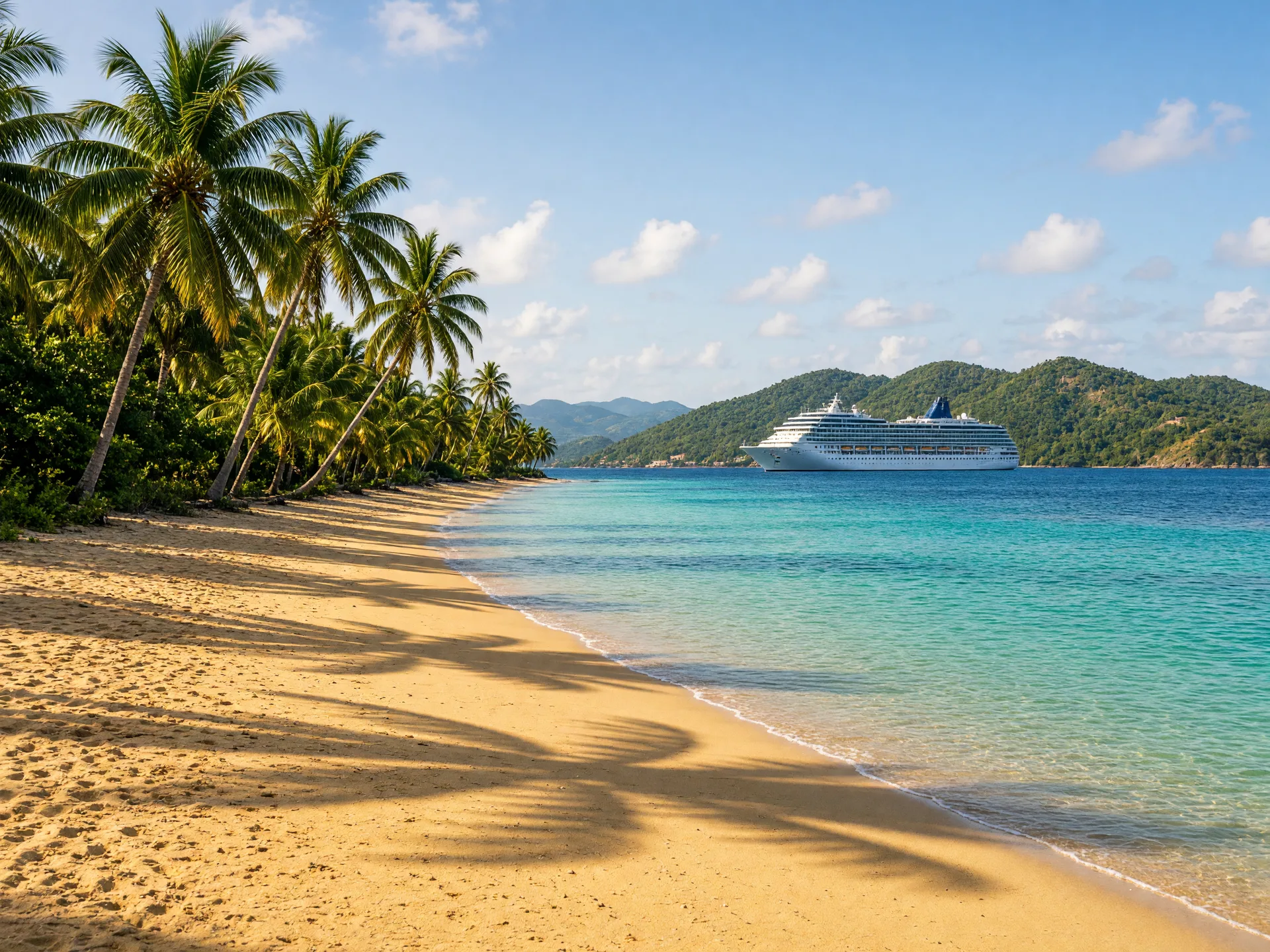
The Eastern route is the region's most straightforward first cruise: a steady string of island ports with some of the Caribbean's most celebrated beaches, easy shore days, and a relaxed pace. Ports typically include the Bahamas, St. Thomas, St. Maarten, San Juan, and Grand Turk on a 7-night loop.
Best for
First-time cruisers and beach lovers who want a classic, sun-soaked first voyage.
02
Western Caribbean
Best for active travelers, divers, and history
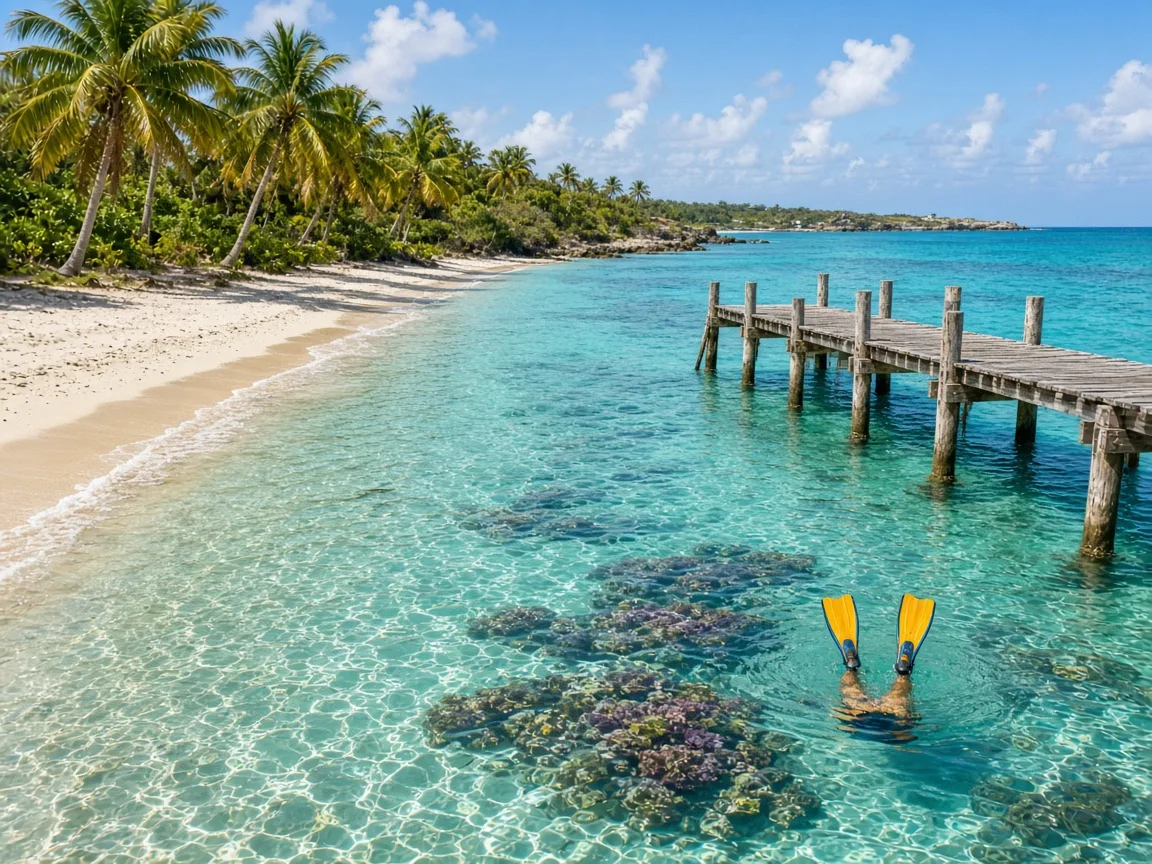
The Western route trades beach-idle days for a fuller menu: Mayan ruins, reef snorkeling and diving, jungle, and the lively ports of Mexico, the Caymans, and Jamaica. It also carries some of the most sailings and the region's most accessible fares, which is why it fits so many first and repeat cruisers.
Best for
Active travelers, history buffs, and divers and snorkelers who want more to do in port.
A third style, the Southern Caribbean, sails longer 10 to 14-night voyages out to the
Dutch ABC islands of Aruba, Bonaire, and Curaçao and beyond. It rewards
travelers who want more sea days and a richer sense of distance.
Cruise lines
Every major line sails here.
Nearly every major line runs Caribbean itineraries year-round from Florida. The
choice comes down to ship size, onboard style, and price point. Open a card for
that line's ships, routes, and maps, or for a side-by-side comparison.
Every Royal Caribbean, Carnival, Celebrity, Disney, Virgin Voyages, and Viking Caribbean port on one true map. Zoom in, pan, and filter by cruise line, ship, or itinerary; click a pin to jump to the ship or the full port card.
N
Miami
Port Canaveral
Cape Liberty
Nassau
CocoCay
St. Thomas
St. Maarten
St. Kitts
Antigua
Martinique
St. Lucia
Barbados
San Juan
Cozumel
Roatán
Costa Maya
Labadee
Falmouth
George Town
Belize City
Puerto Plata
Samaná
Grand Turk
Grand Bahama
Roseau
St. Croix
Tampa
Galveston
Fort Lauderdale
Oranjestad, Aruba
Willemstad, Curaçao
Kralendijk, Bonaire
Celebration Key
Half Moon Cay
Amber Cove
Montego Bay
Progreso
Princess Cays
New Orleans
Baltimore
Jacksonville
Key West
Bimini
Tortola
Colón, Panama
Cartagena, Colombia
St. George's, Grenada
Castaway Cay
Lookout Cay at Lighthouse Point
Ocho Rios
Puerto Limón
Îles du Salut
Santarém
Parintins
Manaus
Belém
Scarborough, Tobago
7 Night Western Caribbean
7 Night Eastern Caribbean
Bahamas & Perfect Day
9 Night Bahamas & Florida
7 Night Eastern Caribbean (St. Thomas & San Juan)
7 Night Eastern Caribbean (Nassau, Grand Turk & Amber Cove)
7 Night Western Caribbean
6 Night Eastern Caribbean
6 Night Western Caribbean
8 Night Eastern Caribbean
8 Night Southern Caribbean
6 Day Western Caribbean
6 Day Eastern Caribbean
8 Day Southern Caribbean
4 Day Bahamas
5 Day Bahamas
7 Night Puerto Plata & St. Maarten
7 Night Bahamas, Mexico & Cayman
4-Night Fire & Sunset Soirées from Miami
4-Night Fire & Sunset Soirées with Nassau from Miami
5-Night Mayan Sol from Miami
5-Night Riviera Maya from Miami
5-Night Dominican Daze from Miami
5-Night Grand Turk & Bimini Beach Club from Miami
5-Night Grand Cayman & Bimini Beach Club from Miami
5-Night Bimini Breeze (Jamaica) from Miami
4-Night Bahamas & Bimini Beach Club from Miami
6-Night Western Caribbean & Bimini Beach Club from Miami
6-Night Eastern Caribbean & Bimini Beach Club from Miami
5-Night Dominican Daze from Miami
10-Night Eastern Caribbean & Bimini Beach Club from Miami
4-Night Fire & Sunset Soirées from Miami
7 Night Eastern Caribbean & Perfect Day (St. Kitts)
7 Night Western Caribbean & Perfect Day
Bahamas & Perfect Day
7 Night Eastern Caribbean & Perfect Day
11 Night Orlando & Caribbean
7 Night Bahamas
4 Night Eastern Caribbean
5 Night Eastern & Western Caribbean
7 Night Eastern Caribbean Holiday
8 Night Eastern Caribbean & Perfect Day
7 Night Eastern Caribbean
7 Night Western Caribbean
8 Night Southern Caribbean
5 Night Bahamas
4 Night Bahamas
7 Night Key West, Mexico & Cayman
3 Night Bahamas
4 Night Bahamas (Nassau & Castaway Cay)
4 Night Bahamas (Castaway Cay & Lookout Cay)
7 Night Eastern Caribbean
7 Night Western Caribbean
4 Night Bahamas (Castaway Cay & Lookout Cay)
5 Night Bahamas
5 Night Western Caribbean
11-12 Night Southern Caribbean
7 Night Bahamas
8 Night Bahamas
7 Night Bahamas
9 Night Bahamas & Florida
Bahamas & Perfect Day
Bahamas & Perfect Day
7 Night Bahamas
8 Night Bahamas
7 Night Bahamas
9 Night Bahamas & Florida
3-4 Night Bahamas Getaway
6 Night Western Caribbean & Perfect Day
4 Night Eastern Caribbean
5 Night Eastern & Western Caribbean
7 Night Eastern Caribbean
7 Night Eastern Caribbean (Nassau, Grand Turk & Amber Cove)
8 Night Bahamas
4 Day Bahamas
5 Day Bahamas
7 Night Bahamas
5 Night Bahamas
5 Day Bahamas
4 Day Bahamas
7 Night Bahamas, Mexico & Cayman
7 Night Grand Cayman, Mexico & Bahamas
3 Night Bahamas Getaway
7 Night Grand Turk, Bahamas & Key West
7 Night Key West & Bahamas
3 Night Bahamas
4 Night Bahamas (Nassau & Castaway Cay)
5 Night Bahamas
4 Night Bahamas
5 Night Bahamas
7 Night Western Caribbean
5 Night Bahamas
7 Night Bahamas
4-Night Fire & Sunset Soirées with Nassau from Miami
4-Night Bahamas & Bimini Beach Club from Miami
7 Night Western Caribbean
7 Night Western Caribbean (from Galveston, 2027-28)
7 Night Eastern Caribbean & Perfect Day (St. Kitts)
7 Night Western Caribbean & Perfect Day
Bahamas & Perfect Day
Bahamas & Perfect Day
7 Night Eastern Caribbean & Perfect Day
11 Night Orlando & Caribbean
7 Night Bahamas
8 Night Bahamas
7 Night Bahamas
9 Night Bahamas & Florida
3-4 Night Bahamas Getaway
6 Night Western Caribbean & Perfect Day
4 Night Eastern Caribbean
5 Night Eastern & Western Caribbean
8 Night Eastern Caribbean & Perfect Day
4 Night Key West & Perfect Day at CocoCay
4 Night Bahamas & Perfect Day at CocoCay
7 Night Eastern Caribbean & Perfect Day (St. Kitts)
7 Night Eastern Caribbean & Perfect Day
11 Night Orlando & Caribbean
8 Night Eastern Caribbean & Perfect Day
7 Night Eastern Caribbean (St. Thomas & San Juan)
8 Night Eastern Caribbean
7 Night Puerto Plata & St. Maarten
7 Night St. Thomas & Puerto Plata
7 Night St. Thomas & St. Kitts
9 Night Best of Southern Caribbean
7 Night Eastern Caribbean
8-Night Southern Caribbean from San Juan
7-Night Antiguan Elegance & Sunny St. Isles from San Juan
10-Night West Indies Explorer from San Juan
21-Night From the Caribbean to the Amazon from San Juan
7 Night Eastern Caribbean
11-12 Night Southern Caribbean
11 Night Orlando & Caribbean
8 Night Eastern Caribbean
7 Night Puerto Plata & St. Maarten
7 Night St. Thomas & Puerto Plata
10 Night Ultimate Southern Caribbean
11 Night Best of Southern Caribbean
7 Night Southern Caribbean (from San Juan)
10-Night Eastern Caribbean & Bimini Beach Club from Miami
7-Night Sunny Miles of Tropical Isles from San Juan
8-Night Southern Caribbean from San Juan
7-Night Antiguan Elegance & Sunny St. Isles from San Juan
7-Night Southern Caribbean from San Juan
10-Night West Indies Explorer from San Juan
10-Night West Indies Explorer from San Juan (Tortola rotation)
7 Night Eastern Caribbean & Perfect Day (St. Kitts)
11-12 Night Southern Caribbean
7 Night St. Thomas & St. Kitts
11 Night Best of Southern Caribbean
9 Night Best of Southern Caribbean
11 Night Southern Caribbean
12 Night Ultimate Southern Caribbean
7 Night Southern Caribbean
6-Night Caribbean East: Virgin & Saint Isles from San Juan
7-Night Sunny Miles of Tropical Isles from San Juan
8-Night Southern Caribbean from San Juan
7-Night Antiguan Elegance & Sunny St. Isles from San Juan
7-Night Southern Caribbean Holiday from San Juan
7-Night Southern Caribbean & Aruban Nights from San Juan
6-Night Southern Caribbean from San Juan
10-Night West Indies Explorer from San Juan
10-Night West Indies Explorer from San Juan (Tortola rotation)
11-12 Night Southern Caribbean
10 Night Ultimate Southern Caribbean
11 Night Best of Southern Caribbean
9 Night Best of Southern Caribbean
7 Night Southern Caribbean (from San Juan)
6-Night Caribbean East: Virgin & Saint Isles from San Juan
7-Night Antiguan Elegance & Sunny St. Isles from San Juan
7-Night Southern Caribbean from San Juan
6-Night Southern Caribbean from San Juan
10-Night West Indies Explorer from San Juan
10-Night West Indies Explorer from San Juan (Tortola rotation)
21-Night From the Caribbean to the Amazon from San Juan
11-12 Night Southern Caribbean
7-Night Sunny Miles of Tropical Isles from San Juan
7-Night Southern Caribbean Holiday from San Juan
7-Night Southern Caribbean & Aruban Nights from San Juan
11-12 Night Southern Caribbean
10 Night Ultimate Southern Caribbean
11 Night Best of Southern Caribbean
9 Night Best of Southern Caribbean
11 Night Southern Caribbean
12 Night Ultimate Southern Caribbean
7 Night Southern Caribbean
6-Night Caribbean East: Virgin & Saint Isles from San Juan
7-Night Sunny Miles of Tropical Isles from San Juan
7-Night Southern Caribbean from San Juan
6-Night Southern Caribbean from San Juan
10-Night West Indies Explorer from San Juan
10-Night West Indies Explorer from San Juan (Tortola rotation)
21-Night From the Caribbean to the Amazon from San Juan
11-12 Night Southern Caribbean
10 Night Ultimate Southern Caribbean
11 Night Best of Southern Caribbean
11 Night Southern Caribbean
12 Night Ultimate Southern Caribbean
7 Night Southern Caribbean
7-Night Sunny Miles of Tropical Isles from San Juan
7-Night Southern Caribbean from San Juan
10-Night West Indies Explorer from San Juan
10-Night West Indies Explorer from San Juan (Tortola rotation)
21-Night From the Caribbean to the Amazon from San Juan
7 Night Eastern Caribbean
11-12 Night Southern Caribbean
7 Night Eastern Caribbean & Perfect Day
7 Night Eastern Caribbean Holiday
8 Night Eastern Caribbean & Perfect Day
7 Night Southern Caribbean
7 Night Southern Caribbean (from April 2028)
7 Night Eastern Caribbean (St. Thomas & San Juan)
8 Night Eastern Caribbean
7 Night Southern Caribbean
7 Night Eastern Caribbean
7 Night Eastern Caribbean (Tortola)
7 Night Southern Caribbean (from San Juan)
6-Night Eastern Caribbean & Bimini Beach Club from Miami
10-Night Eastern Caribbean & Bimini Beach Club from Miami
6-Night Caribbean East: Virgin & Saint Isles from San Juan
7-Night Sunny Miles of Tropical Isles from San Juan
8-Night Southern Caribbean from San Juan
7-Night Antiguan Elegance & Sunny St. Isles from San Juan
7-Night Southern Caribbean Holiday from San Juan
7-Night Southern Caribbean from San Juan
7-Night Southern Caribbean & Aruban Nights from San Juan
6-Night Southern Caribbean from San Juan
10-Night West Indies Explorer from San Juan
10-Night West Indies Explorer from San Juan (Tortola rotation)
21-Night From the Caribbean to the Amazon from San Juan
7 Night Western Caribbean
7 Night Western Caribbean (from Galveston, 2027-28)
5 Night Western Caribbean
7 Night Western Caribbean & Perfect Day
5 Night Eastern & Western Caribbean
7 Night Western Caribbean
7 Night Western Caribbean
7 Night Western Caribbean
6 Night Western Caribbean
7 Night Western Caribbean
4 Night Western Caribbean
5 Night Western Caribbean
6 Day Western Caribbean
7 Day Western Caribbean
7 Day Western Caribbean (Belize & Roatán)
7 Night Western Caribbean
7 Night Western Caribbean (Belize & Roatán)
5 Night Western Caribbean
7 Night Western Caribbean
7 Night Bahamas, Mexico & Cayman
7 Night Grand Cayman, Mexico & Bahamas
6 Night Grand Cayman, Mexico & Bahamas
6 Night Key West, Cayman & Mexico
6 Night Mexico & Honduras
7 Night Western Caribbean
7 Night Key West, Mexico & Cayman
7 Night Western Caribbean
7 Night Western Caribbean
5 Night Western Caribbean
5 Night Western Caribbean
5 Night Western Caribbean
5-Night Riviera Maya from Miami
14-Night Panama Canal & Central America from Fort Lauderdale
7 Night Western Caribbean
7 Night Western Caribbean (from Galveston, 2027-28)
7 Night Western Caribbean & Perfect Day
7 Night Western Caribbean
7 Night Western Caribbean
7 Night Western Caribbean
6 Night Western Caribbean
7 Night Western Caribbean
7 Day Western Caribbean (Belize & Roatán)
7 Night Western Caribbean (Belize & Roatán)
6 Night Mexico & Honduras
7 Night Western Caribbean
14-Night Panama Canal & Central America from Fort Lauderdale
7 Night Western Caribbean
5 Night Western Caribbean
7 Night Western Caribbean & Perfect Day
7 Night Western Caribbean
7 Night Western Caribbean
6 Day Western Caribbean
7 Day Western Caribbean (Belize & Roatán)
7 Night Bahamas, Mexico & Cayman
6 Night Mexico & Honduras
7 Night Western Caribbean
5-Night Mayan Sol from Miami
7 Night Eastern Caribbean
7 Night Eastern Caribbean & Perfect Day
6 Night Western Caribbean & Perfect Day
7 Night Western Caribbean
7 Night Western Caribbean
6 Night Western Caribbean
6 Day Western Caribbean
7 Day Western Caribbean
7 Night Western Caribbean
7 Night Western Caribbean
7 Night Bahamas, Mexico & Cayman
7 Night Grand Cayman, Mexico & Bahamas
8 Night Aruba, Curaçao & Cayman
6 Night Grand Cayman, Mexico & Bahamas
6 Night Key West, Cayman & Mexico
7 Night Western Caribbean
7 Night Key West, Mexico & Cayman
7 Night Western Caribbean
7 Night Western Caribbean
5-Night Grand Cayman & Bimini Beach Club from Miami
6-Night Western Caribbean & Bimini Beach Club from Miami
7 Night Western Caribbean
6 Day Western Caribbean
7 Day Western Caribbean (Belize & Roatán)
7 Night Western Caribbean (Belize & Roatán)
7 Night Western Caribbean
14-Night Panama Canal & Central America from Fort Lauderdale
4 Night Eastern Caribbean
5 Night Eastern & Western Caribbean
7 Night Eastern Caribbean Holiday
7 Night Puerto Plata & St. Maarten
7 Night St. Thomas & Puerto Plata
7 Night St. Thomas & St. Kitts
7 Night Eastern Caribbean
5-Night Dominican Daze from Miami
6-Night Eastern Caribbean & Bimini Beach Club from Miami
5-Night Dominican Daze from Miami
10-Night Eastern Caribbean & Bimini Beach Club from Miami
7 Night Eastern Caribbean Holiday
7 Night Eastern Caribbean (Nassau, Grand Turk & Amber Cove)
6 Night Eastern Caribbean
6 Day Eastern Caribbean
9 Night Eastern Caribbean
7 Night Grand Turk, Bahamas & Key West
5-Night Grand Turk & Bimini Beach Club from Miami
7 Night Eastern Caribbean Holiday
4 Night Bahamas & Perfect Day at CocoCay
3 Night Key West & Bahamas
11 Night Best of Southern Caribbean
7 Night Southern Caribbean
10-Night West Indies Explorer from San Juan
10-Night West Indies Explorer from San Juan (Tortola rotation)
11-12 Night Southern Caribbean
8 Night Eastern Caribbean & Perfect Day
7 Night Southern Caribbean
6-Night Eastern Caribbean & Bimini Beach Club from Miami
10-Night Eastern Caribbean & Bimini Beach Club from Miami
7 Night Western Caribbean
7 Day Western Caribbean
7 Day Western Caribbean (Belize & Roatán)
6 Day Bahamas
7 Night Western Caribbean
7 Night Key West & Bahamas
7 Night Western Caribbean (from Galveston, 2027-28)
5 Night Western Caribbean
6 Night Western Caribbean
7 Night Western Caribbean
8 Night Bahamas
7 Night Western Caribbean
7 Night Western Caribbean (Belize & Roatán)
5 Night Western Caribbean
7 Night Western Caribbean
4 Night Western Caribbean
5 Night Western Caribbean
7 Night Bahamas
3-4 Night Bahamas Getaway
6 Night Western Caribbean & Perfect Day
7 Night St. Thomas & Puerto Plata
7 Night St. Thomas & St. Kitts
7 Night Grand Cayman, Mexico & Bahamas
10 Night Ultimate Southern Caribbean
11 Night Panama Canal & Southern Caribbean
11 Night Best of Southern Caribbean
3 Night Bahamas Getaway
4 Night Key West & Perfect Day at CocoCay
4 Night Bahamas & Perfect Day at CocoCay
3 Night Key West & Bahamas
7 Night Grand Turk, Bahamas & Key West
8 Night Aruba, Curaçao & Bonaire
8 Night Aruba, Curaçao & Cayman
6 Night Grand Cayman, Mexico & Bahamas
6 Night Key West, Cayman & Mexico
6 Night Mexico & Honduras
7 Night Western Caribbean
9 Night Best of Southern Caribbean
11 Night Southern Caribbean
12 Night Ultimate Southern Caribbean
4 Night Bahamas
5 Night Bahamas
5 Night Western Caribbean
7 Night Eastern Caribbean
7 Night Western Caribbean
7 Night Eastern Caribbean (Tortola)
4 Night Bahamas (Lookout Cay & Castaway Cay)
5 Night Bahamas
14-Night Panama Canal & Central America from Fort Lauderdale
7 Night Southern Caribbean
7 Night Southern Caribbean (from April 2028)
8 Night Southern Caribbean
8 Night Southern Caribbean
8 Day Southern Caribbean
11 Night Panama Canal & Southern Caribbean
8 Night Aruba, Curaçao & Bonaire
8 Night Aruba, Curaçao & Cayman
11 Night Southern Caribbean
12 Night Ultimate Southern Caribbean
7 Night Southern Caribbean (from San Juan)
8-Night Southern Caribbean from San Juan
7-Night Southern Caribbean Holiday from San Juan
7-Night Southern Caribbean & Aruban Nights from San Juan
7 Night Southern Caribbean
7 Night Southern Caribbean (from April 2028)
8 Night Southern Caribbean
8 Night Southern Caribbean
8 Day Southern Caribbean
8 Night Aruba, Curaçao & Bonaire
8 Night Aruba, Curaçao & Cayman
11 Night Southern Caribbean
12 Night Ultimate Southern Caribbean
7 Night Southern Caribbean (from San Juan)
8-Night Southern Caribbean from San Juan
7-Night Southern Caribbean Holiday from San Juan
7-Night Southern Caribbean & Aruban Nights from San Juan
7 Night Southern Caribbean
7 Night Southern Caribbean (from April 2028)
8 Night Southern Caribbean
8 Day Southern Caribbean
8 Night Aruba, Curaçao & Bonaire
12 Night Ultimate Southern Caribbean
7 Night Eastern Caribbean
7 Night Western Caribbean
7 Night Eastern Caribbean (St. Thomas & San Juan)
7 Night Eastern Caribbean (Nassau, Grand Turk & Amber Cove)
7 Night Western Caribbean
8 Night Bahamas
6 Night Eastern Caribbean
6 Night Western Caribbean
8 Night Southern Caribbean
6 Day Western Caribbean
6 Day Eastern Caribbean
5 Day Bahamas
7 Night Bahamas
9 Night Eastern Caribbean
6 Day Bahamas
5 Night Bahamas
4 Night Bahamas
5 Day Bahamas
7 Night Eastern Caribbean
8 Night Bahamas
8 Night Eastern Caribbean
4 Day Bahamas
5 Day Bahamas
9 Night Eastern Caribbean
6 Day Bahamas
5 Night Bahamas
4 Night Bahamas
7 Night Eastern Caribbean
7 Night Eastern Caribbean (Nassau, Grand Turk & Amber Cove)
6 Night Eastern Caribbean
6 Day Eastern Caribbean
9 Night Eastern Caribbean
6 Night Western Caribbean
6 Day Western Caribbean
7 Day Western Caribbean
7 Night Western Caribbean
7 Night Western Caribbean
14-Night Panama Canal & Central America from Fort Lauderdale
5 Night Western Caribbean
5 Night Western Caribbean
4 Night Western Caribbean
5 Night Western Caribbean
7 Night Bahamas
5 Day Bahamas
4 Day Bahamas
4 Night Western Caribbean
5 Night Western Caribbean
6 Day Western Caribbean
7 Night Bahamas
9 Night Eastern Caribbean
5 Day Bahamas
4 Day Bahamas
4 Night Key West & Perfect Day at CocoCay
3 Night Key West & Bahamas
7 Night Grand Turk, Bahamas & Key West
6 Night Key West, Cayman & Mexico
7 Night Key West, Mexico & Cayman
7 Night Key West & Bahamas
4-Night Fire & Sunset Soirées from Miami
4-Night Fire & Sunset Soirées from Miami
7 Night Grand Cayman, Mexico & Bahamas
3 Night Bahamas Getaway
6 Night Grand Cayman, Mexico & Bahamas
7 Night Key West & Bahamas
4-Night Fire & Sunset Soirées from Miami
4-Night Fire & Sunset Soirées with Nassau from Miami
5-Night Mayan Sol from Miami
5-Night Riviera Maya from Miami
5-Night Dominican Daze from Miami
5-Night Grand Turk & Bimini Beach Club from Miami
5-Night Grand Cayman & Bimini Beach Club from Miami
5-Night Bimini Breeze (Jamaica) from Miami
4-Night Bahamas & Bimini Beach Club from Miami
6-Night Western Caribbean & Bimini Beach Club from Miami
6-Night Eastern Caribbean & Bimini Beach Club from Miami
5-Night Dominican Daze from Miami
10-Night Eastern Caribbean & Bimini Beach Club from Miami
4-Night Fire & Sunset Soirées from Miami
7 Night Southern Caribbean
7 Night Eastern Caribbean
7 Night Eastern Caribbean (Tortola)
10-Night Eastern Caribbean & Bimini Beach Club from Miami
6-Night Caribbean East: Virgin & Saint Isles from San Juan
7-Night Antiguan Elegance & Sunny St. Isles from San Juan
7-Night Southern Caribbean from San Juan
6-Night Southern Caribbean from San Juan
10-Night West Indies Explorer from San Juan (Tortola rotation)
11 Night Panama Canal & Southern Caribbean
14-Night Panama Canal & Central America from Fort Lauderdale
11 Night Panama Canal & Southern Caribbean
10 Night Ultimate Southern Caribbean
3 Night Bahamas
4 Night Bahamas (Nassau & Castaway Cay)
4 Night Bahamas (Castaway Cay & Lookout Cay)
7 Night Eastern Caribbean
7 Night Western Caribbean
4 Night Bahamas (Castaway Cay & Lookout Cay)
5 Night Bahamas
5 Night Western Caribbean
4 Night Bahamas
5 Night Bahamas
5 Night Western Caribbean
7 Night Eastern Caribbean
4 Night Bahamas (Lookout Cay & Castaway Cay)
5 Night Bahamas
7 Night Bahamas
4 Night Bahamas (Castaway Cay & Lookout Cay)
4 Night Bahamas (Castaway Cay & Lookout Cay)
5 Night Bahamas
5 Night Bahamas
7 Night Eastern Caribbean
7 Night Western Caribbean
7 Night Eastern Caribbean (Tortola)
4 Night Bahamas (Lookout Cay & Castaway Cay)
5 Night Bahamas
5-Night Bimini Breeze (Jamaica) from Miami
6-Night Western Caribbean & Bimini Beach Club from Miami
14-Night Panama Canal & Central America from Fort Lauderdale
21-Night From the Caribbean to the Amazon from San Juan
21-Night From the Caribbean to the Amazon from San Juan
21-Night From the Caribbean to the Amazon from San Juan
21-Night From the Caribbean to the Amazon from San Juan
21-Night From the Caribbean to the Amazon from San Juan
21-Night From the Caribbean to the Amazon from San Juan
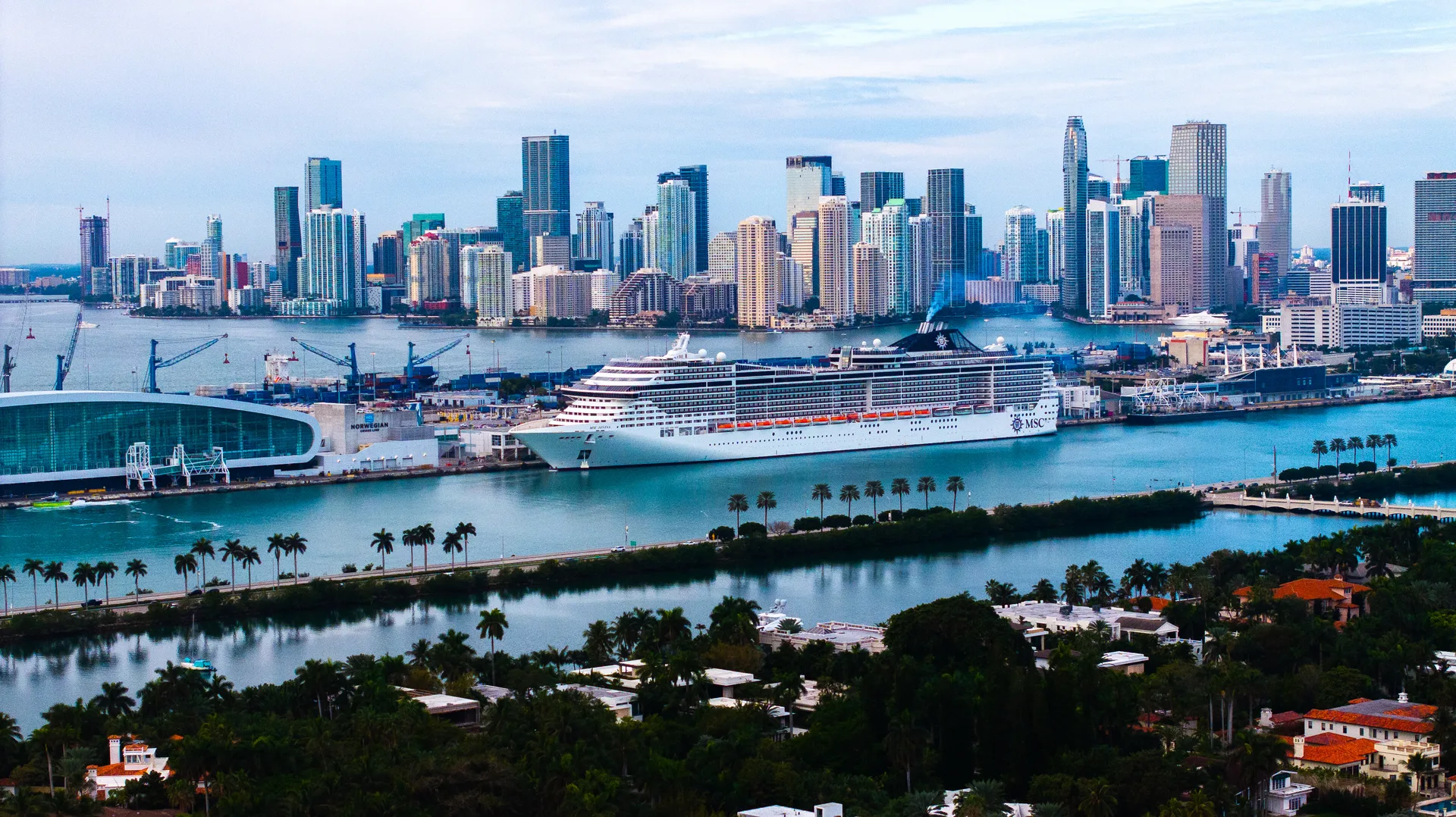
Miami, Florida
The world-renowned Cruise Capital of the World: PortMiami, where Royal Caribbean homeports Icon of the Seas and Wonder of the Seas, rises over Biscayne Bay beneath the skyline of downtown Miami.
Port highlights
PortMiami, long billed as the Cruise Capital of the World, has been the busiest cruise port on Earth, with more than a dozen terminals along Dodge Island.
South Beach's Art Deco District, a mile of pastel hotels and neon along Ocean Drive, is the classic pre- or post-cruise stroll.
Wynwood's murals, Little Havana's cigar shops and cafecito stands, and the bayfront views of Brickell and downtown Miami.
Interesting facts
Miami was incorporated in 1896, making it one of the youngest major cities in the United States.
PortMiami sits on Dodge Island, an artificial island joined to the mainland by two bridges.
The city's name is thought to come from the Mayaimi, a Native American people who lived around Lake Okeechobee.
Something not everyone knows
The cruise terminals at PortMiami are built on an island that did not exist until the 1960s: Dodge Island was created from dredged bay bottom, and the port gradually moved there from the downtown riverfront.
Cruise lines sailing from here
Royal Caribbean, Carnival, Norwegian, MSC, Celebrity, Virgin Voyages, Disney
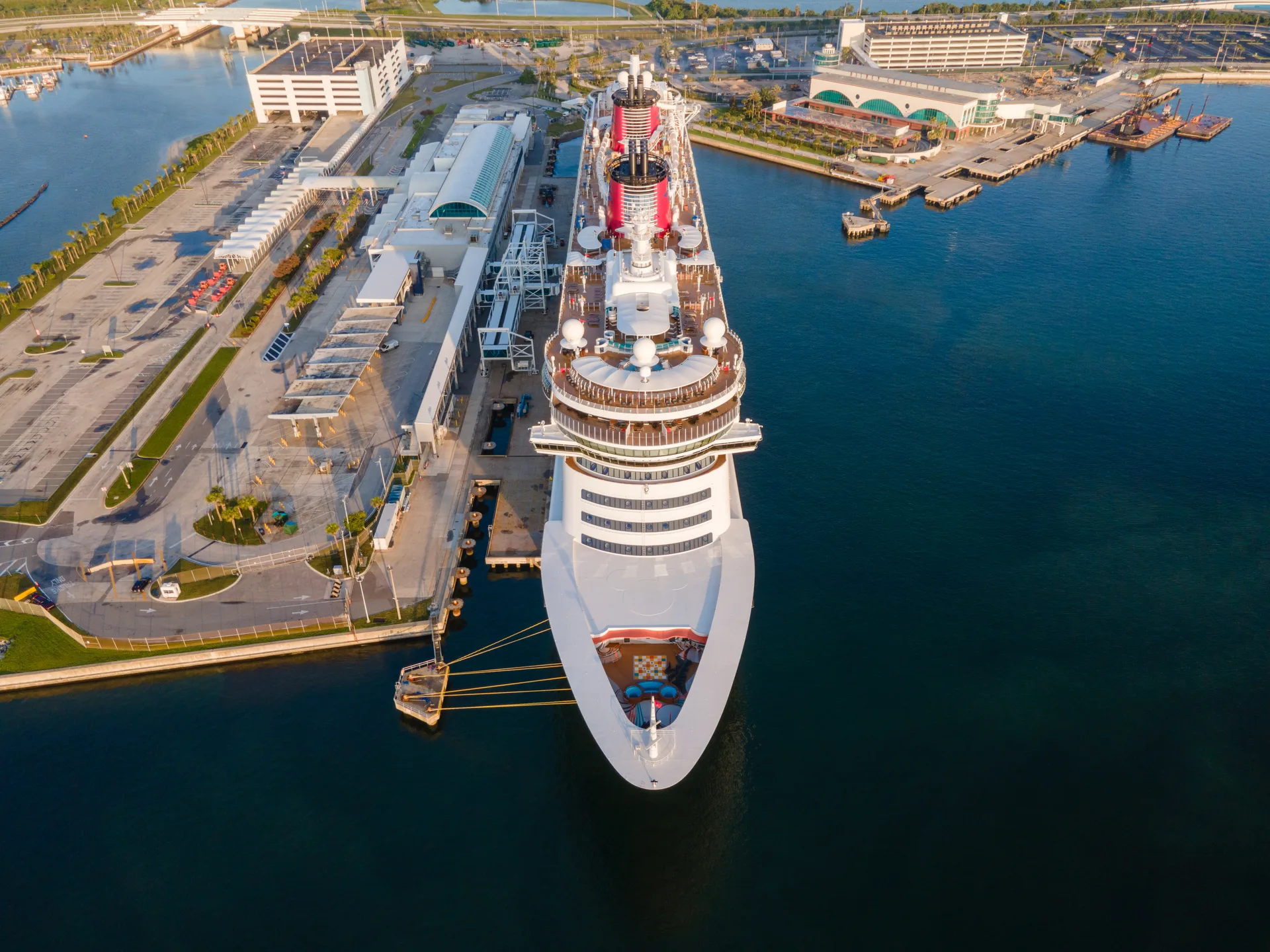
Port Canaveral, Florida
Florida's Space Coast homeport, where some of the world's largest cruise ships tie up a few miles from the launch pads of Kennedy Space Center and the beaches of Cocoa Beach.
Port highlights
The cruise terminals sit at the northern end of the Space Coast, minutes from the Atlantic beaches of Cocoa Beach and Cape Canaveral.
Kennedy Space Center Visitor Complex, with the Space Shuttle Atlantis exhibit and its rocket garden, is a short drive from the port.
Jetty Park's fishing pier and beach, right beside the port entrance, where locals watch ships sail and rockets launch.
Interesting facts
Port Canaveral is one of the busiest cruise ports in the world and the homeport for some of the largest ships afloat, including Royal Caribbean's Icon-class vessels.
The port lies just south of Cape Canaveral, the historic rocket-launch site that gave the region its Space Coast name.
Cargo, fuel, fish, and container shipping share the port with the cruise terminals.
Something not everyone knows
Because the port sits beside an active rocket range, cruise departures occasionally pause for a launch: sailings are scheduled around the space calendar, and passengers have been known to watch liftoffs from the ship's top decks.
Cruise lines sailing from here
Royal Caribbean, Disney, Carnival, Norwegian
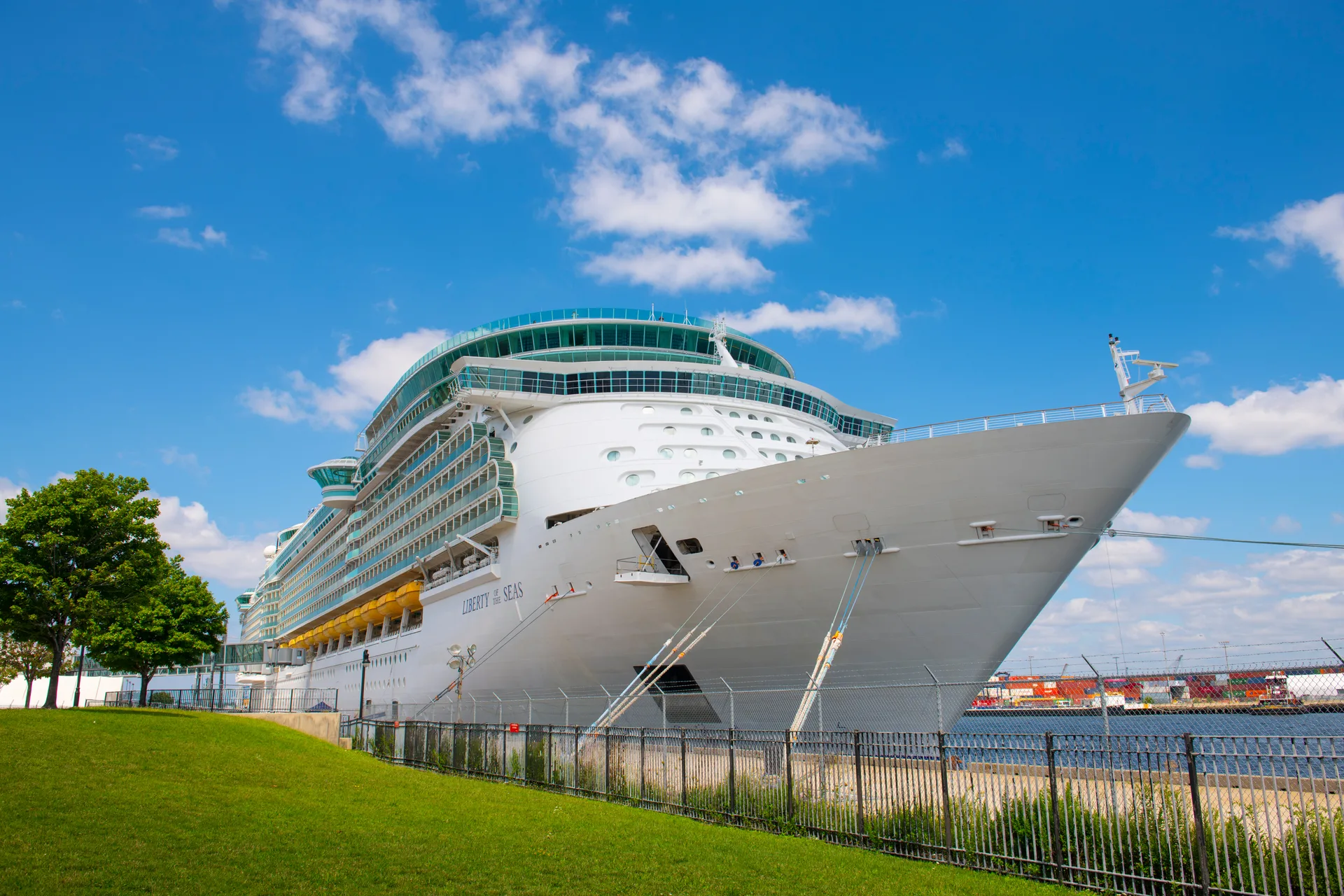
Cape Liberty, Bayonne, New Jersey
Royal Caribbean's New York-area homeport, tucked into the industrial waterfront of Bayonne, New Jersey, with the Statue of Liberty and the Manhattan skyline on the horizon.
Port highlights
The cruise port sits on the waterfront with direct views across the harbor to the Statue of Liberty and Lower Manhattan.
Downtown Manhattan is a short ride away, making Cape Liberty the launch point for pre-cruise days in New York.
The New Jersey Turnpike and Bayonne Bridge connect the port to the region's airports and highways.
Interesting facts
Cape Liberty Cruise Port opened in May 2004 on the grounds of the former Military Ocean Terminal at Bayonne (MOTBY), a World War II-era Navy facility.
It is one of the principal cruise homeports for the New York metropolitan area, handling Royal Caribbean's largest ships on Caribbean sailings.
The port's berths face the Upper Bay, one of the busiest shipping lanes in the United States.
Something not everyone knows
The massive pier at Cape Liberty was once part of a U.S. military terminal that loaded troops and supplies in two world wars; the cruise terminal sits directly on the concrete structure of the old naval base.
Cruise lines sailing from here
Royal Caribbean, Celebrity
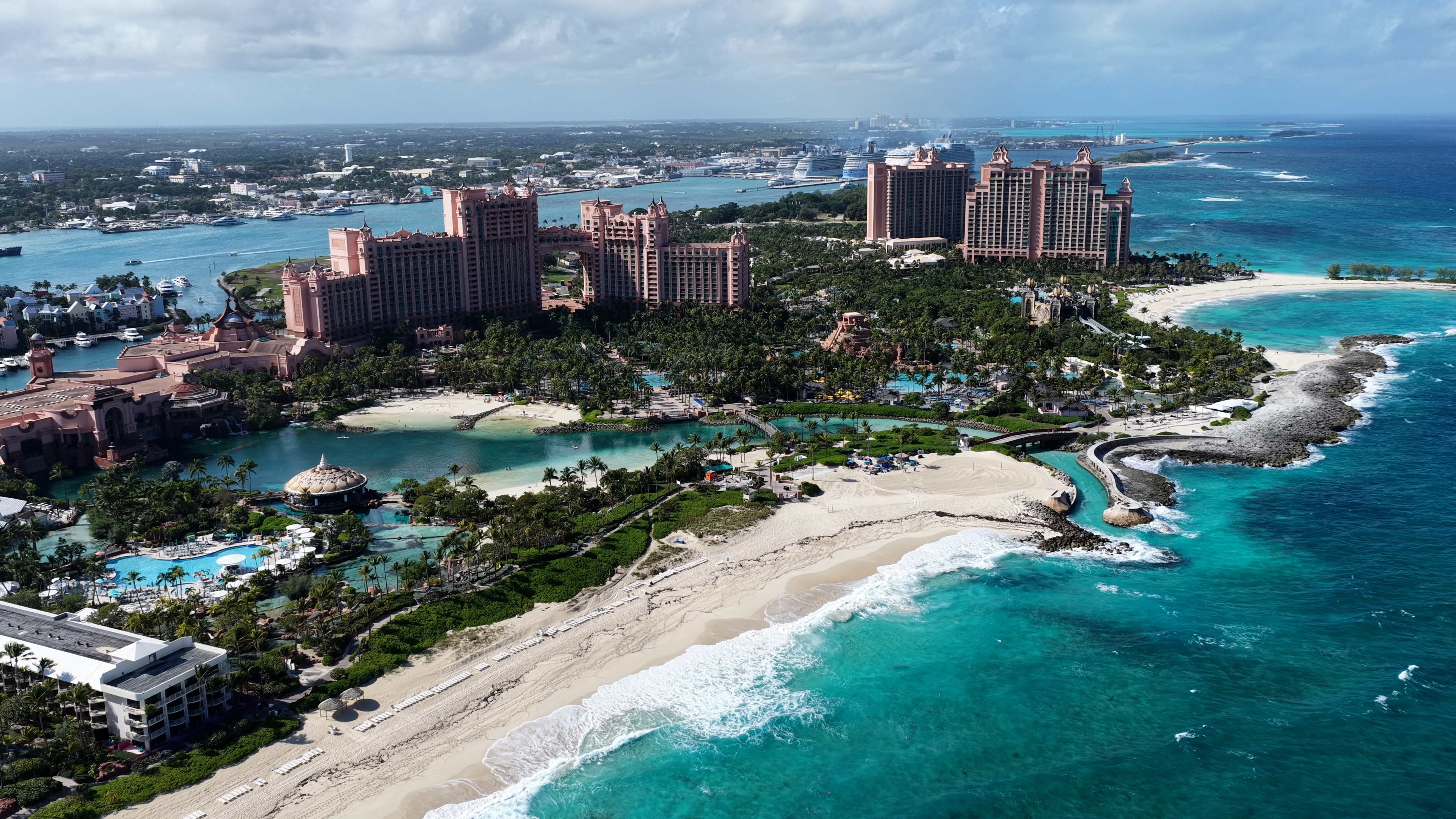
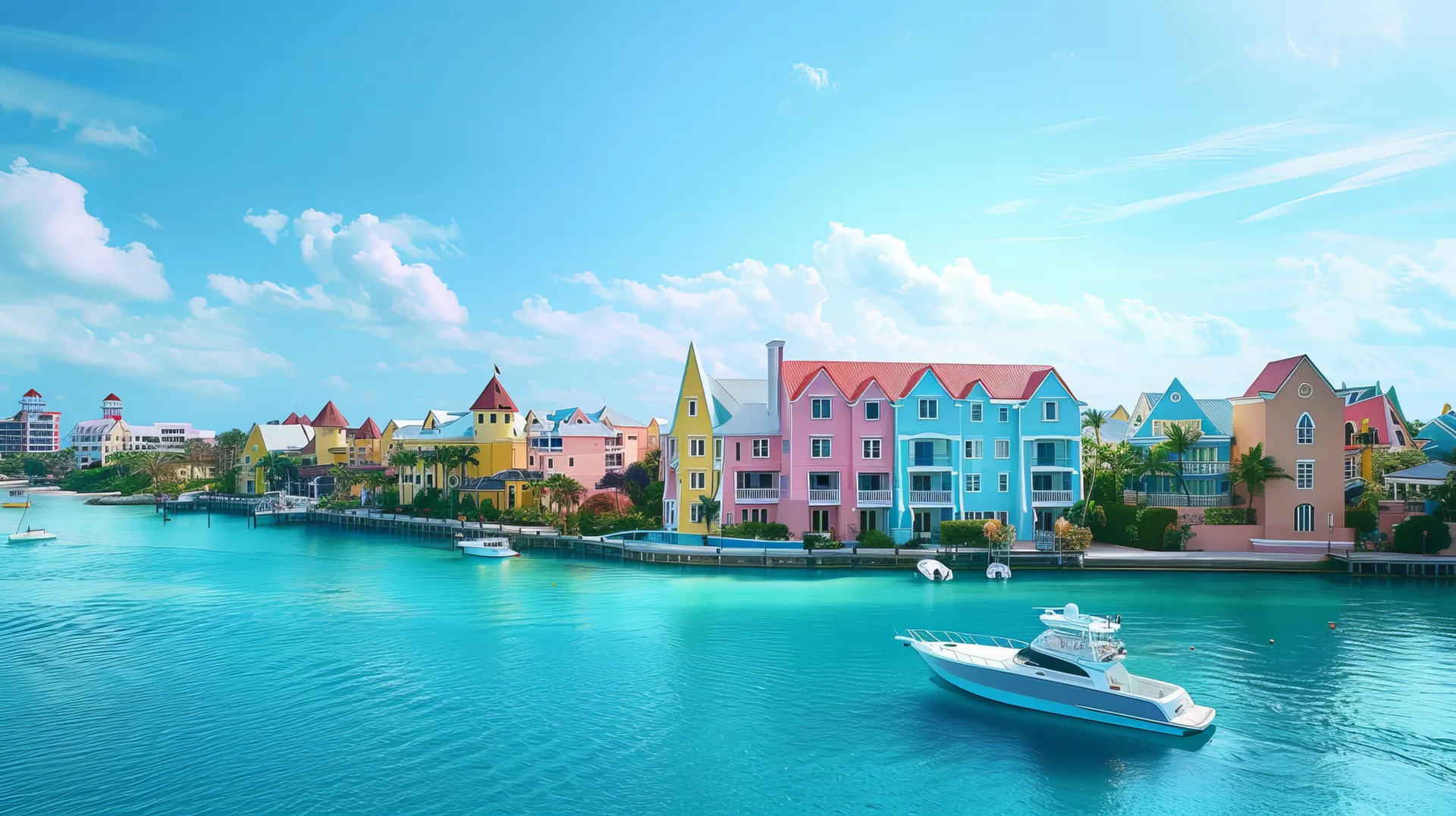
Nassau, Bahamas
The Bahamas' bright waterfront capital on New Providence island, where pirates once ruled the harbor and where Atlantis, Parliament Square, and the Straw Market set the pace.
Port highlights
Atlantis Paradise Island, the ocean-themed resort whose vast marine habitat and Aquaventure water park anchor a day just across the bridge from downtown.
Parliament Square's pink-and-white government buildings, laid out in a tidy colonial row and shaded by a statue of Queen Victoria worn smooth by the sea-salt air.
The Straw Market's woven hats and bags, the Junkanoo-style crafts, and the rum distilleries whose gift shops sit a short stroll from where the ship ties up.
Interesting facts
Nassau was founded as Charles Town in 1670 and renamed in 1695 in honor of the Dutch royal House of Nassau.
More than 70 percent of the Bahamas' people live on New Providence, an island only about 21 miles long.
Pirates made Nassau their base in the early 1700s until a royal governor drove them out in 1718, offering pardons to those who surrendered.
Something not everyone knows
The island's name is said to honor a governor's thanks for surviving a shipwreck, and the 'New' was later added to tell it apart from Old Providence, the pirate stronghold off the coast of Belize.
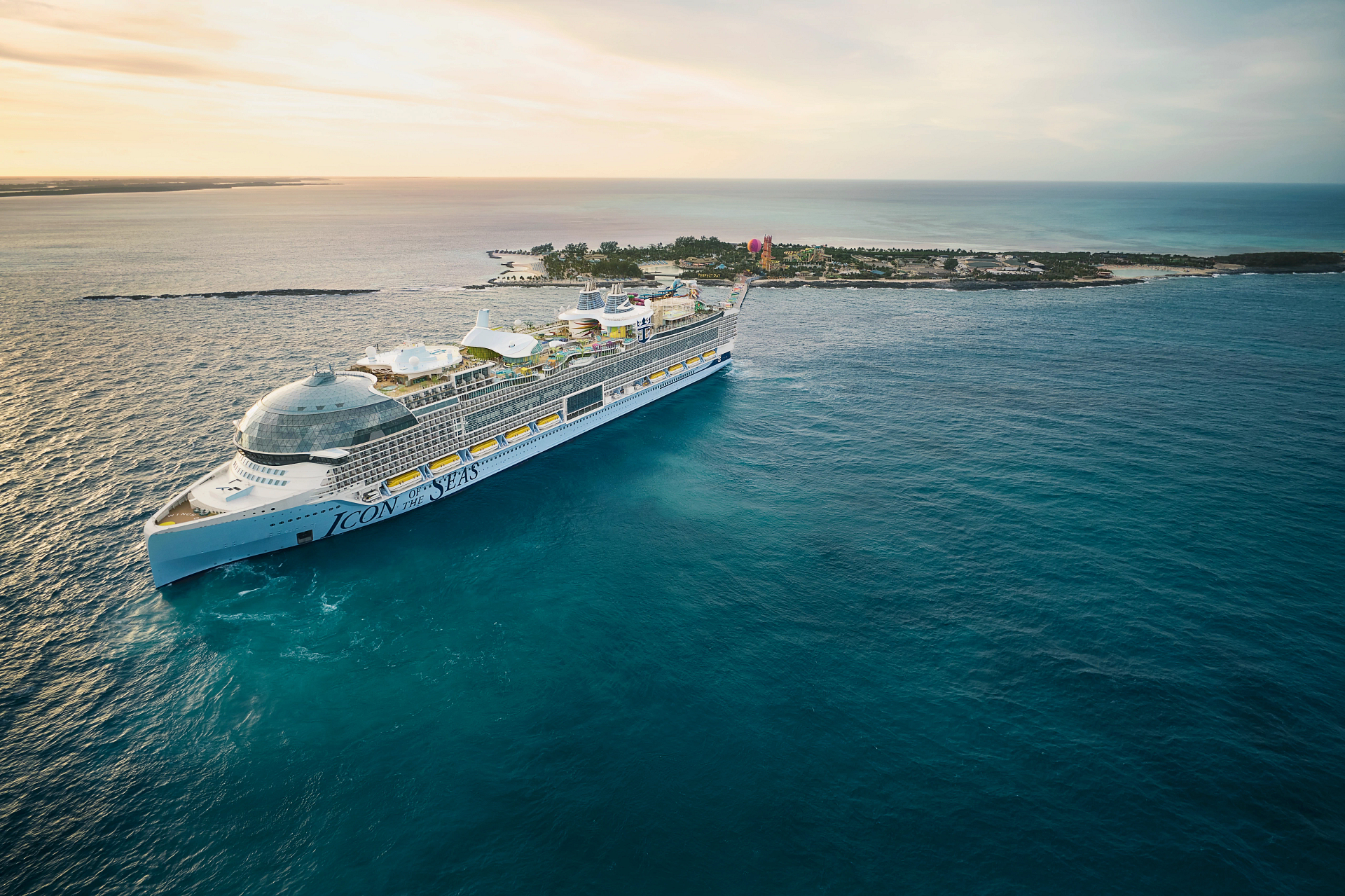
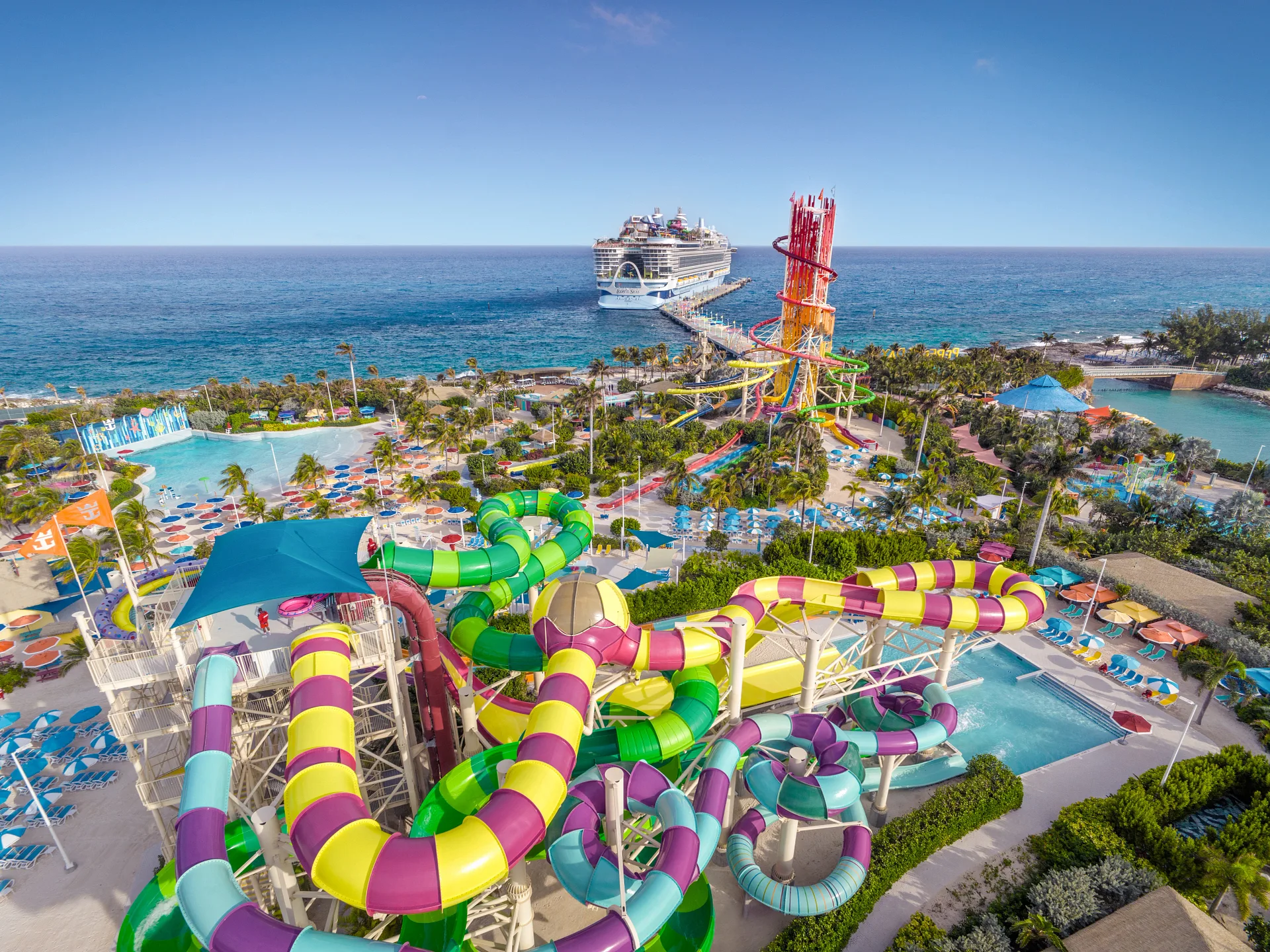
Perfect Day at CocoCay, Bahamas
Royal Caribbean's private island in the Berry Islands of the Bahamas, unveiled in 2019 as Perfect Day at CocoCay, with the region's largest freshwater pool and a record-setting waterpark.
Port highlights
Thrill Waterpark, home to Daredevil's Peak, the 135-foot slide billed as the tallest waterslide in North America, plus a wave pool and a family raft ride.
The largest freshwater pool in the Caribbean, ringed by swim-up bars and cabanas.
Coco Beach Club, the adults-leaning beach with overwater cabanas, and Up, Up and Away, the island's hot-air-balloon-style helium ride.
Interesting facts
CocoCay sits in the Berry Islands, about 55 miles north of Nassau, and has been Royal Caribbean's private island since the late 1980s.
The island was transformed into Perfect Day at CocoCay and reopened in 2019.
Most Royal Caribbean Bahamas and Caribbean sailings from Florida build a full beach day at CocoCay into the itinerary.
Something not everyone knows
Daredevil's Peak, the tallest waterslide in North America, begins with a trapdoor drop from a 135-foot tower, so riders get a clear view across the whole island before the plunge.
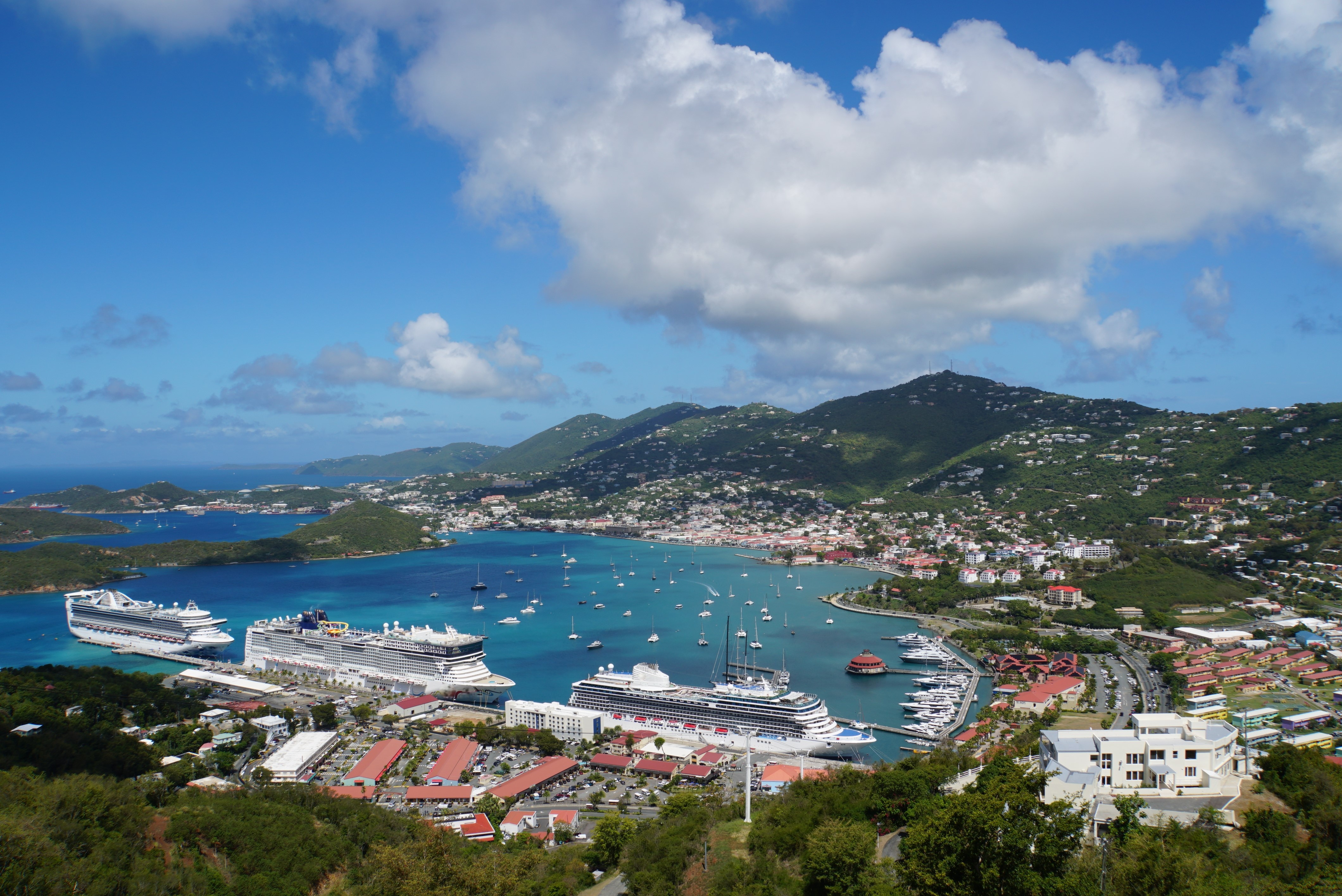
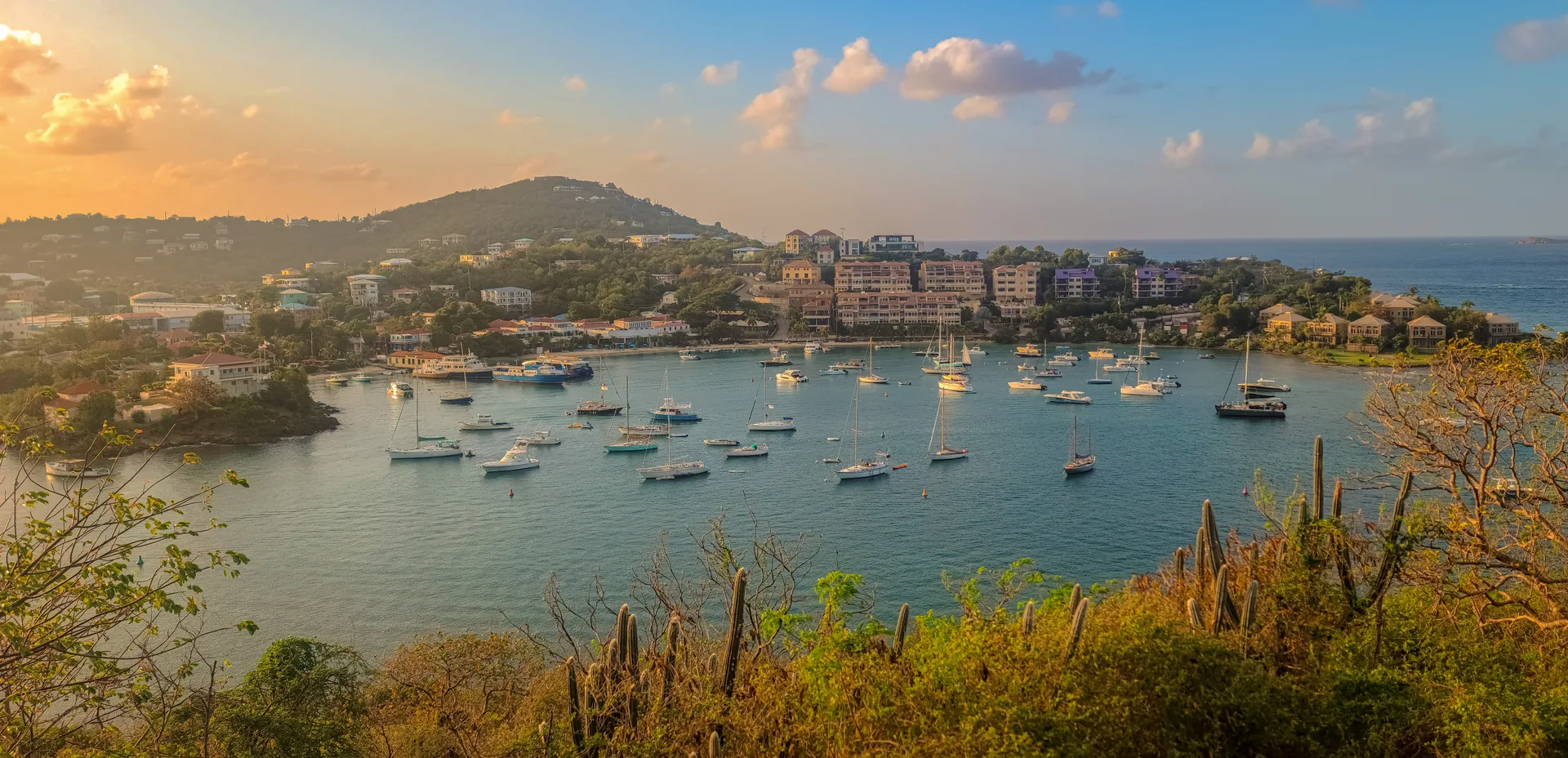
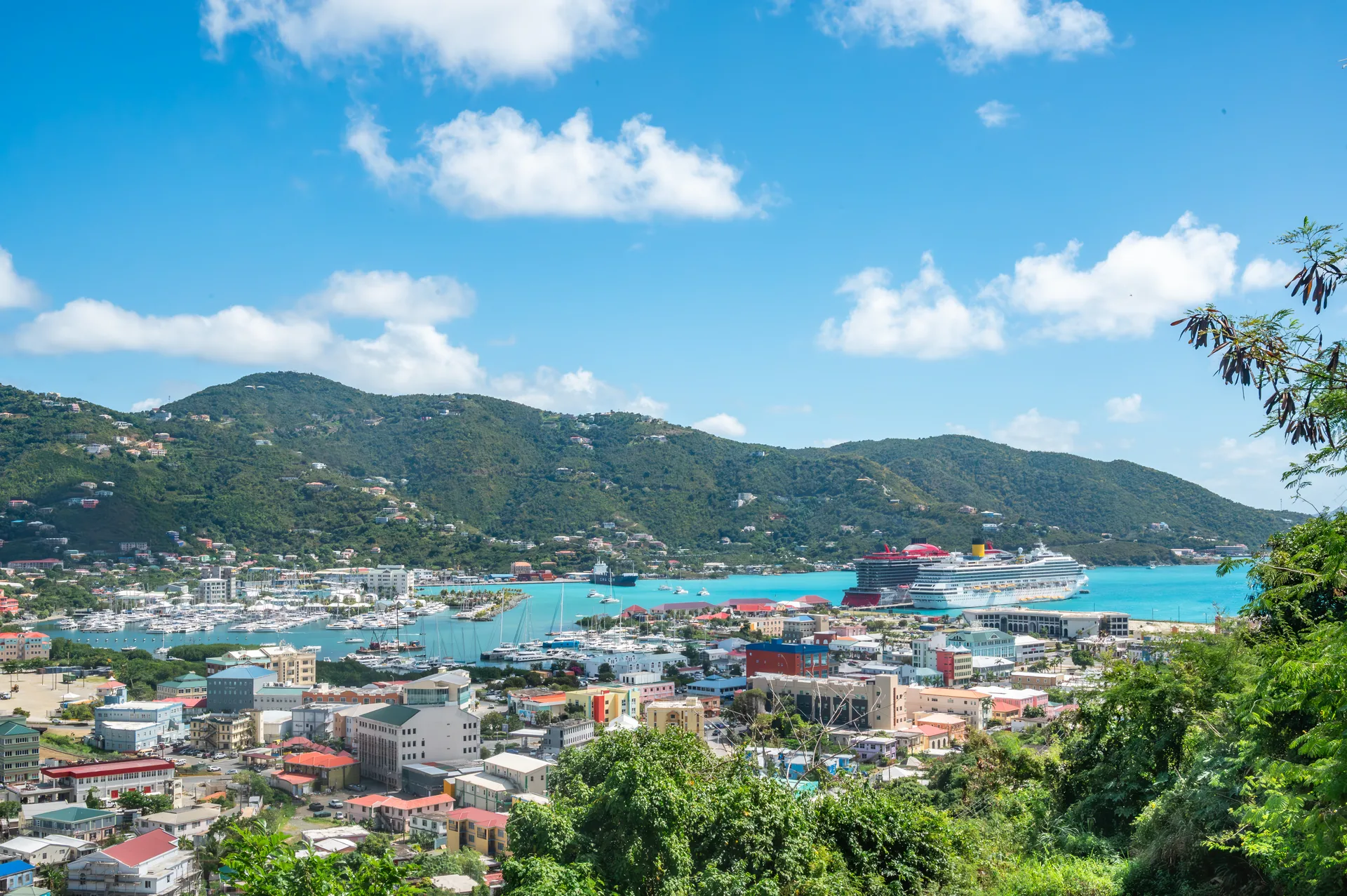
St. Thomas, U.S. Virgin Islands
The busiest harbor in the U.S. Virgin Islands and a long-established free port, whose hilly capital of Charlotte Amalie and beaches like Magens Bay have welcomed cruisers for over a century.
Port highlights
Magens Bay, the sheltered horseshoe of white sand on the island's north shore, donated to the public in 1946 by a Wall Street financier.
Paradise Point, reached by the Skyride cable car above the harbor, with rum drinks and a panoramic view over Charlotte Amalie's rooftops and the anchored ships.
Duty-free shopping along Charlotte Amalie's narrow streets, built on the slopes of three volcanic spurs and home to one of the Caribbean's best-known cruise piers.
Interesting facts
St. Thomas was a Danish colony for more than two centuries, until Denmark sold the islands to the United States in 1917.
Charlotte Amalie began in 1666 as a settlement literally named Taphus, Danish for a beer hall or tap house, and was renamed in 1691 for the queen of Denmark.
It is a free port, which is why jewelry and watches dominate the storefronts within a few blocks of the dock.
Something not everyone knows
Charlotte Amalie's first name gives away its origin: 'Taphus' means tap house or beer hall in Danish, a drinking spot that grew into a settlement and, in time, a territorial capital.
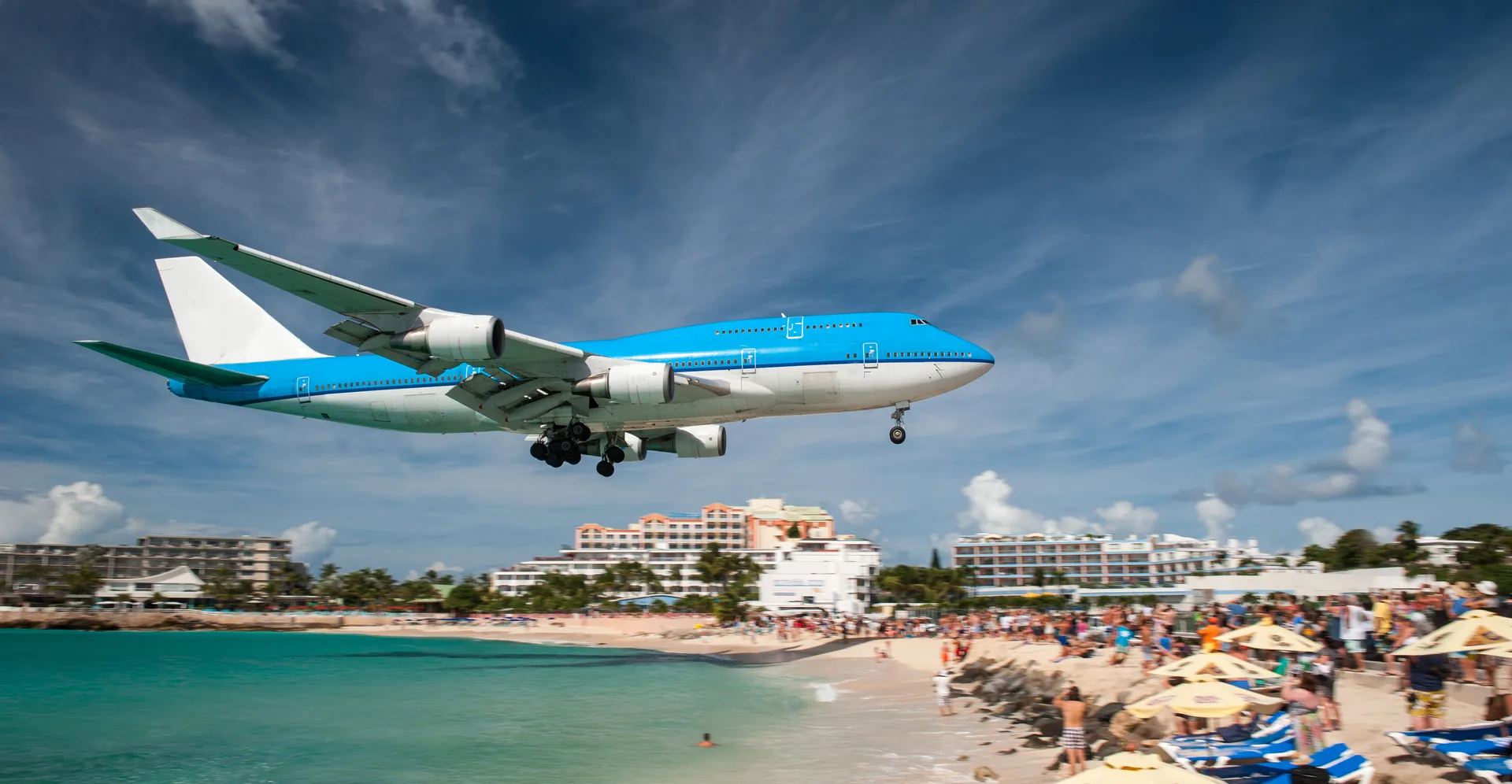
Philipsburg, St. Maarten
The Dutch-side capital of a single island shared by two nations, where duty-free shopfronts line Front Street, Great Bay's beach hugs the harbor, and planes skim the sand at Maho Beach.
Port highlights
Front Street's duty-free shops and galleries, a short walk from the cruise pier at the edge of Great Bay.
Maho Beach, at the island's Dutch-French border, where arriving jets pass just above the sand at Princess Juliana International Airport.
A day on the French side: the restaurants of Grand Case, the beach at Orient Bay, and the hilltop views of Marigot.
Interesting facts
St. Maarten is the smallest landmass in the world shared by two sovereign nations: the Dutch side, Sint Maarten, and the French side, Saint-Martin.
Philipsburg was founded in 1763 by a Scottish captain, John Philips, and grew around the salt ponds that once drove the island's economy.
The island is a long-established duty-free port, which is why jewelry, liquor, and electronics crowd the shop windows.
Something not everyone knows
Maho Beach's famous plane-spotting is so close that jet blast from departing flights can knock people over, and signs on the sand warn sunbathers to hold on during takeoffs.
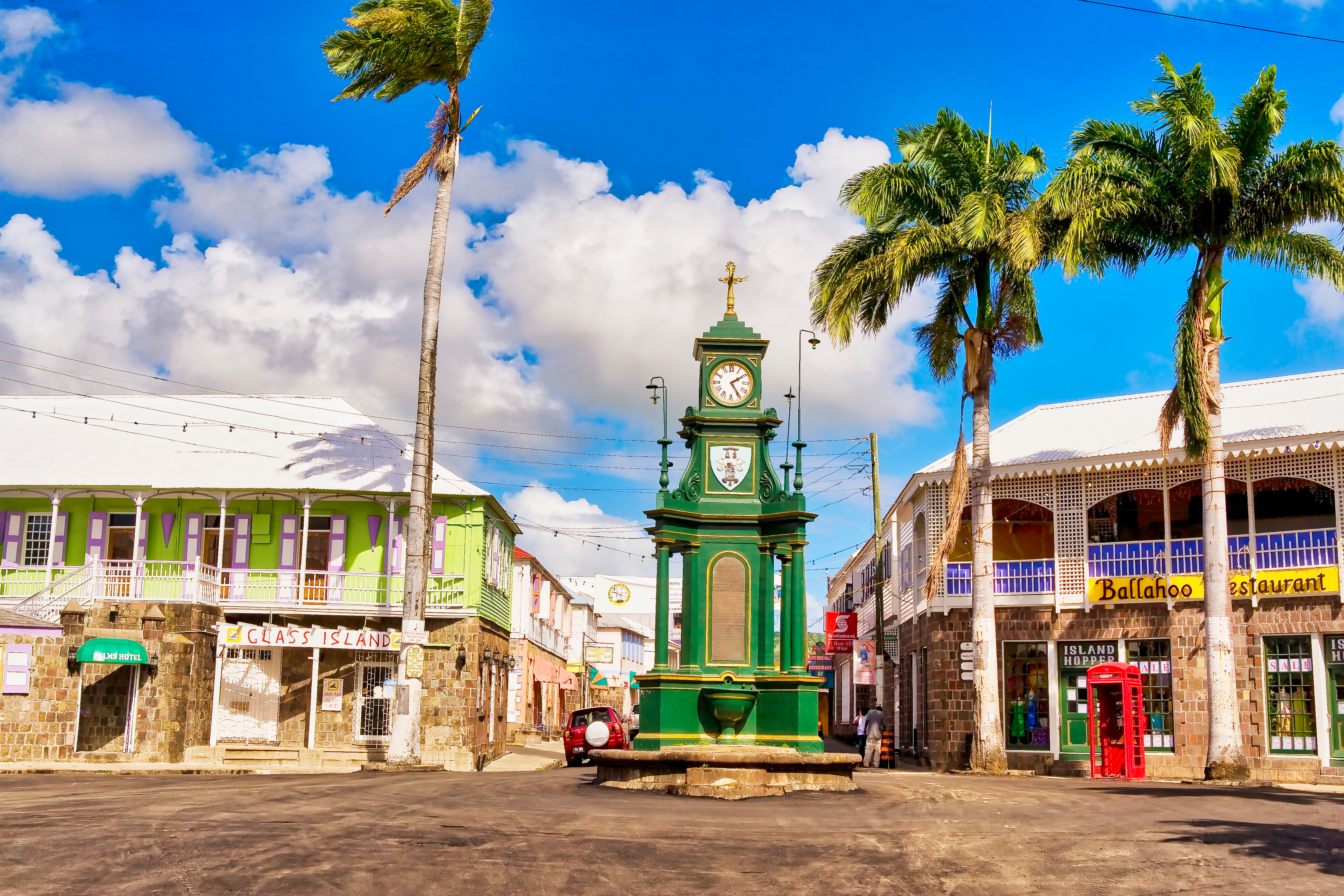
St. Kitts
One of the Leeward Islands' loveliest calls, where sugar-train rides, a majestic hilltop fortress, and the clock tower of Basseterre's Circus frame the harbor.
Port highlights
The narrow-gauge sugar train that loops the island's coast, once carrying cane, now a scenic ride past rainforest and sea.
Brimstone Hill, the 'Gibraltar of the West Indies,' a volcanic-stone fortress set high above the water and so well built it is a UNESCO World Heritage site.
The Circus, Basseterre's green roundabout centered on an ornate cast-iron clock tower from 1883.
Interesting facts
Brimstone Hill was nicknamed the Gibraltar of the West Indies for its commanding position and near-impregnable defenses.
The fortress was built by British military engineers with stone quarried from the volcano it sits on, over several decades beginning in the 1690s.
St. Kitts is the larger of the two islands forming the federation of St. Kitts and Nevis.
Something not everyone knows
The Circus clock honors not a monarch but Thomas Berkeley, a local legislator and estate owner, and for a long time it was the island's only public memorial to a single person. Its layout drew on London's Piccadilly Circus.
St. John's, Antigua
Antigua's low-rise capital, a calm entry point to an island ringed by coral and white sand, classic yacht anchorages, and the lovingly restored Georgian naval base at English Harbour.
Port highlights
Nelson's Dockyard in English Harbour, the world's only working Georgian-era naval dockyard, now a UNESCO World Heritage site where wooden warships were once hauled ashore for repairs.
St. John's Cathedral, whose twin-towered silhouette rises over the capital and whose stone walls were twice rebuilt after earthquakes.
Sailing, Antigua's great sport: the island hosts two of the Caribbean's celebrated regattas, and an afternoon at the dockyards means wandering among classic yachts.
Interesting facts
Nelson's Dockyard is named for Horatio Nelson, who commanded HMS Boreas here in the 1780s while enforcing Britain's Navigation Acts.
It is part of the Antigua Naval Dockyard UNESCO World Heritage site, inscribed in 2016.
The island's beloved boast of '365 beaches, one for every day of the year' is a proud slogan rather than a precise count.
Something not everyone knows
Antigua's identity runs deep on the cricket field: the island has produced some of the West Indies' greatest cricketers, and the national stadium is named for the legendary fast bowler Viv Richards.
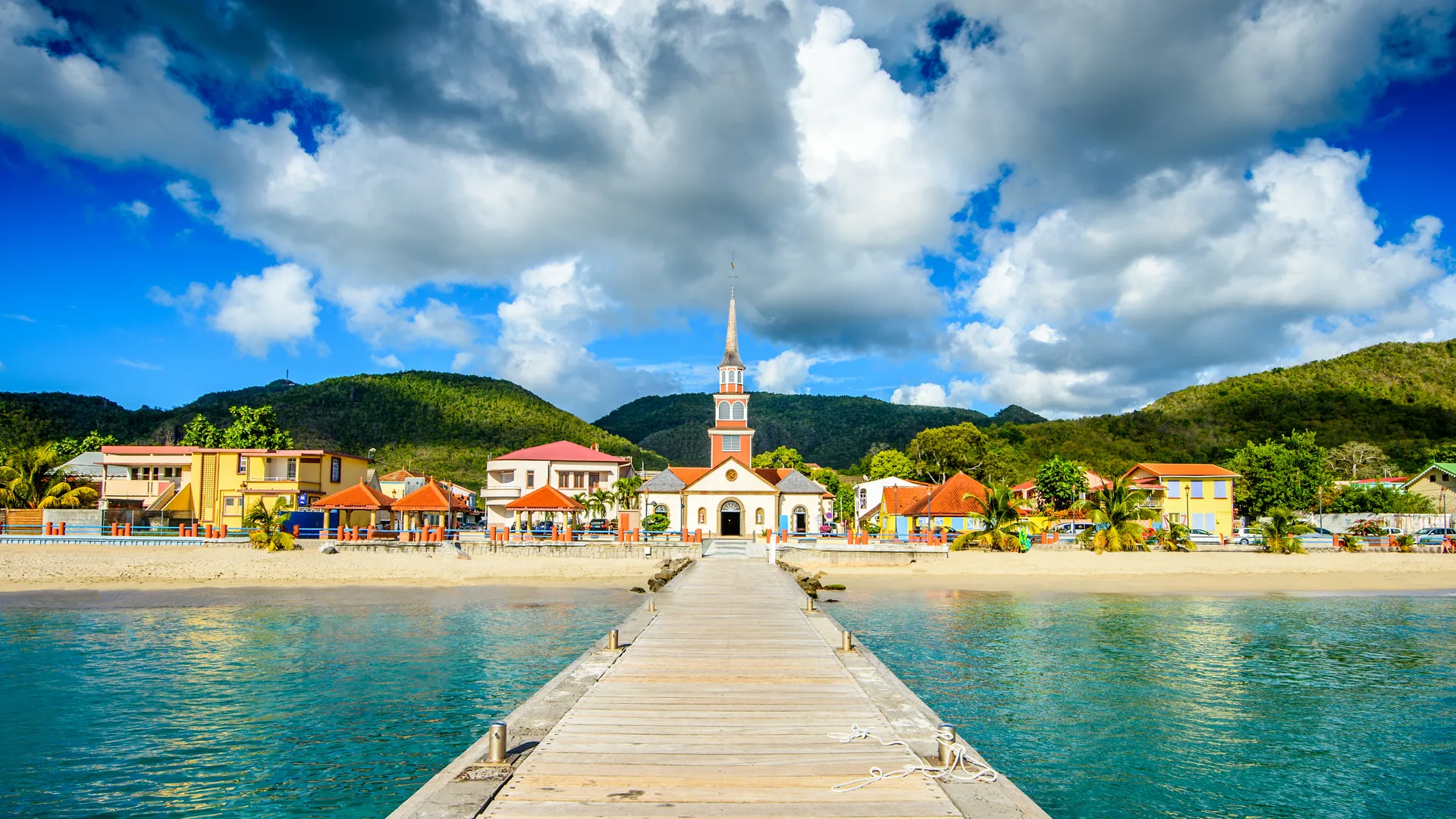
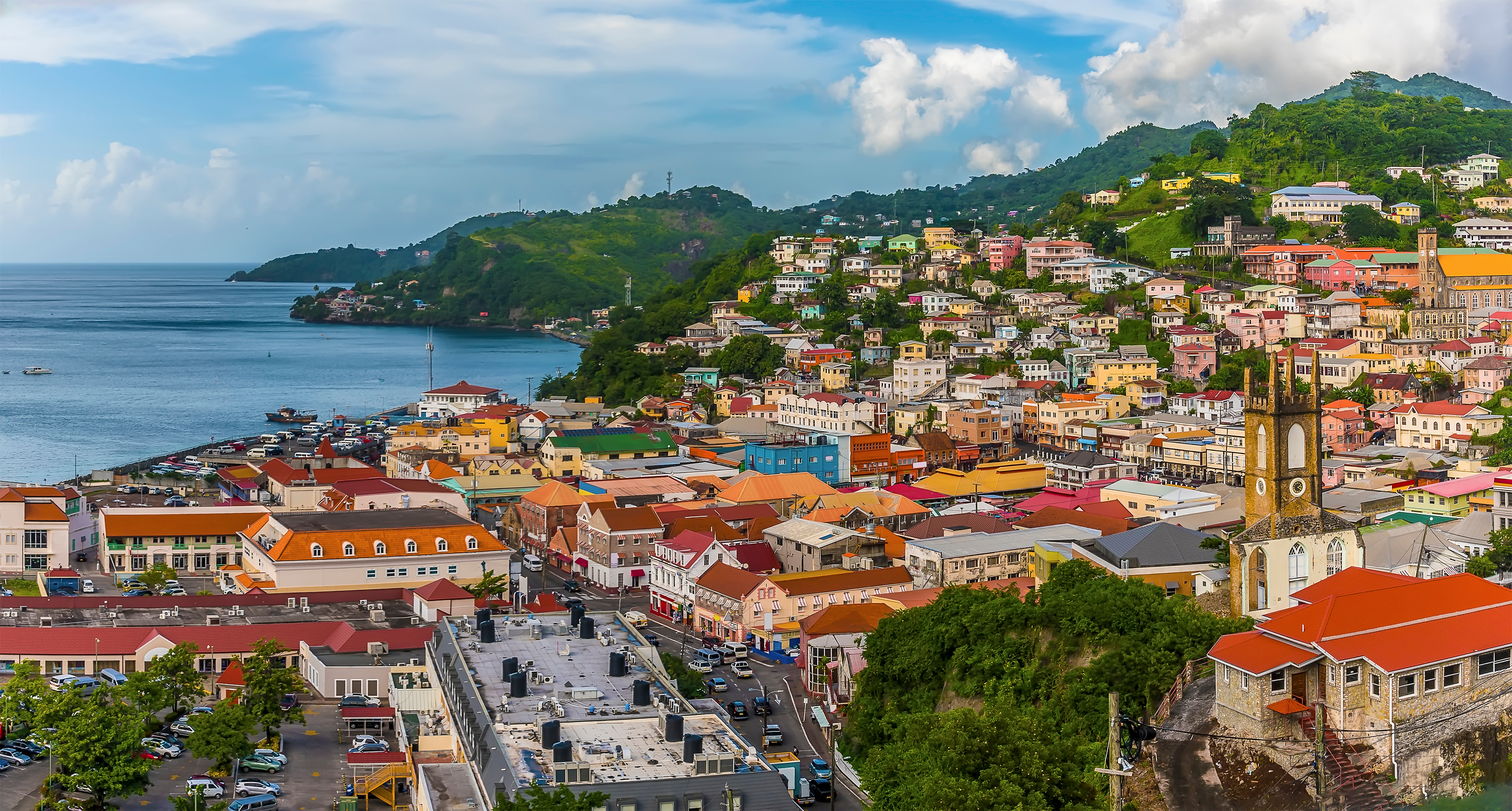
Fort-de-France, Martinique
The French Caribbean's most Gallic capital, a harbor city beneath green mountains where rum distilleries, Creole markets, and the shadow of Mount Pelée shape the island's rhythm.
Port highlights
The covered market of Fort-de-France, piled with tropical fruit, spices, and the madras fabrics of the French Antilles.
Rhum agricole distilleries, where fresh sugarcane juice is distilled on the spot, a style of rum born on the island.
Balata Garden's treetop walkways and, on the horizon, Mount Pelée, the volcano that destroyed Saint-Pierre in 1902.
Interesting facts
Martinique is a French overseas department and part of the European Union, so the currency is the euro and the language is French.
Fort-de-France is the largest city in the French Antilles and the island's commercial capital.
Mount Pelée's 1902 eruption wiped out Saint-Pierre, then the island's largest city, in a matter of minutes.
Something not everyone knows
Martinique's rum is different from most Caribbean rum: rhum agricole is distilled directly from fresh sugarcane juice rather than molasses, a French tradition that gives the island's rums a grassy, floral character.
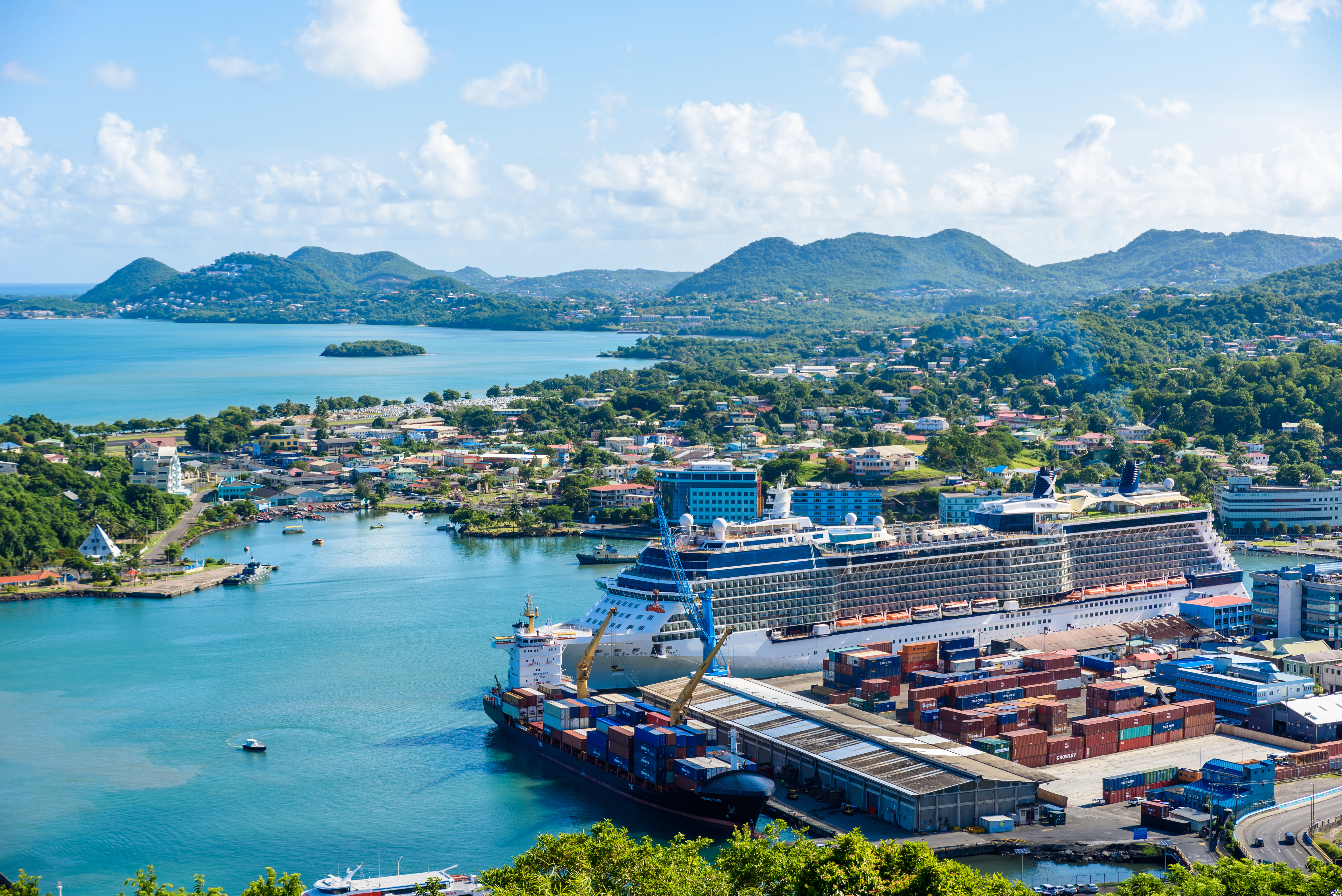
Castries, St. Lucia
The capital of St. Lucia, a port tucked between forested peaks, whose greatest sights lie an hour away by road or boat: the twin Pitons and the world's only drive-in volcano.
Port highlights
The Pitons, the two volcanic plugs that rise side by side from the sea near the village of Soufrière and anchor a UNESCO World Heritage-listed landscape.
The Sulphur Springs at Soufrière, the world's only drive-in volcano, where you can park, walk the steam vents, and drop into a warm mud bath.
Castries' colorful market and the rainforest, waterfalls, and banana groves of the island's mountainous interior.
Interesting facts
Gros Piton and Petit Piton stand around 2,600 feet and 2,400 feet above the sea and are among the most photographed peaks in the Caribbean.
The Sulphur Springs are the only in the Eastern Caribbean you can drive into, venting steam and hot springs rather than lava.
Castries is a port of call rather than a homeport, so a ship usually arrives in the morning and sails in the evening, leaving a full day for the island.
Something not everyone knows
St. Lucia's 'volcano' last erupted in 1766, so the steaming flat at Soufrière is really a geothermal field: you can soak in the hot springs and smear on the mineral mud exactly where the island's famous steam rises.
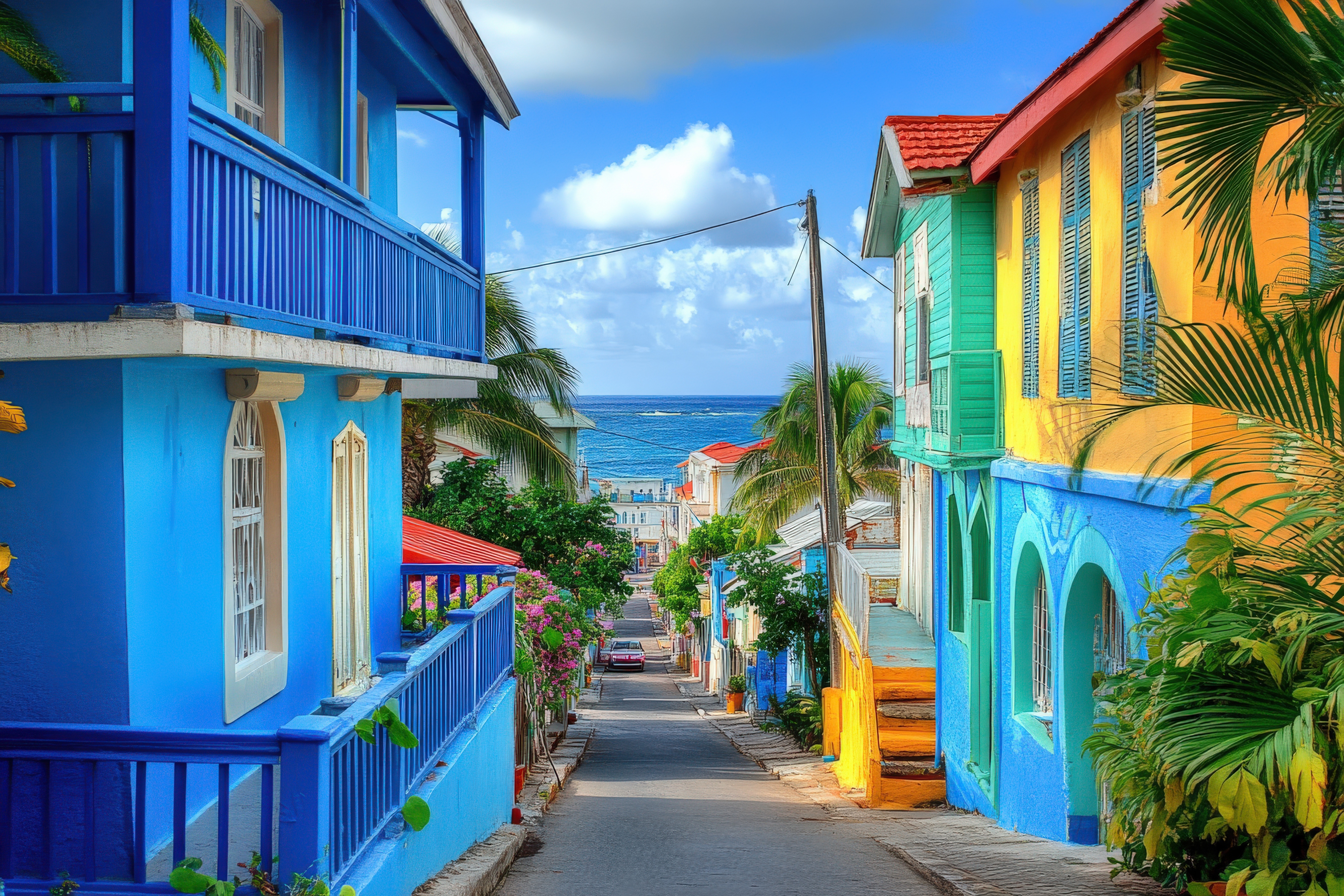
Bridgetown, Barbados
Bridgetown, the historic capital of the eastern Caribbean's 'Little England,' blends crisp Georgian architecture, rum heritage, and the calm turquoise curve of Carlisle Bay.
Port highlights
Historic Bridgetown and its Garrison, a UNESCO World Heritage site that preserves one of the best intact colonial towns in the Caribbean.
The Mount Gay rum distillery, the world's oldest commercial rum house, whose 1703 deed makes it the oldest on record, with tastings and tours.
Carlisle Bay, a protected arc of clear water right beside downtown, with sunken wrecks, sea turtles, and glass-bottom boats a stone's throw from the port.
Interesting facts
Bridgetown's name traces to a bridge built by the island's early Amerindian settlers, so old it was long known as the Indian Bridge.
Barbados is the easternmost island of the Caribbean and, since November 2021, a republic within the Commonwealth.
Rum was born in the region, and the earliest known written use of the word appears on a Barbados plantation document from the 1600s.
Something not everyone knows
So strongly did English customs, cricket, and afternoon tea take root here that Barbados earned the lasting nickname 'Little England,' a compliment the island wears with plenty of its own Bajan pride.
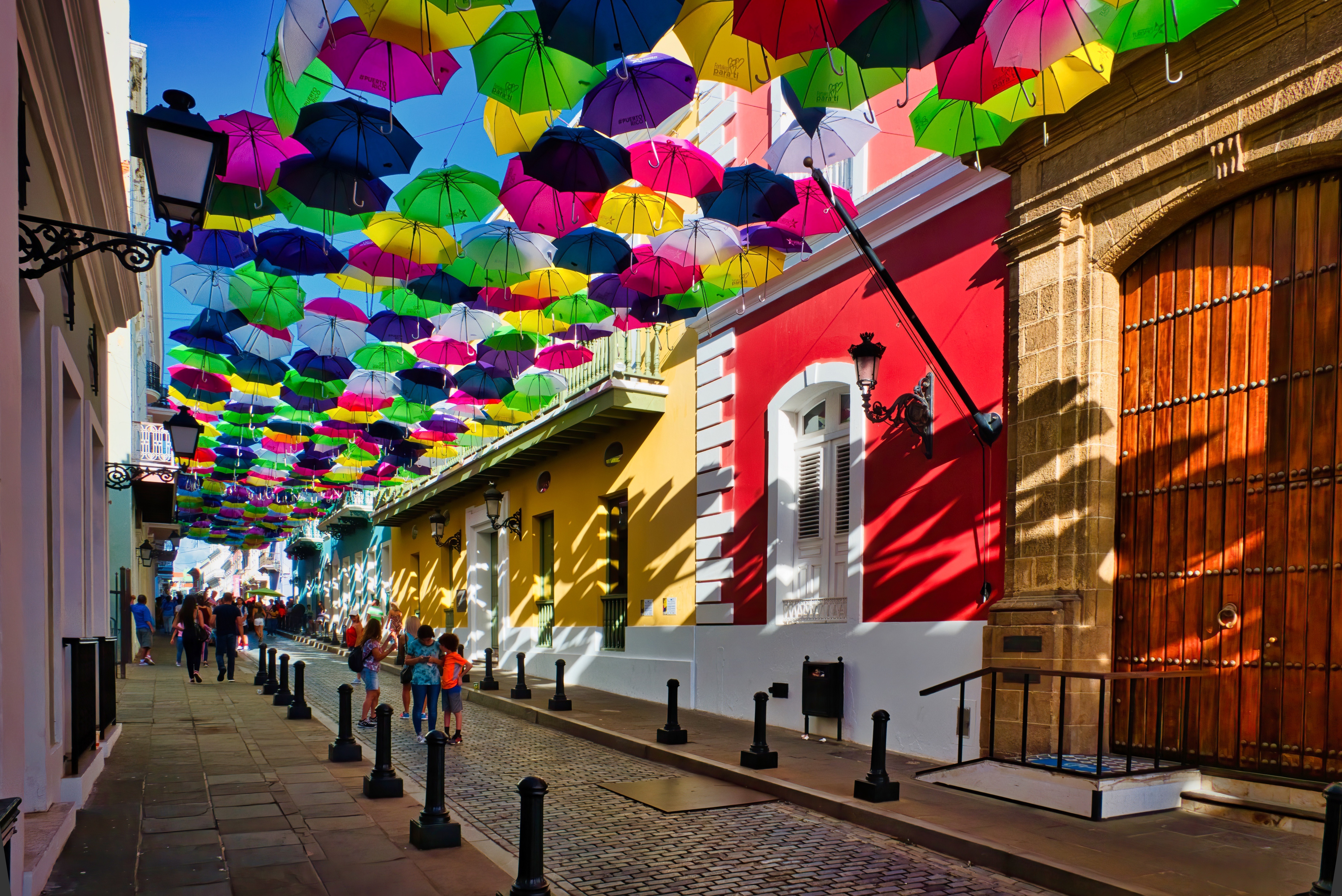
San Juan, Puerto Rico
Puerto Rico's 500-year-old capital, where the blue-cobblestone streets of Old San Juan sit beneath the ramparts of some of the oldest European-built defenses in the Americas.
Port highlights
El Morro, the six-level fortress begun in the 1500s that has guarded San Juan Bay for more than four centuries, so stoutly built it is now a national historic site and UNESCO World Heritage site.
The color-splashed lanes of Old San Juan: blue cobblestones, balconies heavy with bougainvillea, and painted churches and plazas in the oldest continuously inhabited settlement on U.S. soil.
Bars and cafés along Fortaleza Street, where local rum and a slow island rhythm meet cruise passengers who walked in from the nearby pier.
Interesting facts
San Juan is that rare Caribbean port where you can walk off the ship and, within minutes, be inside a colonial city that has stood since 1521.
El Morro and the city walls are part of the San Juan National Historic Site, one of the oldest fortification systems in the New World.
The city's signature half-blue, half-white cobblestones were cast from iron-smelting slag, which gives them their unusual color and weight.
Something not everyone knows
El Morro was never taken by a naval assault. The one time it fell, in 1598, attackers seized it from the land side while Spain was weak, then lost it again to a dysentery epidemic before the garrison could even reclaim it.
Cruise lines sailing from here
Royal Caribbean, Celebrity, Disney, Norwegian, Virgin Voyages, Viking
Cozumel, Mexico
Mexico's island of reefs and ruins sits squarely on the Mesoamerican Barrier Reef, the second-largest reef system in the world, with Maya temples inland and superb diving offshore.
Port highlights
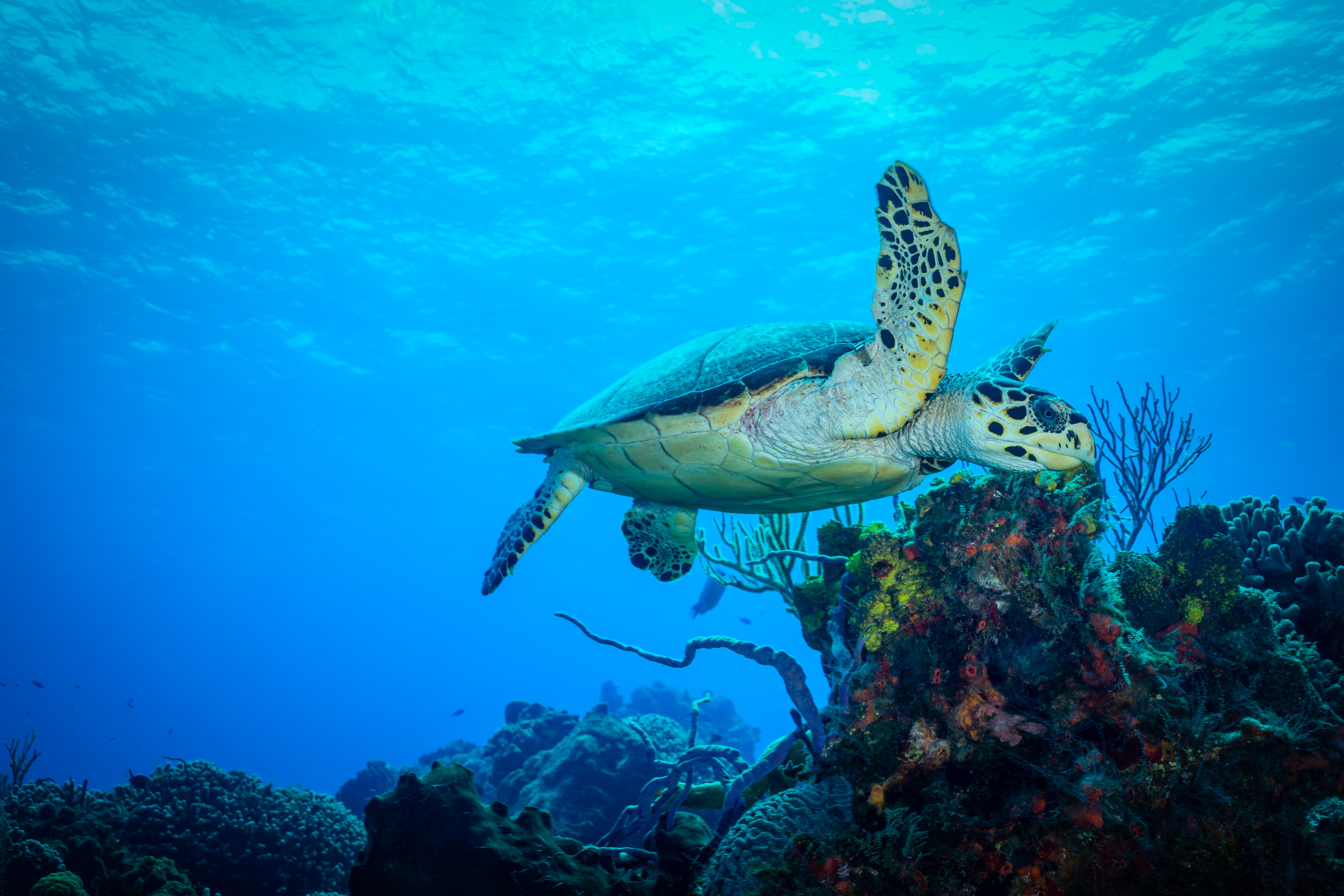
Palancar Reef, Cozumel's signature wall-and-canyon dive site, brought worldwide fame by Jacques Cousteau and now protected as a national park.
San Gervasio, the largest Maya ruins on the island, once home to a temple honoring Ixchel, the Maya goddess of fertility and medicine.
Chankanaab, the island's treasured nature park with its lagoon, beaches, and an underwater snorkel trail, a short ride from the piers.
Interesting facts
Cozumel is counted among the great diving and snorkeling islands of the Caribbean, standing on the Mesoamerican Barrier Reef.
San Gervasio was occupied and used for centuries, from the early first millennium into the Spanish era.
Most ships dock at San Miguel de Cozumel, the island's lively town, whose shops and beach clubs are steps from the terminal.
Something not everyone knows
The Maya crossed from the Yucatán mainland on pilgrimage to Cozumel, whose name descends from the Maya word for 'island of the swallows.' San Gervasio honored Ixchel, and women especially came here to seek the goddess's blessing.
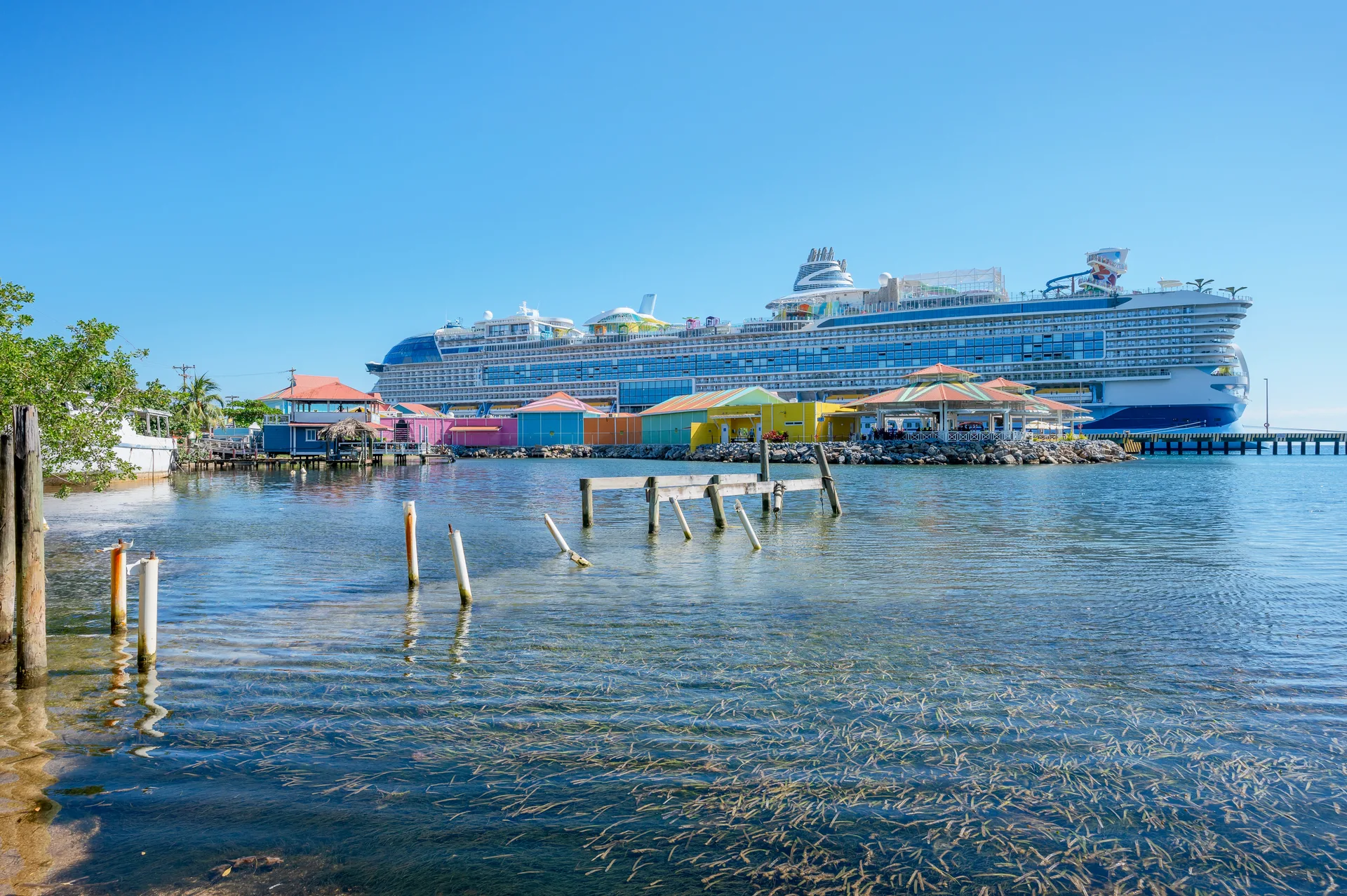
Roatán, Honduras
Honduras' Bay Island of reefs and rainforest, where the Mesoamerican Barrier Reef wraps the coast, West Bay's white sand meets reef snorkeling, and sloths and iguanas greet visitors in island parks.
Port highlights
The Mesoamerican Barrier Reef, the second-largest reef system on earth, runs right along Roatán's shore, with wall dives and shallow snorkeling a boat ride from the piers.
West Bay Beach, the island's signature stretch of white sand, backed by reef and lined with beach bars.
Gumbalimba Park and the island's sloth and iguana sanctuaries, where visitors meet rescued animals face to face.
Interesting facts
Roatán is the largest of Honduras' Bay Islands, lying about 40 miles north of the mainland coast.
Cruise ships dock at Coxen Hole and at Mahogany Bay, the island's purpose-built cruise center.
The island's population blends Spanish-speaking Hondurans with English-speaking communities whose roots go back to British, Garifuna, and Caribbean settlers.
Something not everyone knows
Roatán's English-speaking communities trace back to pirates, Caymanian settlers, and the Garifuna, and many islanders switch easily between English and Spanish, a living legacy of the island's frontier past.
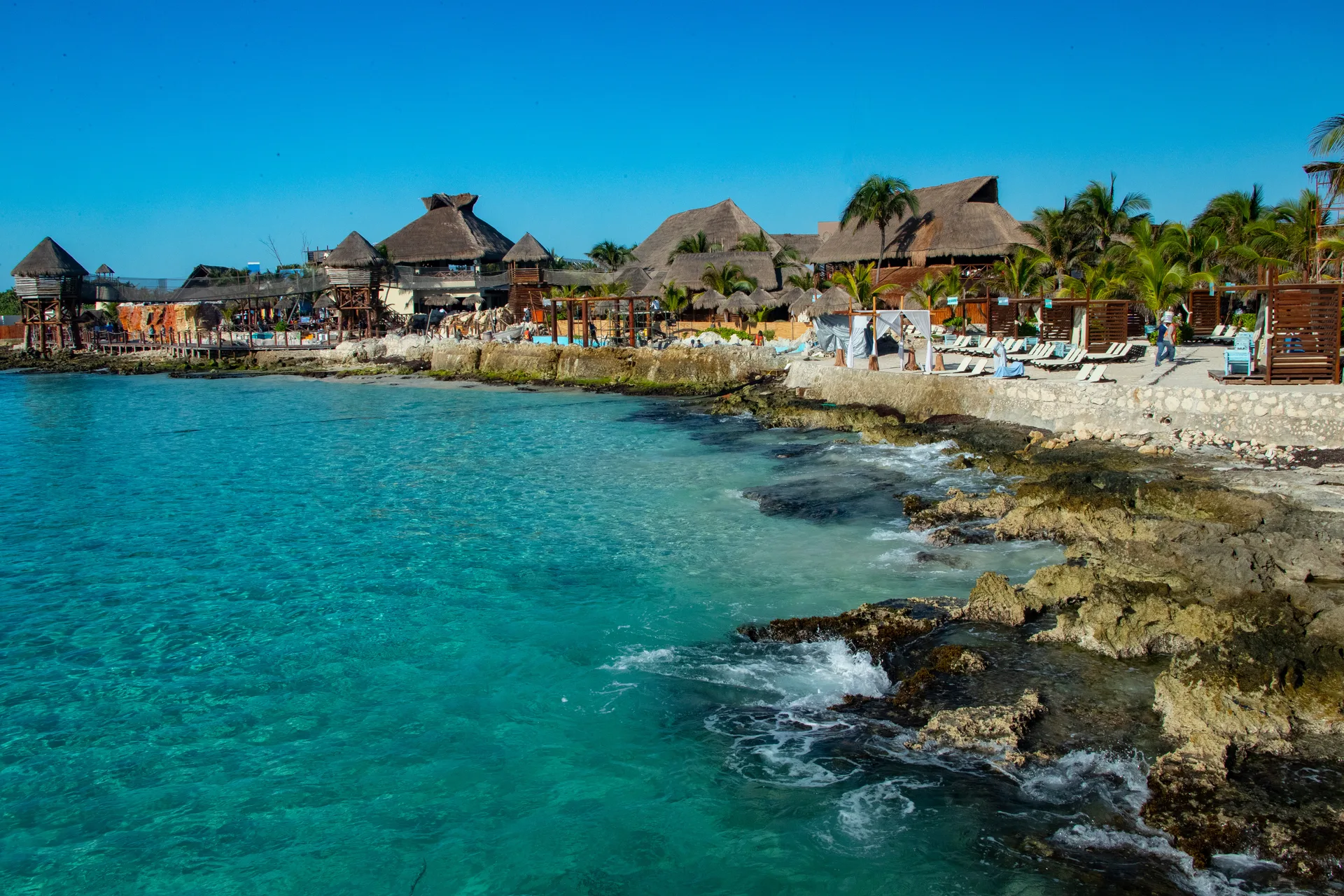
Puerto Costa Maya, Mexico
The Yucatán's southern cruise gateway, a purpose-built port at Mahahual where Mayan ruins, reef snorkeling, and a laid-back beach village meet the western Caribbean.
Port highlights
Chacchoben, the great Maya ruin site about an hour inland, with its towering temple pyramids rising from the jungle.
The reef at Mahahual, part of the Mesoamerican Barrier Reef, with snorkel trips setting out from the village beach.
The port's own Maya-styled village, with a pool, shops, and a beach club steps from the ship.
Interesting facts
Puerto Costa Maya opened in 2001 as a purpose-built cruise port on Mexico's southern Caribbean coast.
The port sits on the Costa Maya, the name given to the southern stretch of Mexico's Caribbean shoreline.
Chacchoben, whose name means 'place of red corn' in the Maya language, was opened to visitors in the early 2000s after decades overgrown by jungle.
Something not everyone knows
Chacchoben was still largely buried when the cruise port opened: the temple complex was recorded by a local farmer in the 1940s but only cleared and opened to visitors around the same years the Costa Maya piers welcomed their first ships.
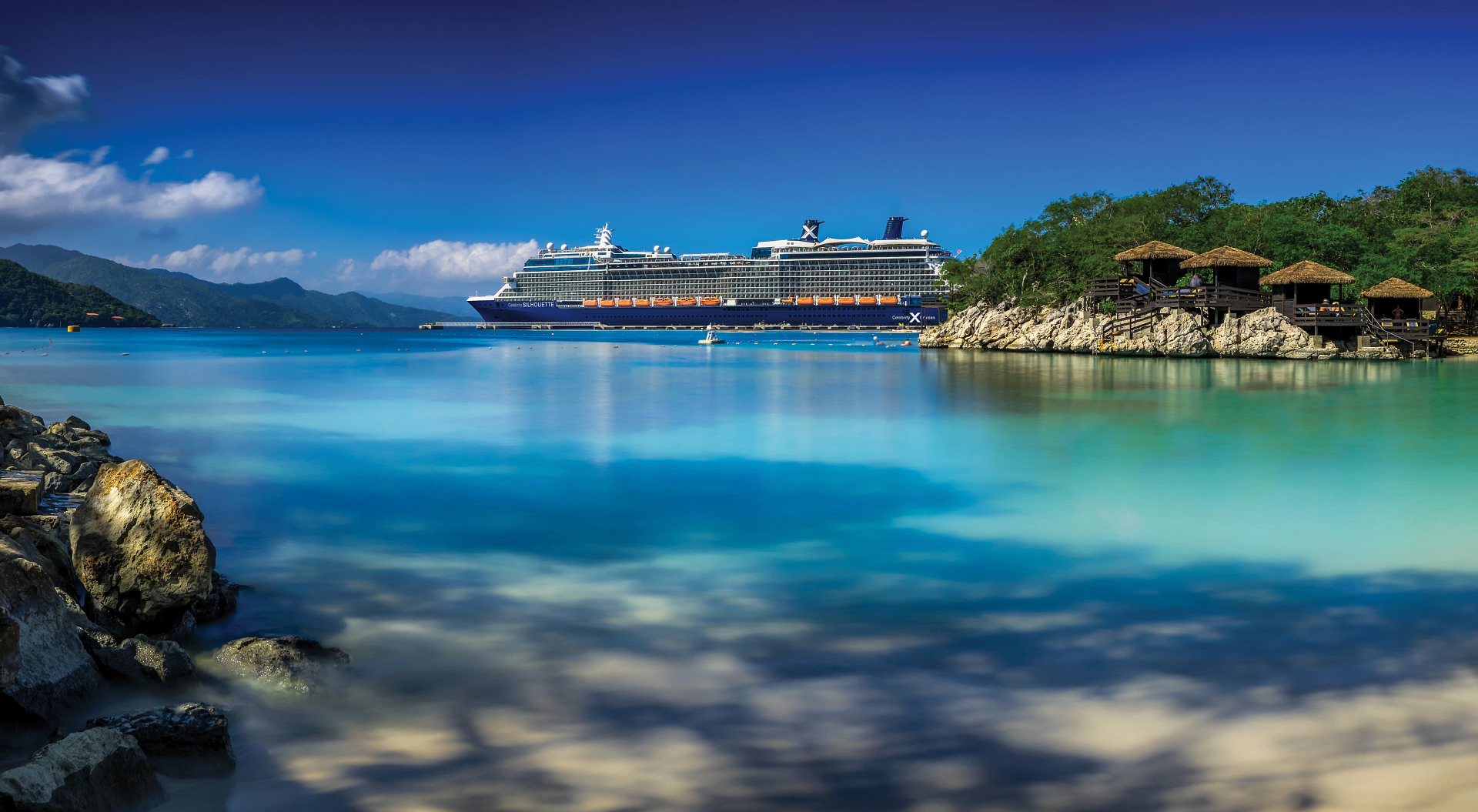
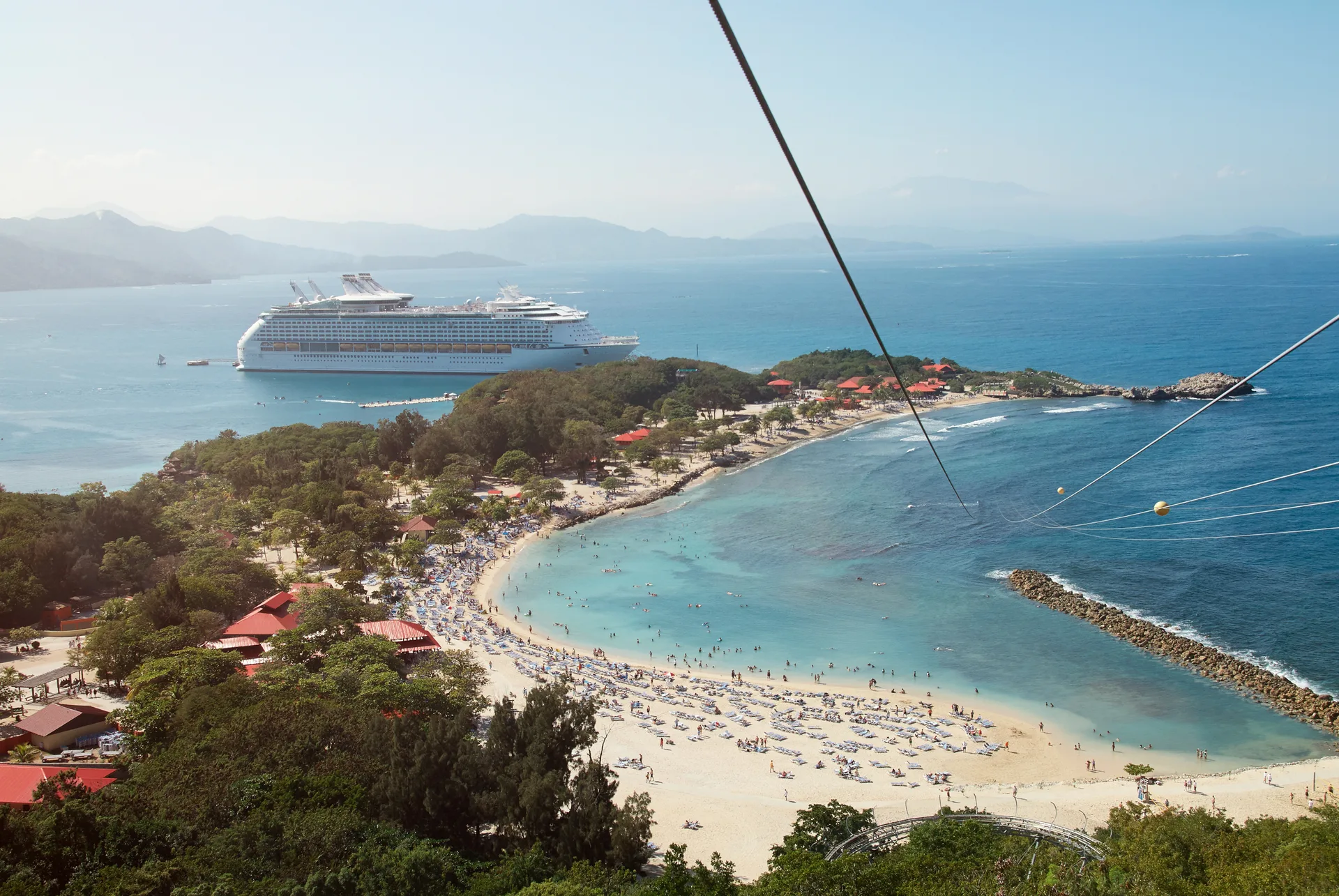
Labadee, Haiti
Royal Caribbean's private beach destination on the north coast of Haiti, a palm-lined peninsula of sandy coves and water sports reached only by cruise ship and surrounded by forested hills.
Port highlights
Columbus Cove, the island's largest beach, a long curve of soft sand with calm, shallow water and a swim platform offshore.
The Dragon's Breath Flight Line, a zip-line-style ride that sends riders gliding high over the water between the hillside and the beach.
Snorkeling, kayaking, and a mountain coaster that races down the hillside above the coves.
Interesting facts
Labadee has been leased by Royal Caribbean since the late 1980s, making it one of the longest-running private cruise destinations in the Caribbean.
Guests can only reach Labadee by cruise ship; there is no airport, and the destination is staffed largely by local residents.
The peninsula sits on the north coast of Haiti, about 100 miles from the country's capital, Port-au-Prince.
Something not everyone knows
After the 2010 earthquake in Haiti, Royal Caribbean briefly used Labadee as a staging point for relief supplies and delivered aid to the surrounding region on its ships.
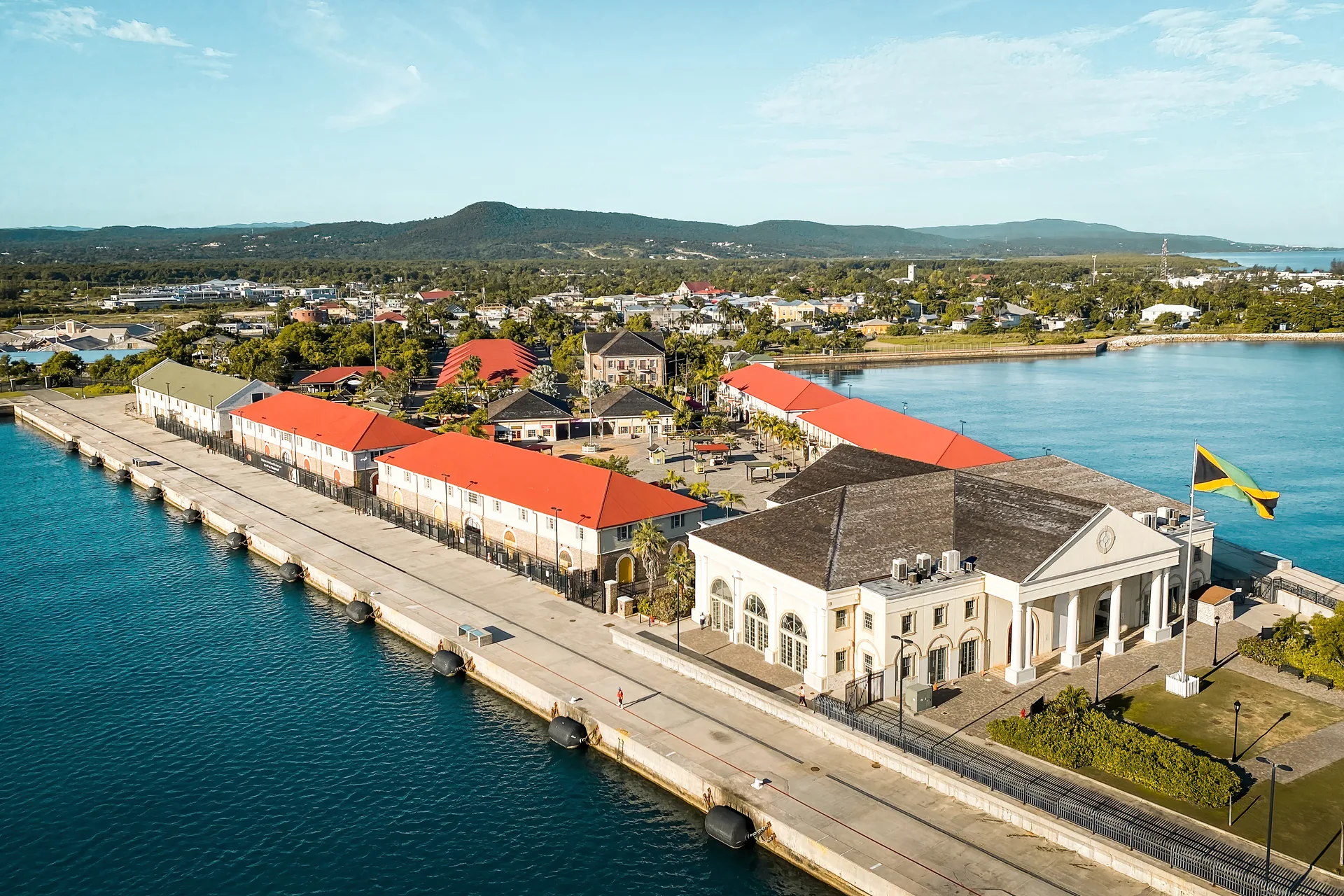
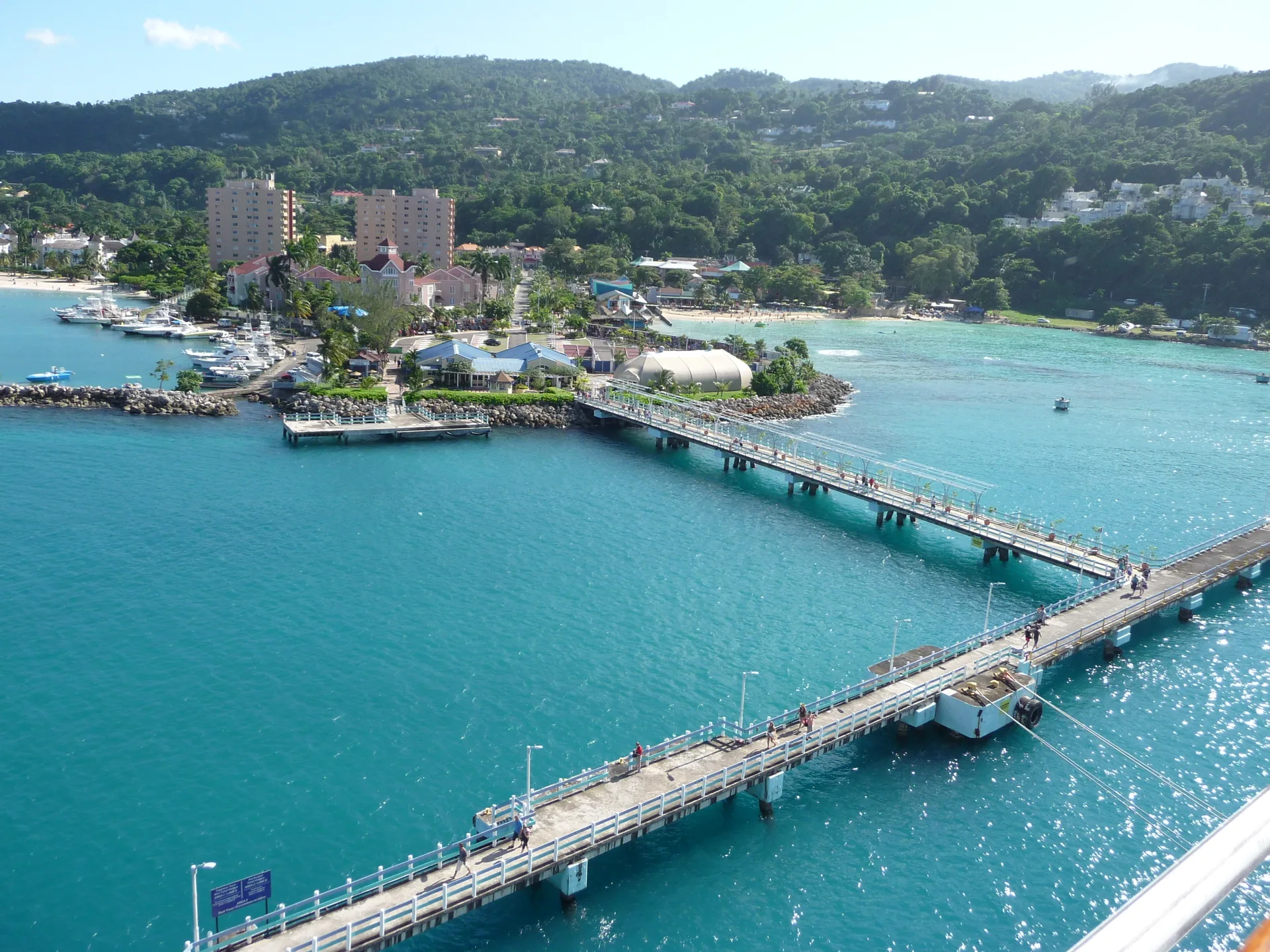
Falmouth, Jamaica
A Georgian-era port town on Jamaica's north coast, whose restored 19th-century streets frame the cruise pier and whose tours lead inland to the island's signature waterfalls and rivers.
Port highlights
The waterfront town's Georgian architecture, a grid of pastel 18th- and 19th-century buildings around Water Square.
Dunn's River Falls, the famous terraced waterfall near Ocho Rios, a favorite shore excursion from Falmouth.
Martha Brae River bamboo rafting, a slow drift through rainforest on hand-steered rafts.
Interesting facts
Falmouth was founded in 1769 and grew wealthy on the sugar trade, when it was one of the busiest ports in Jamaica.
The modern cruise port opened in 2011, built with the historic town center in mind.
The town is the capital of the parish of Trelawny, set about halfway between Montego Bay and Ocho Rios on the north coast.
Something not everyone knows
Falmouth takes its name from the Cornish town of Falmouth in England, a naming habit shared by many of Jamaica's colonial-era settlements.
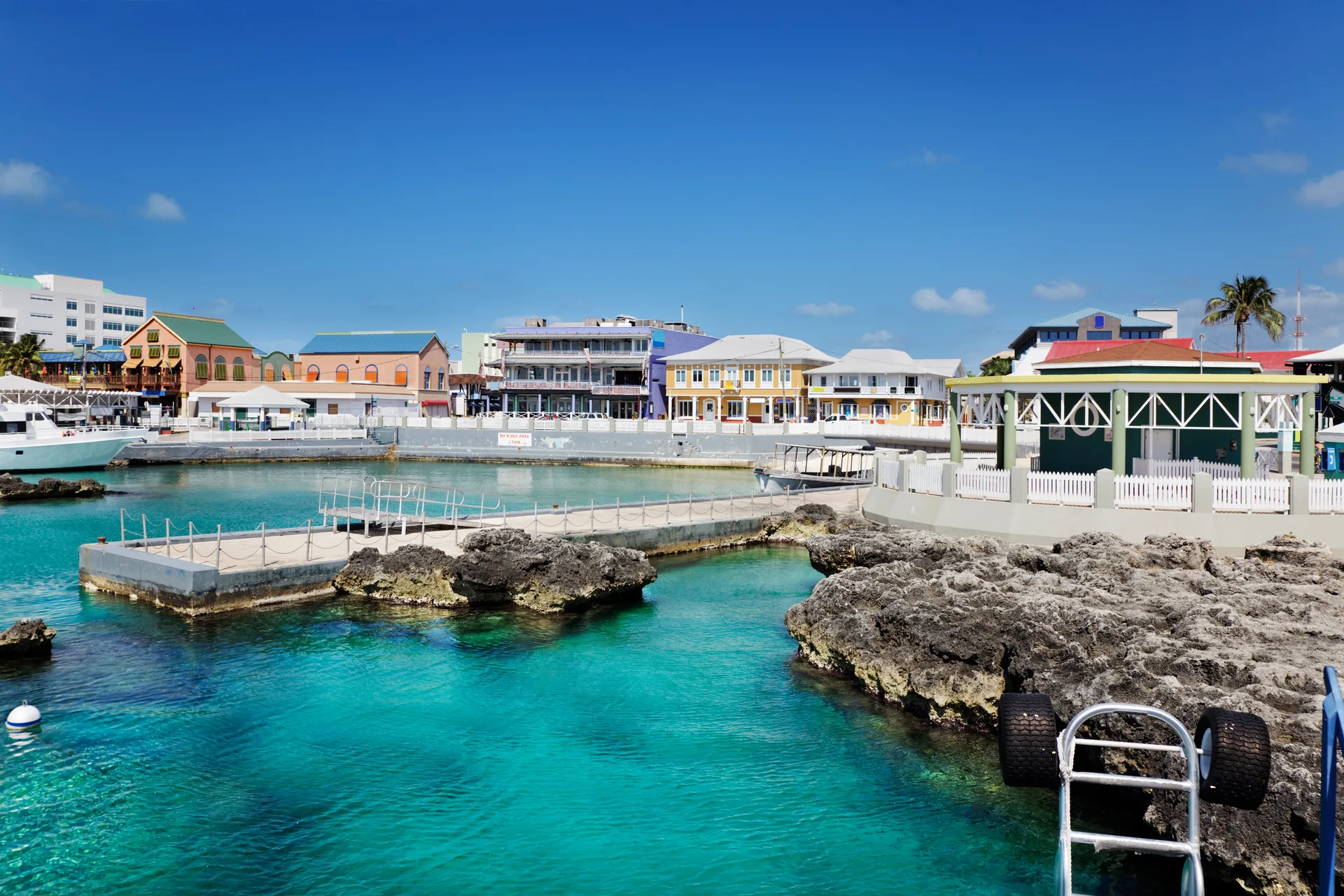
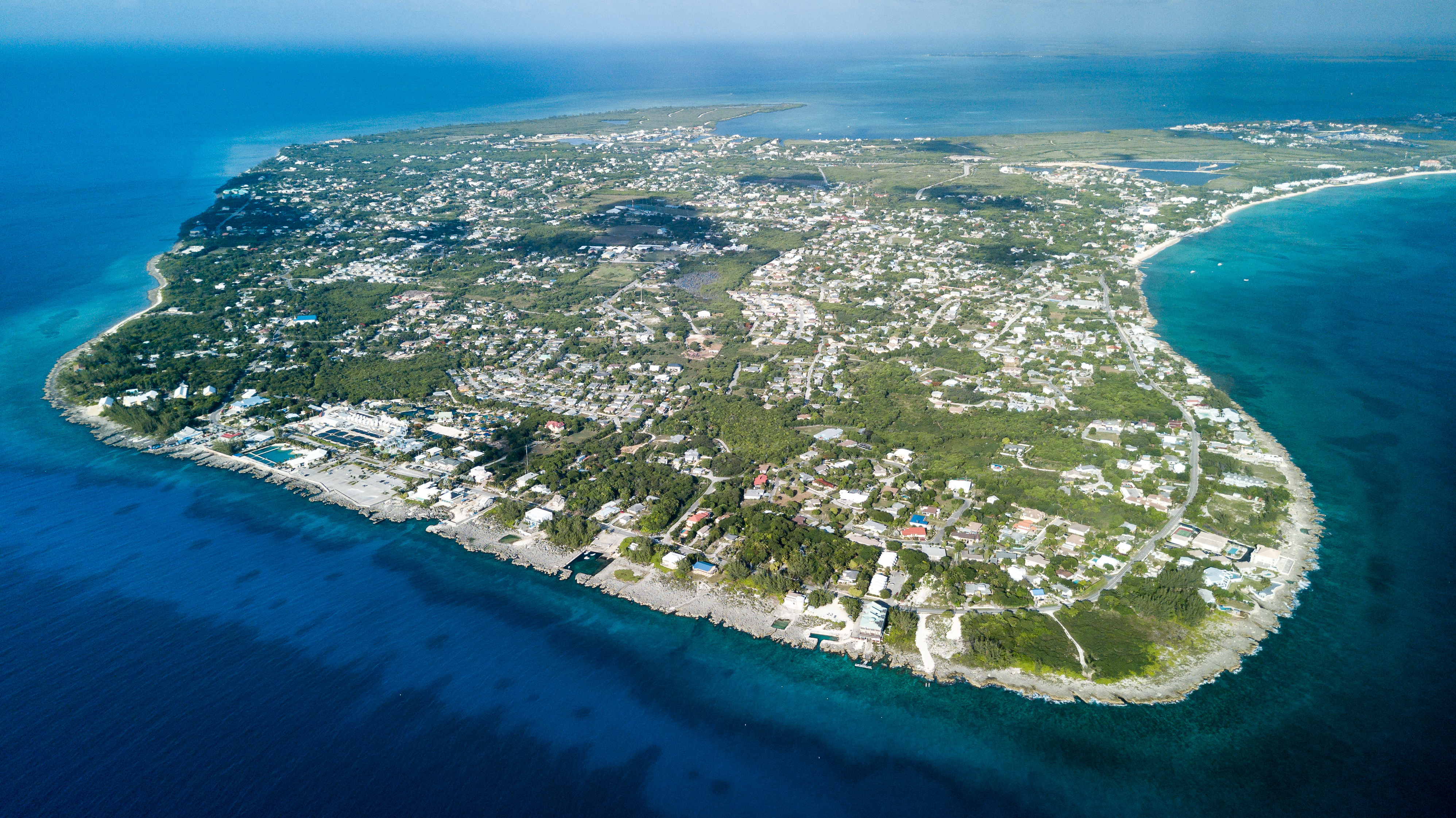
George Town, Grand Cayman
The capital of the Cayman Islands on Grand Cayman's west coast, best known for the white-sand ribbon of Seven Mile Beach, stingray sandbars, and a compact duty-free shopping district near the tender pier.
Port highlights
Seven Mile Beach, the island's famous stretch of powder-white sand just north of George Town.
Stingray City, a shallow sandbar where friendly southern stingrays gather and visitors can wade among them.
George Town's gallery-and-jewelry district, with Caymanian crafts and duty-free stores steps from where passengers tender ashore.
Interesting facts
George Town is the capital of the Cayman Islands, a British Overseas Territory.
Cruise ships anchor in George Town Harbour and passengers travel ashore on tenders.
The Cayman Islands are one of the world's leading offshore financial centers, and the territory levies no direct income tax.
Something not everyone knows
Stingray City is not a coral reef: it is a shallow sandbar where local fishermen once cleaned their catch, teaching generations of southern stingrays to gather for easy food.
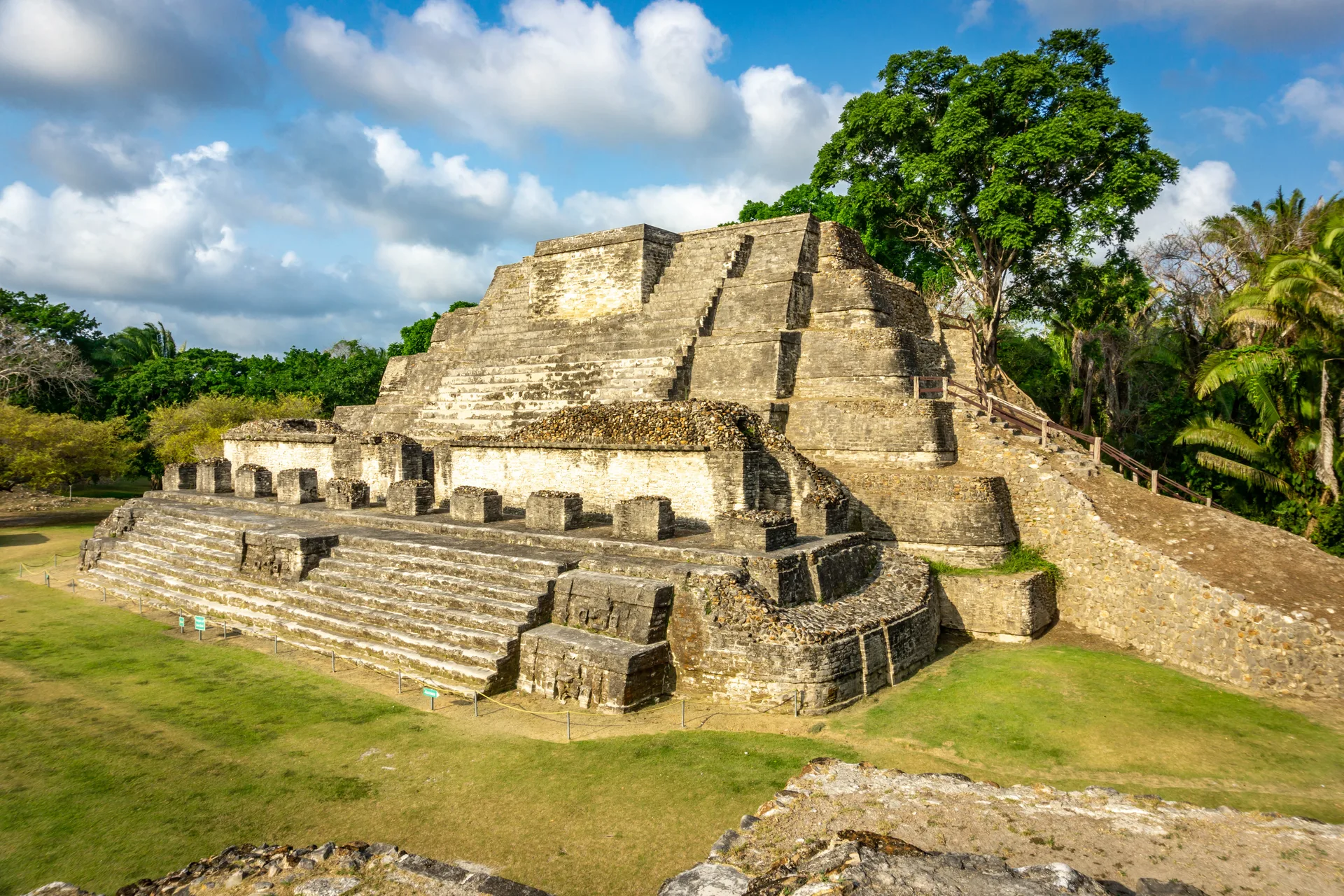
Belize City, Belize
Belize's largest city and historic port, set at the mouth of the Belize River, where cruise passengers tender ashore and set out for barrier-reef snorkeling and Maya temple day trips.
Port highlights
The Belize Barrier Reef, the second-largest reef system on Earth and a UNESCO World Heritage site, a boat ride from the city.
Altun Ha, a major Maya ruin site about an hour inland, crowned by the famous stone Jaguar Temple.
The city's Caribbean-British character: wood-frame houses, riverside markets, and rum punch at waterfront bars.
Interesting facts
Belize City was the national capital until 1970, when the government moved to purpose-built Belmopan inland.
Belize is the only English-speaking country in Central America, a legacy of British colonial rule.
Ships anchor offshore and passengers reach the city by tender, since the harbor is shallow for large vessels.
Something not everyone knows
Much of old Belize City is built on reclaimed mangrove swamp at sea level, which is why its classic houses stand high on stilts and why the capital was moved inland.
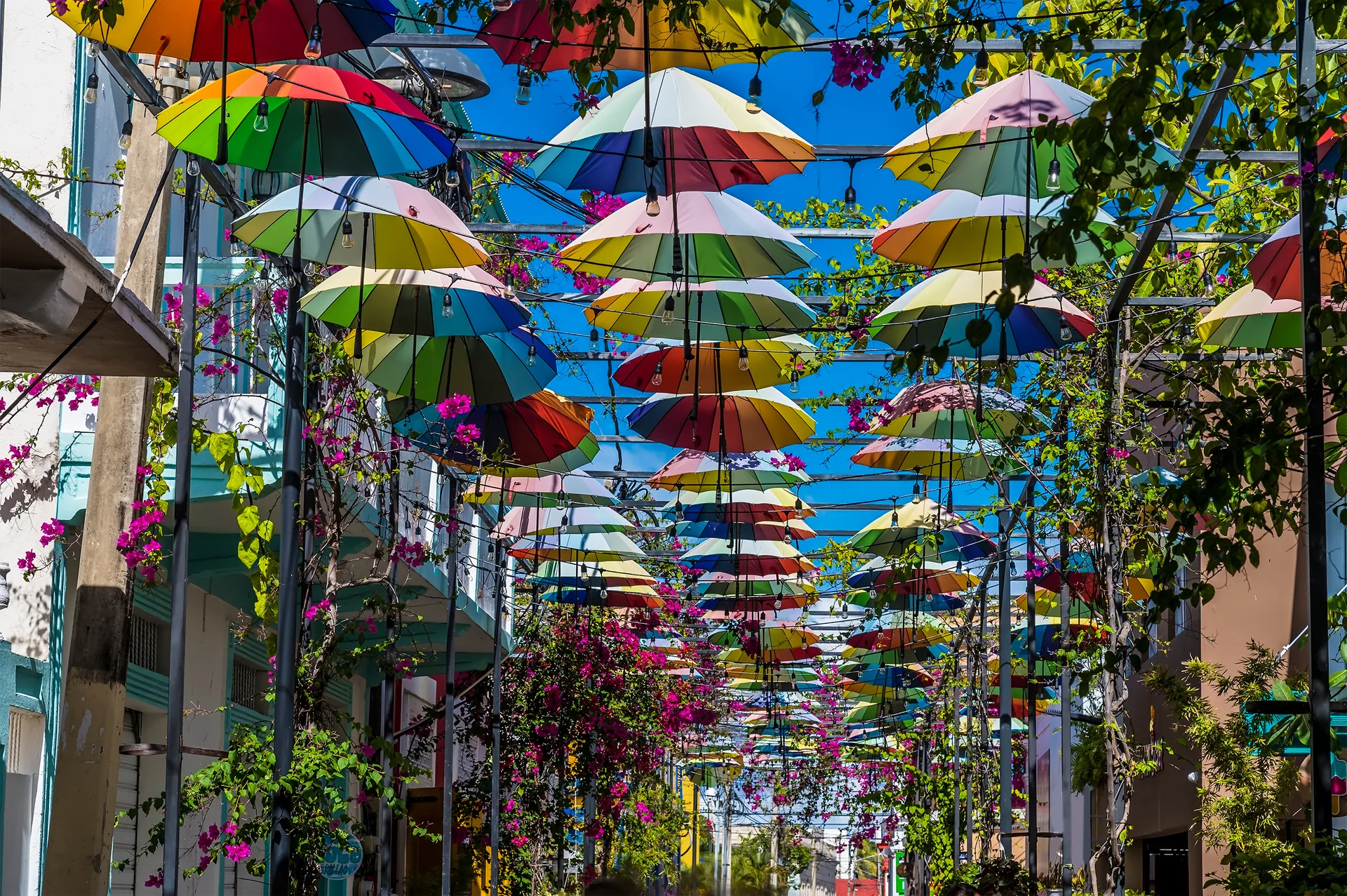
Puerto Plata, Dominican Republic
A historic Atlantic-coast city on the Dominican Republic's Amber Coast, set beneath the cone of Isabel de Torres mountain, with a restored Victorian quarter, a colonial fort, and a cable car to a hilltop botanical garden.
Port highlights
The cable car that climbs Isabel de Torres, where a summit botanical garden and a replica of Rio de Janeiro's Christ statue look down over the bay.
Fort San Felipe, the Spanish fortress begun in the 1500s that guards the harbor entrance.
The Victorian gingerbread district, rows of lacy wooden houses painted in bright colors, plus amber shops along the waterfront.
Interesting facts
Puerto Plata is one of the oldest European-founded cities in the Americas, with roots tracing to the early 1500s.
The city's name means 'silver port,' a name Columbus is said to have given for the way the mountain's summit glowed silver in the clouds.
The Amber Coast earned its name from the fossilized resin found around Puerto Plata, displayed in the city's amber museum.
Something not everyone knows
Nearly all of colonial Puerto Plata burned in an 1863 fire, and the city rebuilt itself in the lacy Victorian style that gives the old town its distinctive look today.
Samaná, Dominican Republic
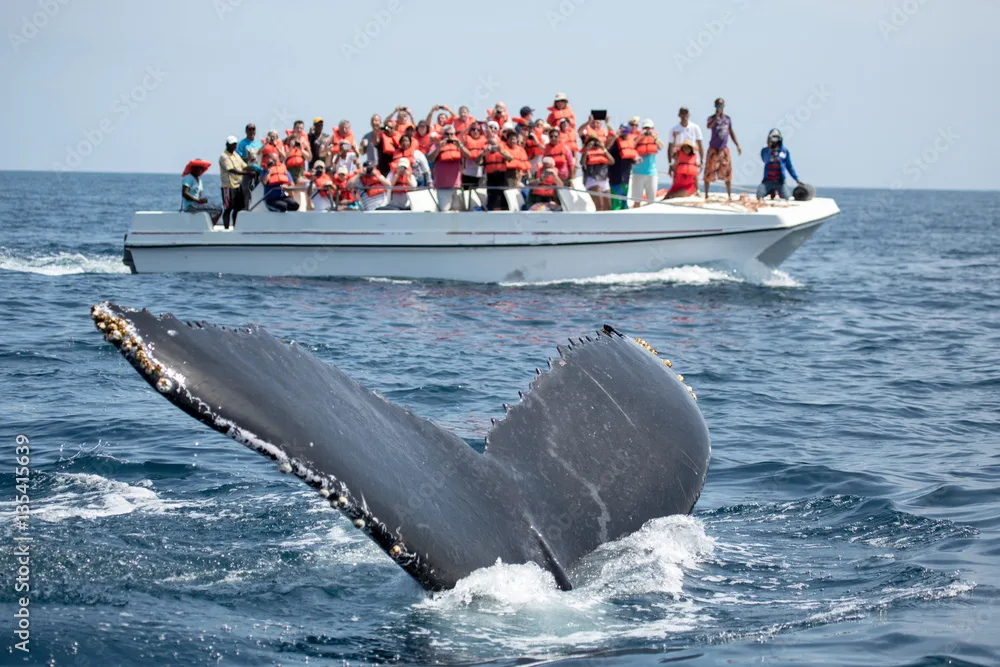
A palm-shaded town on the Samaná Peninsula in the Dominican Republic's northeast, where humpback whales winter in the bay and some of the country's wildest beaches lie down the coast.
Port highlights
Humpback whale watching in the Bay of Samaná, where the whales gather each winter and breach just offshore.
Playa Rincón, a long sweep of wild white sand backed by coconut palms, reached by boat or a rough road from Las Galeras.
El Limón waterfall, which spills 50 meters through rainforest, reached by horse or hike from the hillside farms.
Interesting facts
The Bay of Samaná is one of the world's best whale-watching sites, with humpbacks arriving from January through March.
Samaná was settled in 1824 by colonists from the United States, and English surnames still echo in local families.
The town is the commercial heart of the peninsula, with ferries and boats heading to the islands of the bay on request.
Something not everyone knows
Cayo Levantado, the tiny islet off Samaná, is known to Dominicans as Bacardi Island because an old rum commercial made it famous; today boats run visitors over for a beach day.
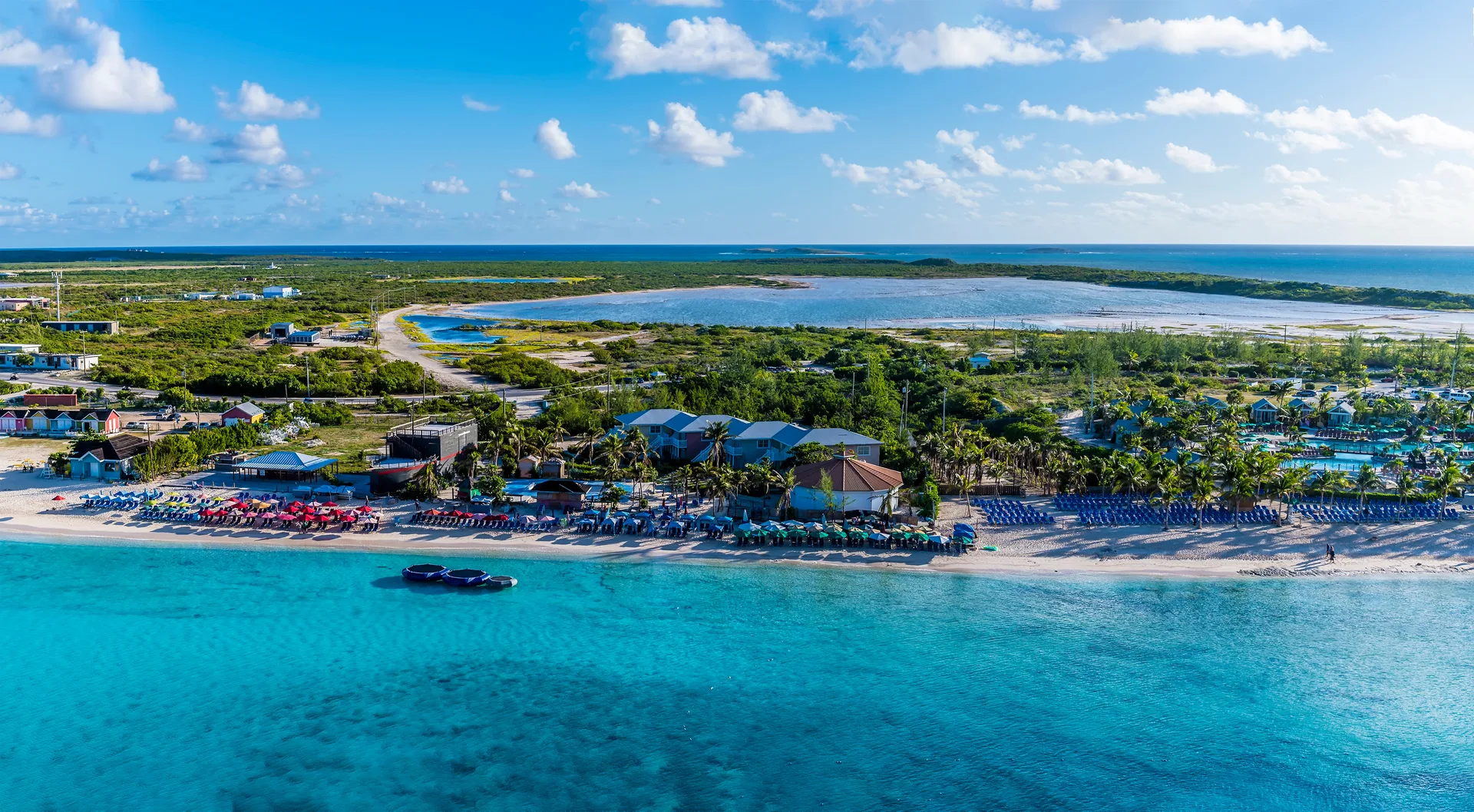
Grand Turk, Turks & Caicos
The capital island of the Turks & Caicos, a low scrub-covered sliver of land where the Bermudian-style houses of Cockburn Town face a drop-off so steep that the wall dive starts a swim from shore.
Port highlights
Cockburn Town, the tiny capital, with pastel Bermudian rooflines, a small national museum, and quiet lanes.
The wall, a dramatic deep-water drop-off that begins close to shore, making Grand Turk a celebrated diving and snorkeling stop.
Governor's Beach, a stretch of white sand where the water steps from turquoise to deep blue in a few paces.
Interesting facts
Grand Turk is the capital island of the Turks & Caicos Islands, a British Overseas Territory.
Christopher Columbus is often cited as making his first New World landfall in the islands in 1492, and Grand Turk is a leading candidate.
The cruise center opened in 2006 and sits beside one of the island's best snorkeling reefs, with a beach, pool, and shops.
Something not everyone knows
The Turks & Caicos takes half its name from the Turk's head cactus, whose red cap reminded early sailors of a Turkish fez; 'Caicos' comes from the indigenous Lucayan name for the islands.
Grand Bahama Island (Freeport), Bahamas
The Bahamas' northernmost island, home to the planned city of Freeport and the resort district of Lucaya, where Port Lucaya's marketplace and water sports sit across the water from Florida.
Port highlights
Port Lucaya Marketplace, the waterfront square of boutiques, bars, and straw markets beside a marina in Lucaya.
Lucayan National Park, with a boardwalk to Gold Rock Beach and one of the world's longest underwater cave systems.
Snorkeling and glass-bottom boat trips over the shallow reefs and the chance to swim with dolphins at the local marine park.
Interesting facts
Freeport was created in the 1950s as a free-trade zone under the Hawksbill Creek Agreement of 1955.
Grand Bahama is one of the closest Bahamian islands to the United States, lying about 70 miles off the coast of Florida.
The capital, Freeport, was designed by the same planners behind modern resort developments, laid out around the industrial port of the Hawksbill Creek.
Something not everyone knows
Lucayan National Park preserves part of one of the longest underwater cave systems in the world, a maze of limestone tunnels once used by the Lucayan people who inhabited the island before the colonial era.
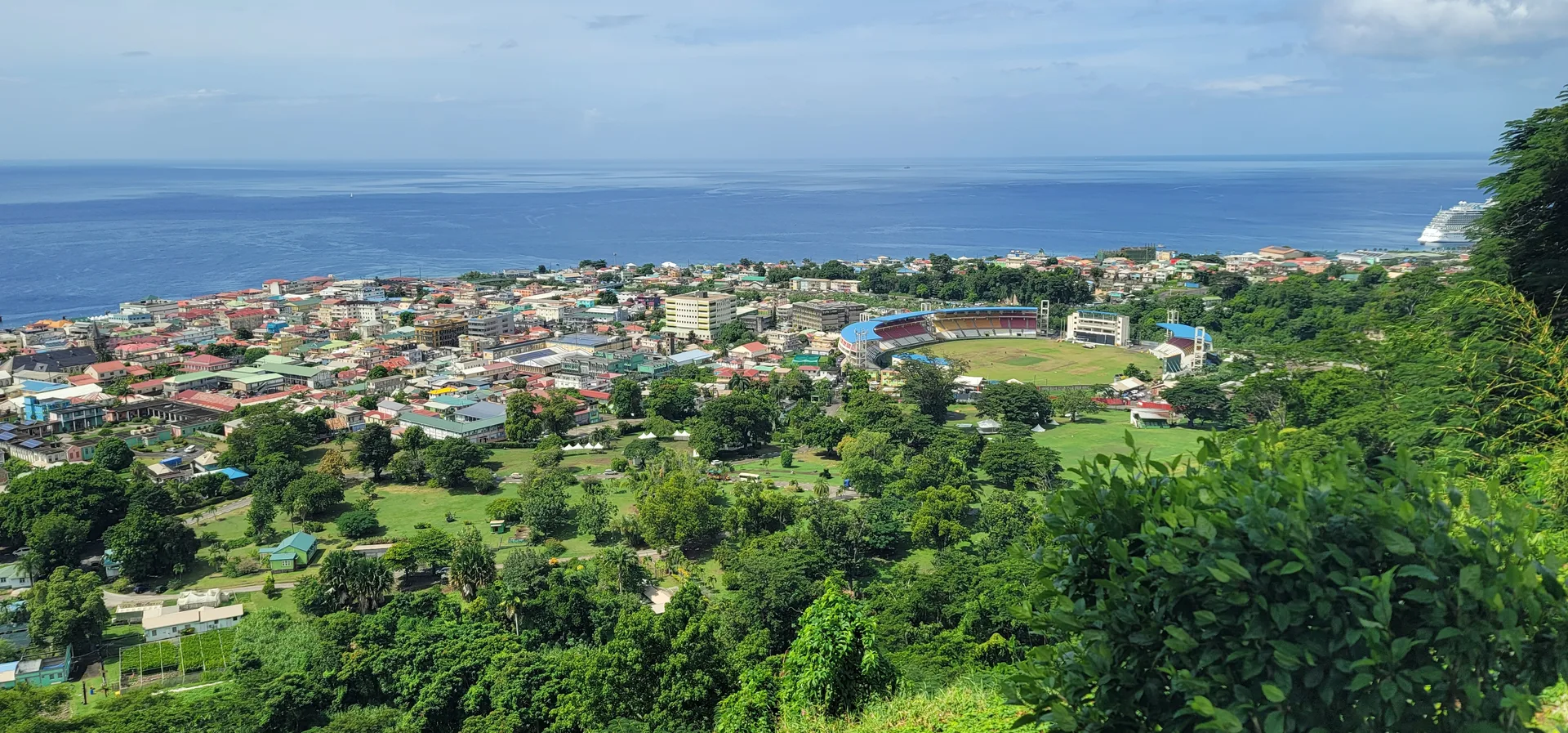
Roseau, Dominica
The small capital of Dominica, the Caribbean's 'Nature Island,' a river-mouth city backed by black-sand beaches and green peaks, where rainforest trails, waterfalls, and hot springs lie minutes from town.
Port highlights
Trafalgar Falls, twin waterfalls that drop out of the rainforest a short drive from Roseau, with hot springs at the trailhead.
Morne Trois Pitons National Park, a UNESCO World Heritage site whose hike leads to the famous Boiling Lake.
The city's colorful market, botanical gardens, and riverside streets of timber houses painted in bright Caribbean colors.
Interesting facts
Dominica lies between the French islands of Guadeloupe and Martinique and is a member of the Commonwealth, with English as its official language.
The island's rugged volcanic heart, rainforest, and rivers earned it the nickname 'Nature Island.'
Larger ships anchor off Roseau and passengers come ashore by tender, since the harbor is small.
Something not everyone knows
The Boiling Lake in the mountains above Roseau is one of the largest boiling lakes on Earth, a flooded volcanic vent whose gray water churns and steams perpetually.
St. Croix, U.S. Virgin Islands
The largest of the U.S. Virgin Islands, a low, rural island of Danish-era towns, cane fields, and reef, where ships dock at Frederiksted's pier and the snorkeling trails of Buck Island lie just offshore.
Port highlights
Christiansted, the Danish colonial waterfront of pastel warehouses, arcs, and the island's best historic district, on the north shore.
Buck Island Reef National Monument, a protected reef with an underwater snorkel trail a short boat ride from the island.
Frederiksted, the west-end port town where ships dock, with a restored Victorian waterfront and the Cruzan rum distillery nearby.
Interesting facts
St. Croix is the largest of the U.S. Virgin Islands, spanning about 84 square miles.
The island was a Danish colony until 1917, when Denmark sold the Virgin Islands to the United States.
Buck Island's marked underwater trail is the only one of its kind in the U.S. National Park System.
Something not everyone knows
For a stretch in the 1600s, St. Croix was ruled by the Knights of Malta, a religious military order, before the island changed hands among several European powers.
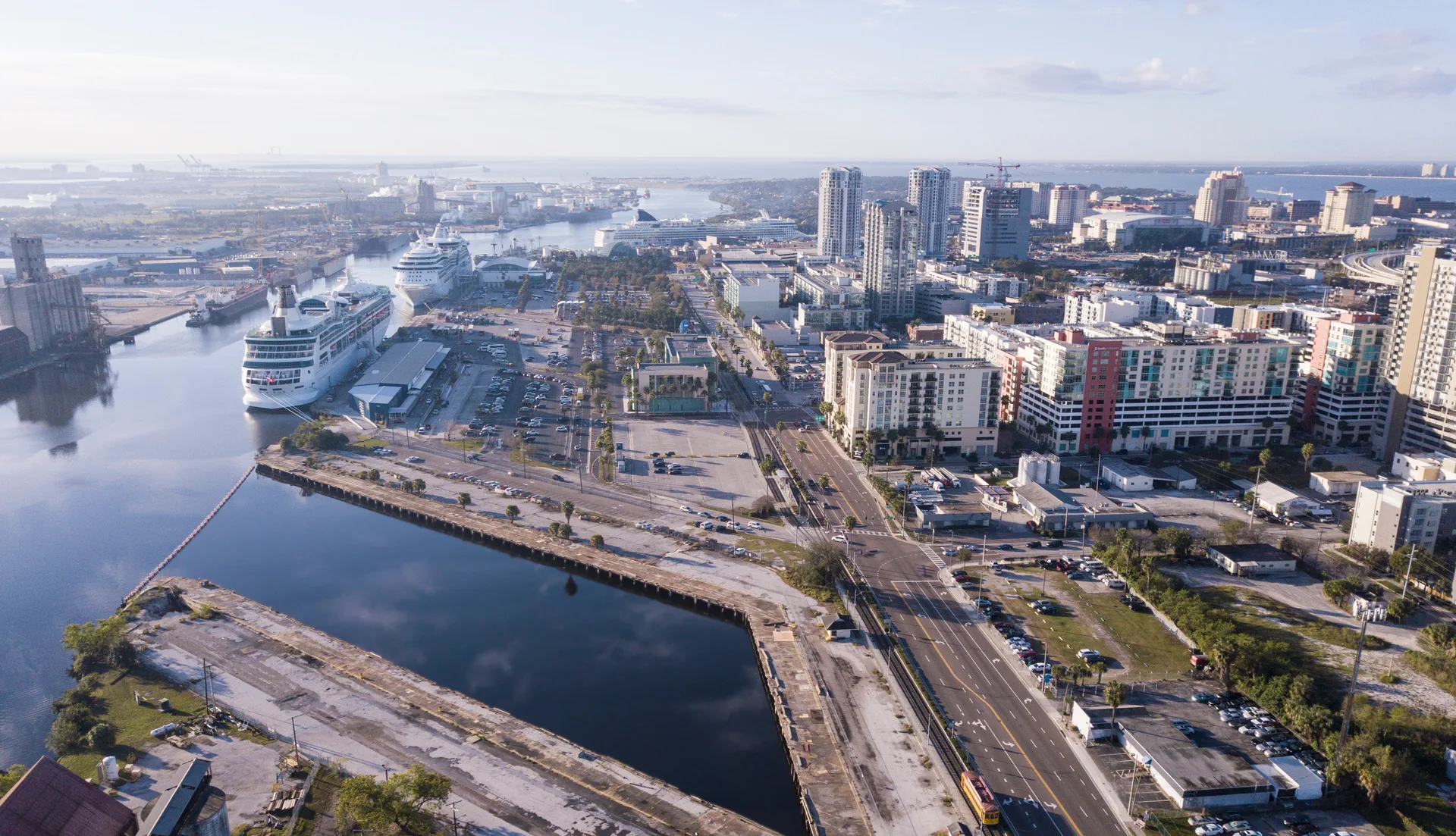
Tampa, Florida
A Gulf-coast homeport on Florida's west coast, where cruise ships sail from Port Tampa Bay while Ybor City's cigar heritage, the riverfront Riverwalk, and nearby Gulf beaches fill the days before and after the voyage.
Port highlights
Ybor City, the historic cigar district founded in the 1880s, now a lively quarter of brick storefronts, cafés, and nightlife.
The Tampa Riverwalk, a waterfront promenade linking museums, parks, and the channelside district along the Hillsborough River.
The Gulf beaches of St. Pete and Clearwater, white-sand strands a short drive across the bay.
Interesting facts
Port Tampa Bay is one of the largest cruise homeports on the Gulf of Mexico, with ships sailing from the downtown-channel terminals.
Ybor City was founded in 1886 by Vicente Martinez-Ybor, and Tampa grew into a cigar-making capital that drew thousands of immigrant workers.
Cruise ships heading to sea pass beneath the Sunshine Skyway Bridge, the cable-stayed span across the mouth of Tampa Bay.
Something not everyone knows
Tampa's deep history includes a 13th-century Native American village called Mocozo, and the fort and town built in 1824 on the site took the name Fort Brooke, an ancestor of the modern city.
Cruise lines sailing from here
Royal Caribbean, Carnival, Celebrity, Norwegian
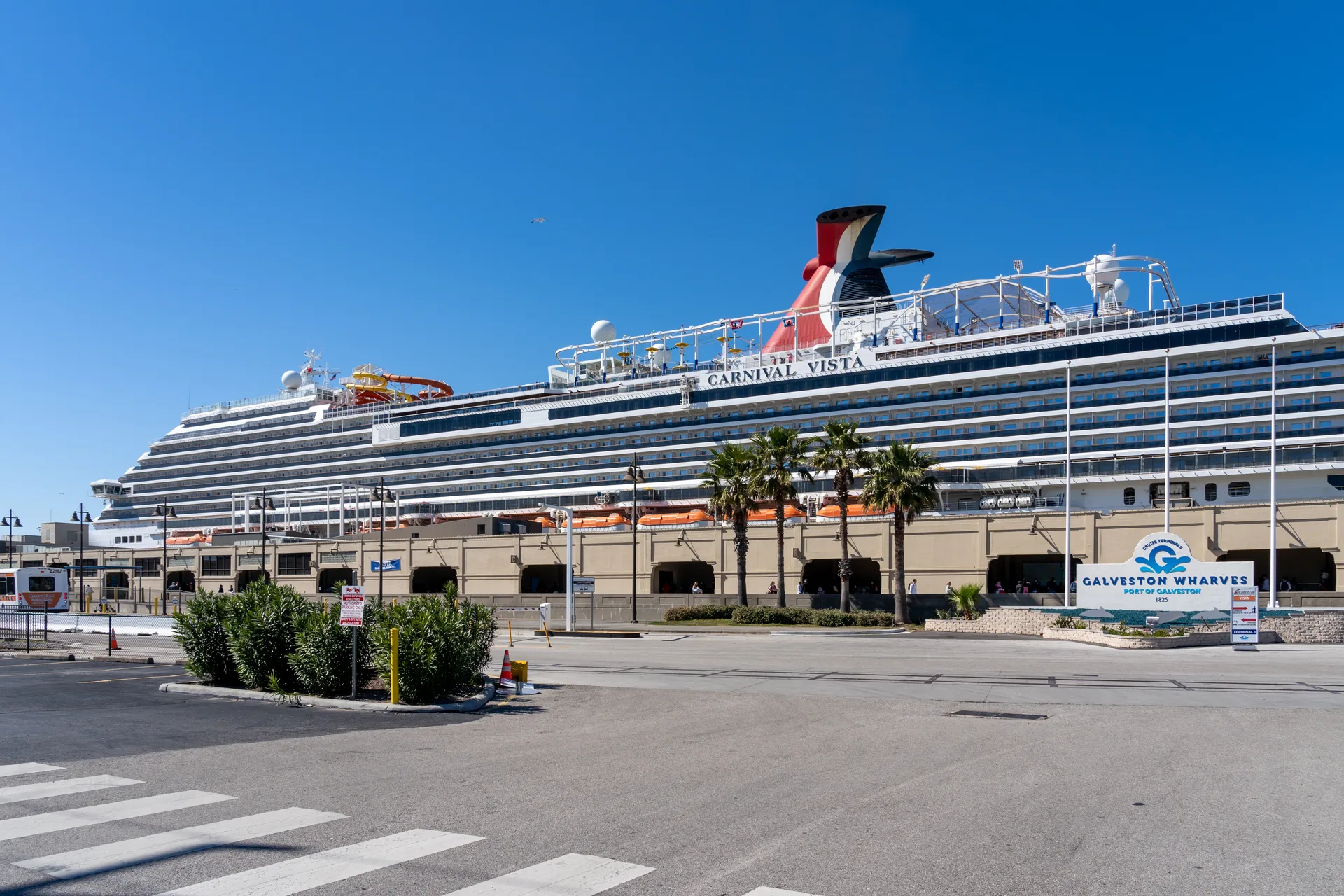
Galveston, Texas
An island city on the Texas Gulf coast where Victorian sea captains' houses line the historic East End, the Strand shopping district fills the downtown, and cruise ships sail from one of the busiest ports on the Gulf.
Port highlights
The Strand, the National Historic Landmark district of iron-front commercial buildings that was once called the 'Wall Street of the Southwest.'
The East End Historic District, where ornate Victorian mansions and cottages recall the island's 19th-century heyday.
Galveston Island Historic Pleasure Pier, a family boardwalk of rides and games above the beach, plus Moody Gardens' attractions nearby.
Interesting facts
Galveston was Texas' largest city in the late 19th century, a cotton and banking port that rivaled Houston.
The Port of Galveston is one of the busiest cruise ports on the Gulf of Mexico, with Royal Caribbean ships homeporting there seasonally.
The island is a barrier island about 50 miles south of Houston, linked to the mainland by bridge and causeway.
Something not everyone knows
After the great hurricane of 1900, workers jacked up hundreds of Galveston buildings and pumped sand beneath them to raise the city, while a 17-foot seawall was built along the shore.
Cruise lines sailing from here
Royal Caribbean, Carnival, Norwegian, Disney
Fort Lauderdale, Florida
A south-Florida homeport known as the 'Venice of America' for its canals, where Port Everglades ranks among the world's busiest cruise ports and the beachfront promenade and Las Olas Boulevard set the pace between voyages.
Port highlights
Port Everglades, one of the busiest cruise homeports on Earth and the base for several major cruise brands.
Las Olas Boulevard, the downtown boulevard of galleries, boutiques, and al fresco restaurants running toward the beach.
Fort Lauderdale Beach, a wide boulevard of white sand, and the jungle waterways of the Everglades a short drive inland.
Interesting facts
Port Everglades is consistently ranked among the world's top three cruise homeports by passenger traffic.
Fort Lauderdale is threaded by more than 165 miles of navigable waterways, canals, and rivers, earning the city its Venetian nickname.
The city took its name from a fort built in 1838 during the Seminole Wars beside the New River.
Something not everyone knows
Much of Fort Lauderdale's canal system was dug during the 1920s Florida land boom, which is why so many canals run straight through residential neighborhoods today.
Cruise lines sailing from here
Royal Caribbean, Celebrity, Princess, Holland America, Carnival, Disney, Viking
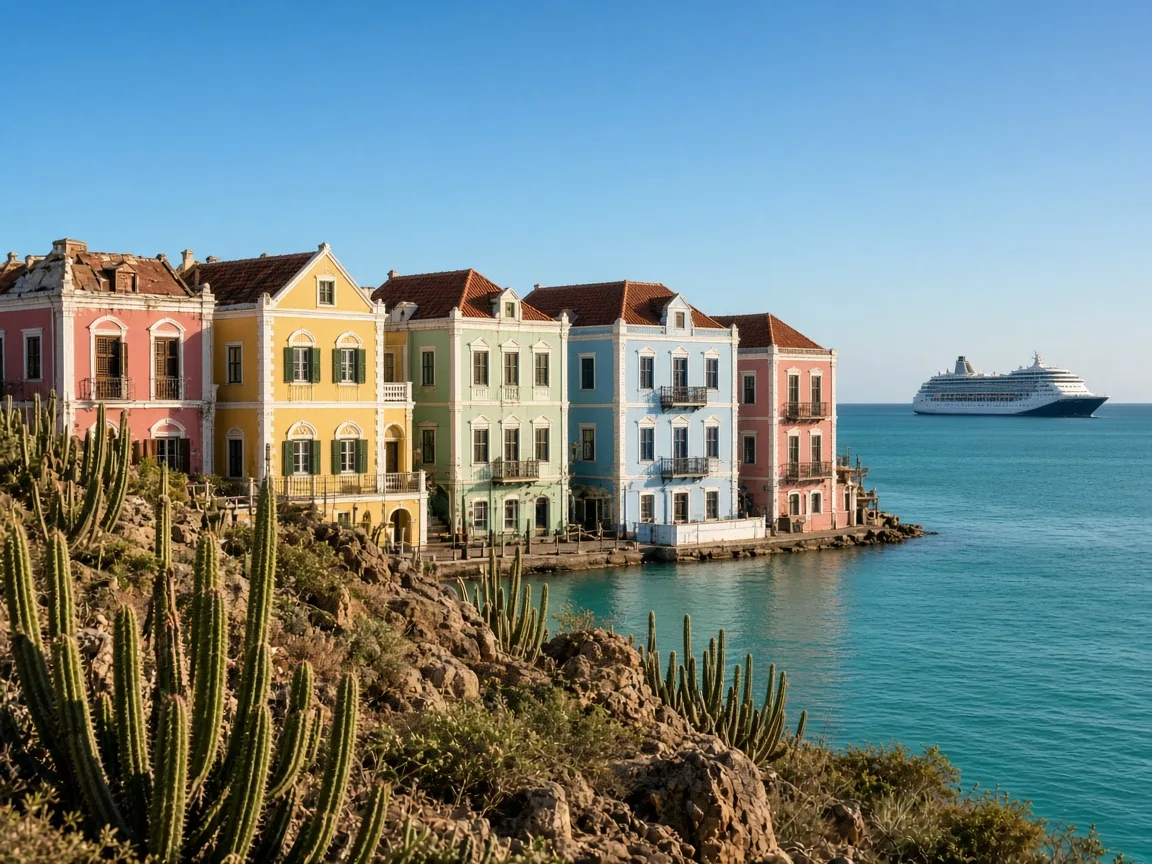
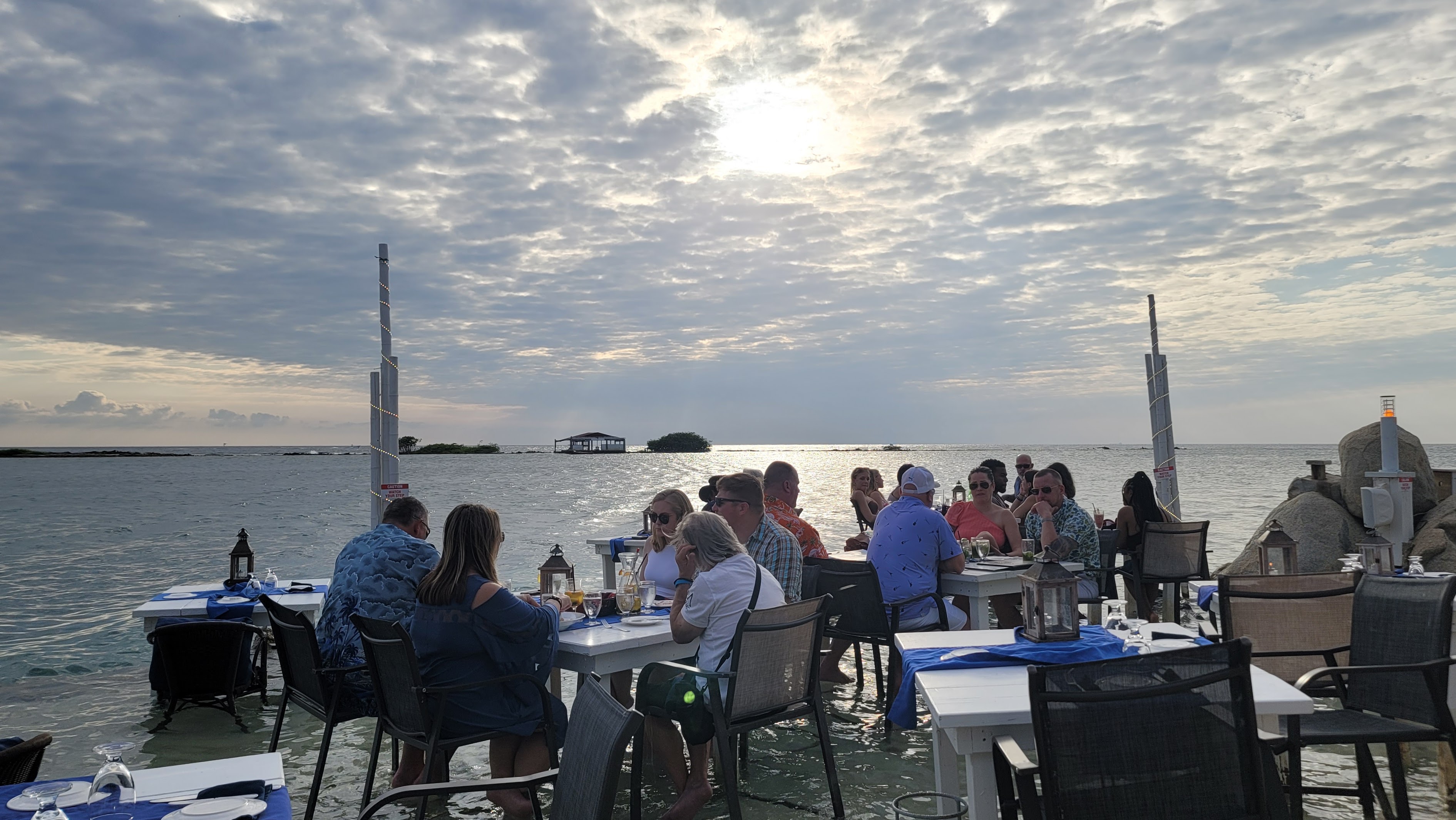
Oranjestad, Aruba
Aruba's capital, a tidy Dutch-flavored town on the island's south coast, steps from Eagle Beach's wide white sand and the desert-sculpted landscape of Arikok National Park.
Port highlights
Eagle Beach, one of the best strands in the Caribbean, sweeping white sand punctuated by the crooked divi-divi trees that have become the island's welcome sign.
Arikok National Park, guarding nearly a fifth of the island, from cactus and iguanas to ancient Indigenous rock art and a natural pool pounded by the sea.
Oranjestad's candy-colored colonial row, the open-air markets, and the duty-free shopfronts, all within a short walk of the pier.
Interesting facts
Aruba sits well south of the main hurricane track, so direct strikes are extraordinarily rare and the island enjoys some of the Caribbean's steadiest sunshine.
It is part of the Kingdom of the Netherlands, one of the 'ABC' islands along with Bonaire and Curaçao.
Arikok covers roughly one-fifth of the island, preserving desert terrain, cactus forest, and the rock art of Aruba's first people.
Something not everyone knows
The divi-divi tree is permanently bent by the trade winds: its trunk stands straight while the crown leans hard to the southwest, so nearly every one of these iconic trees on Eagle Beach points the same way.
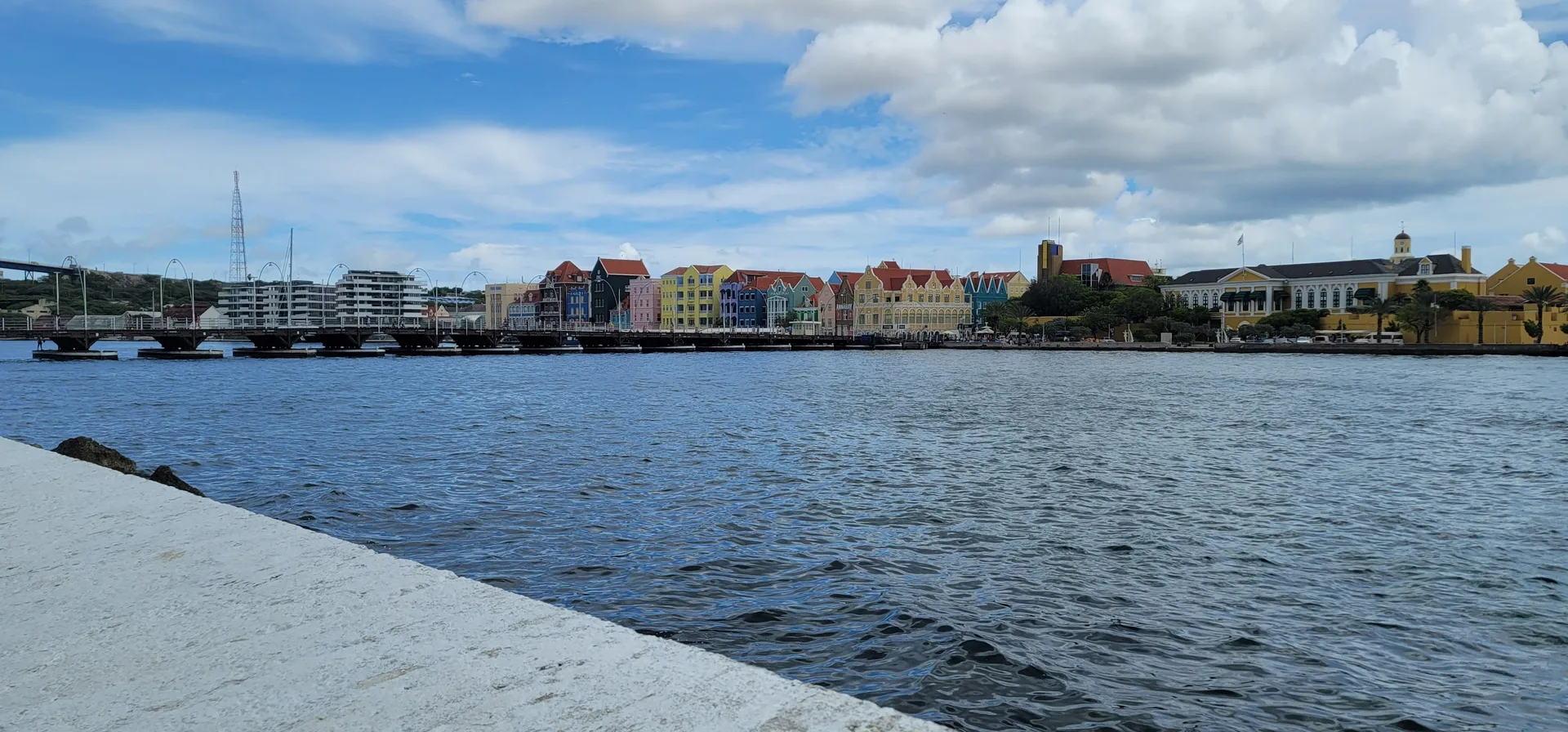
Willemstad, Curaçao
Willemstad's UNESCO-listed canal-side town of rainbow-colored Dutch gables is unlike any other in the Caribbean, wrapped around one of the region's most striking natural harbors.
Port highlights
The Handelskade, the photogenic row of pastel merchant houses along the waterfront that has become the island's postcard image.
Queen Emma, the wooden pontoon bridge that floats across St. Anna Bay and swings open to let ships pass, a draped marvel in service since 1888.
The colorful lanes of Punda and Otrobanda, with street murals, local galleries, and kitschy souvenir shops a short walk or ferry hop apart.
Interesting facts
Willemstad's inner city and harbor were inscribed as a UNESCO World Heritage site in 1997 for their Dutch colonial architecture and working waterfront.
Curaçao is a constituent country of the Kingdom of the Netherlands, and Dutch shares official status with Papiamentu.
The Queen Emma pontoon bridge is one of the only floating wooden swing bridges in the world still in daily service.
Something not everyone knows
The trademark blue liqueur begins with the bitter laraha orange, which thrives in Curaçao's dry climate and lends Curaçao liqueur its flavor. The blue color came later, when a Dutch distiller tinted its version as a marketing play.
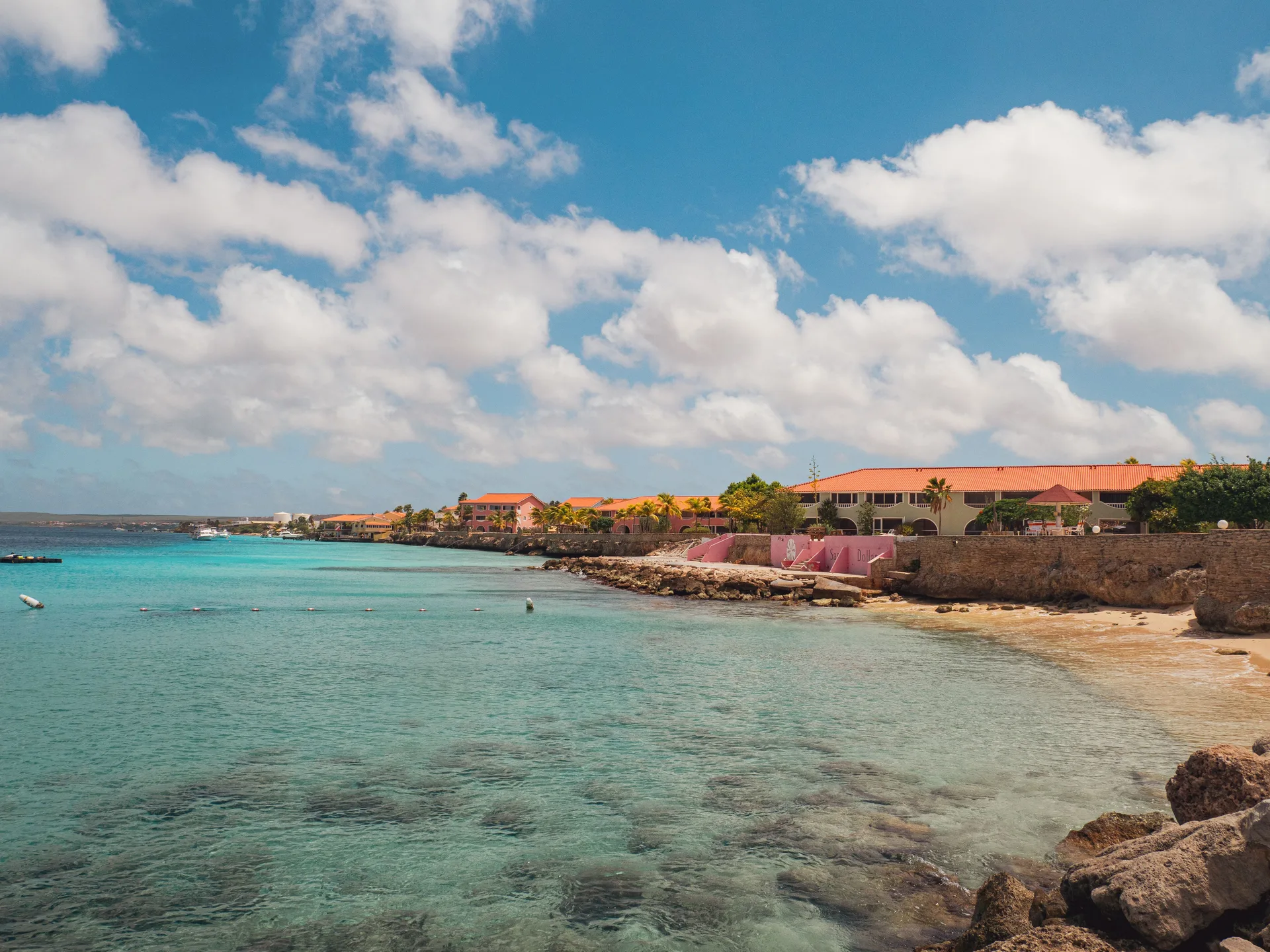
Kralendijk, Bonaire
The diver's island: a Dutch outpost whose whole coast is a marine park, whose salt flats turn pink with flamingos, and whose quiet charm wins travelers who want more reef and less crowd.
Port highlights
Shore diving along the coast, from the yellow-stone entry points that earned Bonaire its reputation as the shore-dive capital of the Caribbean.
Flamingos feeding in the Pekelmeer salt pans, protected from visitors yet visible from the road, set against white salt flats and the blue sea.
The salt flats and windmills of the island's deep south, reminders of the solar-evaporation industry that still works Bonaire's pans.
Interesting facts
The Bonaire National Marine Park, established in 1979, was the world's first marine park devoted to coral-reef protection, and it rings the whole island and its neighbor Klein Bonaire.
Bonaire is a special municipality of the Netherlands in the Caribbean, along with Saba and St. Eustatius.
The brine shrimp and algae of the salt flats color the flamingos pink, and the island has long been a sanctuary for the birds.
Something not everyone knows
Nearly all of Bonaire's best diving is shore diving: with a tank and weight belt, you simply walk in from the beach or roadside at more than 50 marked sites, no boat needed, which is exactly why the island prizes its quiet.
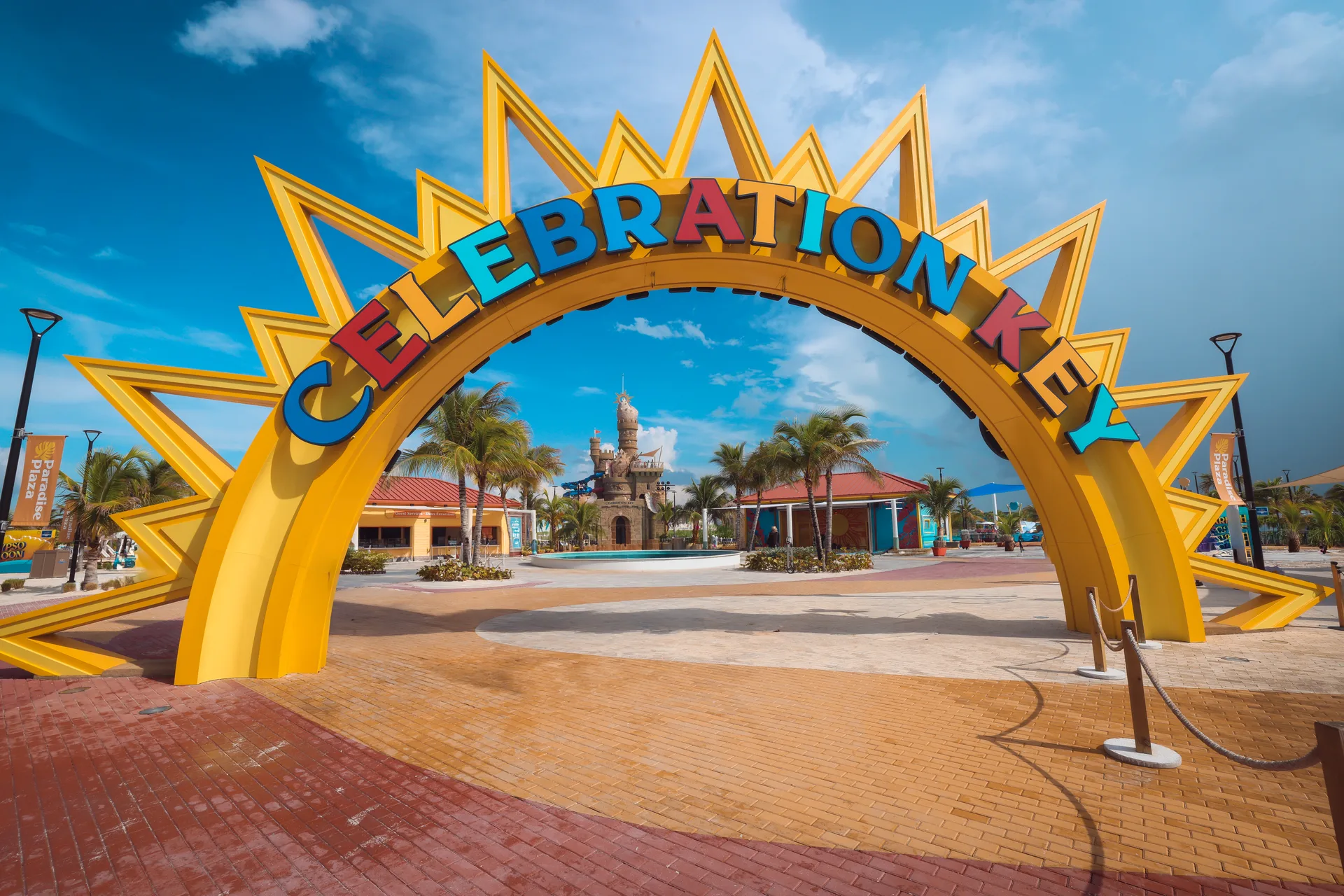
Celebration Key, Grand Bahama
Carnival's first purpose-built destination on the south coast of Grand Bahama, opened in July 2025 as a beach-and-pool day built around two lagoon gateways: one for families and one for adults, with a shopping village at the pier.
Port highlights
Starfish Lagoon, the family lagoon with the Flash Flamingo and Mach III Marlin waterslides and a splash zone for little ones.
Calypso Lagoon, the adults-focused retreat with swim-up bars, a DJ, and daybeds along the shore.
Pearl Cove Beach Club's adults-only infinity pool and Lokono Cove, the retail village steps from the berths.
Interesting facts
Celebration Key opened on July 19, 2025, with Carnival Vista making the first call.
It sits on the south coast of Grand Bahama, roughly 20 miles east of Freeport.
The pier opened with two berths for Excel-class ships, and an expansion completed in 2026 doubled it to four berths.
Something not everyone knows
The destination is divided into five themed areas Carnival calls portals, each with its own lagoon, beach, or club, and the two main lagoons each hold roughly 275,000 square feet of water.
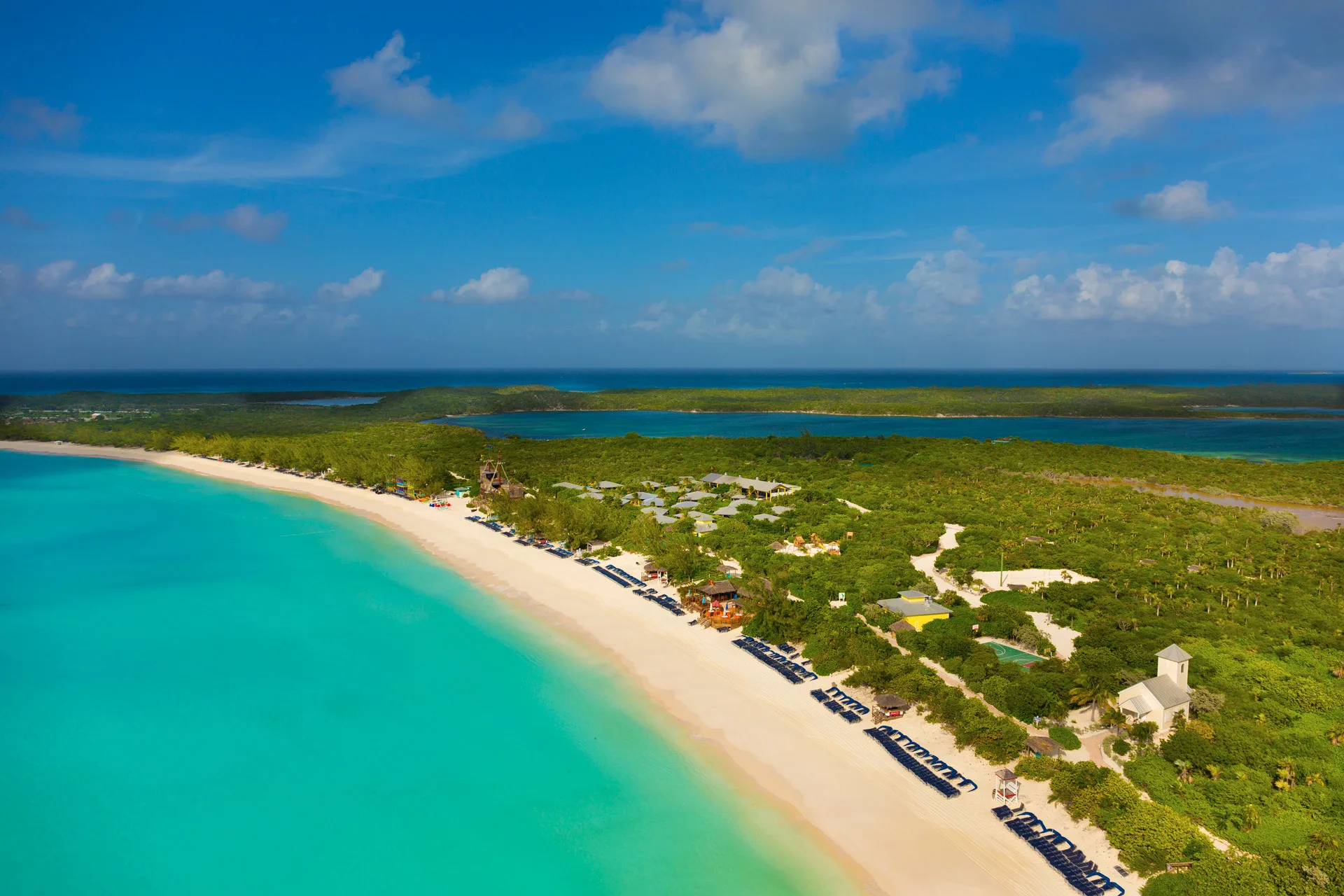
RelaxAway, Half Moon Cay
Carnival's private island in the central Bahamas and the largest private island in the cruise industry, where a half-moon of white sand, water sports, and a new pier turn the stop into a day at the beach.
Port highlights
A mile of white-sand beach on Little San Salvador Island, lapped by shallow turquoise water.
Snorkeling, kayaks, and float mats from the water-sports center, plus cabanas and clamshells along the sand.
A complimentary barbecue lunch served on the beach, included with the call.
Interesting facts
Half Moon Cay is Little San Salvador Island, about 2,400 acres in the Bahamas' Cat Island district.
Carnival Corporation's Holland America Line bought the island in 1996, and it now serves both Holland America and Carnival guests.
Only one ship calls at a time, and the rest of the island stays undeveloped.
Something not everyone knows
For decades every visit to Half Moon Cay meant riding ashore on a tender; the island's 2024-2026 redevelopment added a pier so ships can now dock and guests walk right off.
Amber Cove, Dominican Republic
Carnival's cruise port on the Dominican Republic's north coast, opened in Maimón Bay in 2015 as the gateway to Puerto Plata's historic streets, mountain cable car, and Atlantic beaches.
Port highlights
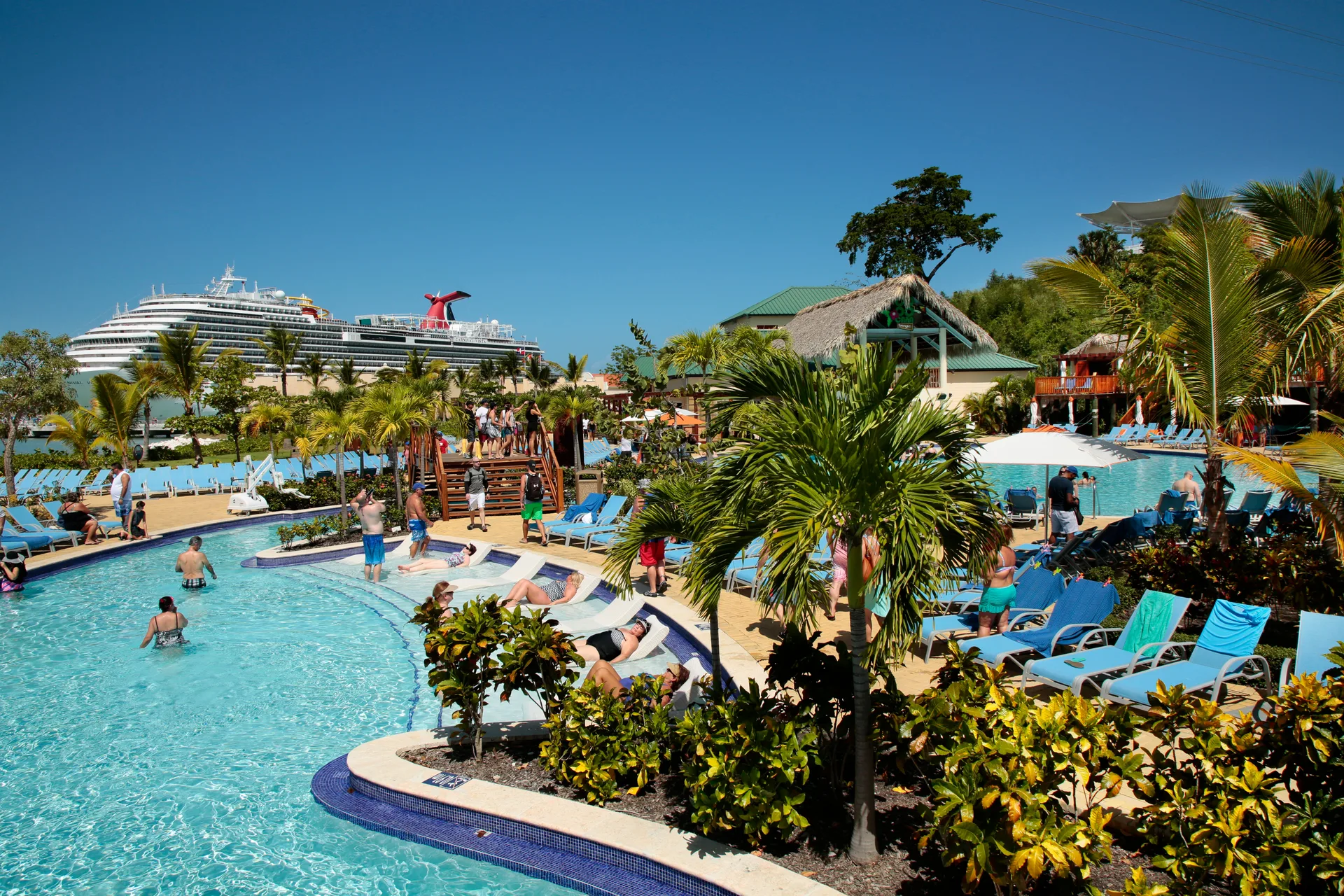
The Aqua Zone, the port's pool complex with a swim-up bar, waterslides, and a lazy river.
Twin zip lines that launch from the hillside and swoop over the pool complex toward the bay.
Puerto Plata, with its restored Victorian-era center, the Fortaleza San Felipe, and the Mount Isabel de Torres cable car.
Interesting facts
Amber Cove opened in October 2015 in Maimón Bay, about seven miles west of Puerto Plata.
The port was built by Carnival Corporation with the Dominican group Grupo B&R, and entry is restricted to cruise passengers.
The island's amber trade gives the port its name, and Puerto Plata's Amber Museum sits in the historic center.
Something not everyone knows
The mountain behind Puerto Plata, Mount Isabel de Torres, is named for the queen who sponsored Columbus's first voyage, and its summit holds a replica of Rio de Janeiro's Christ the Redeemer.
Montego Bay, Jamaica
Jamaica's second city and a deep-water cruise port on the island's northwest coast, where ships dock at the Montego Bay Freeport and the Hip Strip's bars, jerk pits, and reggae rhythms are minutes away.
Port highlights
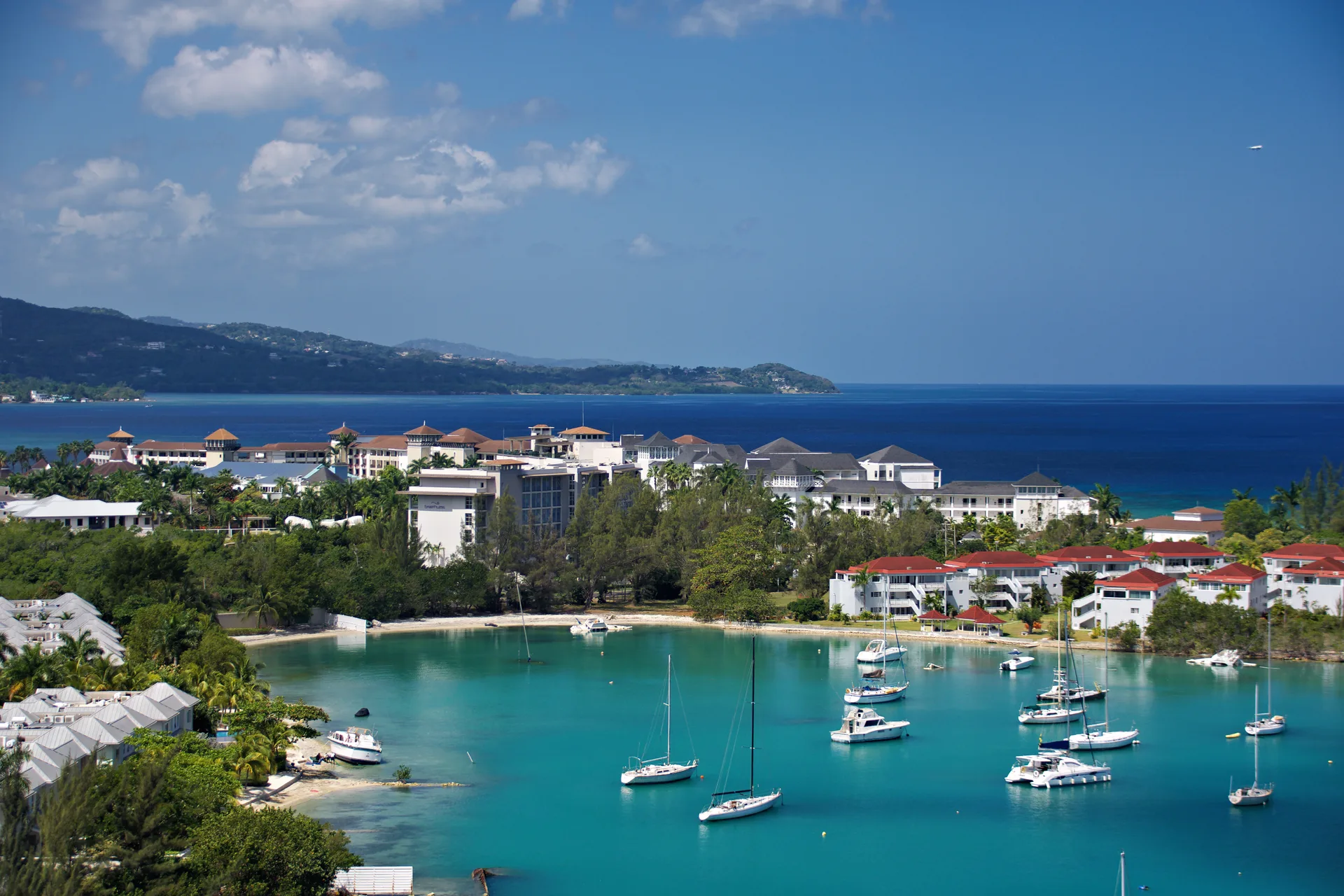
The Hip Strip along Gloucester Avenue, lined with beach bars, restaurants, and Jamaica's famous jerk chicken.
Doctor's Cave Beach, the famous stretch of white sand and clear water that has drawn visitors for a century.
River and plantation tours in the hills, from Great River rafting to the sugar estates above the bay.
Interesting facts
Montego Bay is Jamaica's second-largest city, on the island's northwest coast.
Ships dock directly at the Montego Bay Freeport, about three miles west of downtown.
Sangster International Airport, the busiest in Jamaica, serves the city and the resort strip.
Something not everyone knows
The bay's English name comes from the Spanish manteca, meaning lard: under Spanish rule the port shipped lard and hides, and the name softened into Montego Bay.
Progreso, Mexico
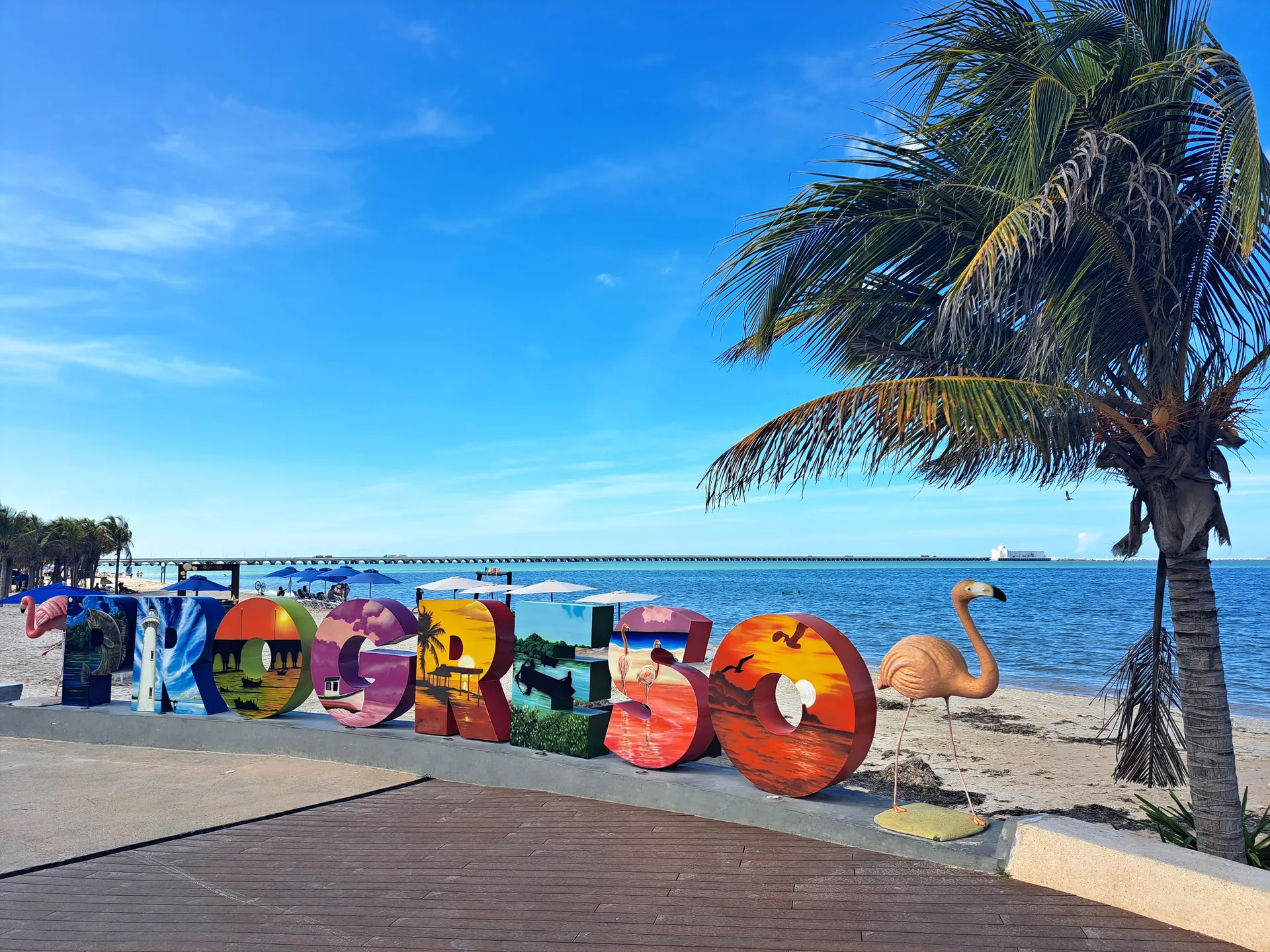
The Yucatán's Gulf-port gateway on Mexico's northern coast, where ships tie up at the world's longest pier and the Maya state capital of Mérida lies a short drive inland.
Port highlights
The Progreso pier, the longest jetty in the world at more than 8,000 meters, recognized by Guinness World Records.
Mérida, the colonial capital of Yucatán, with its grand plaza, museums, and henequen-era mansions about 36 kilometers inland.
Full-day excursions to Chichén Itzá, the Maya city whose El Castillo pyramid draws visitors from around the world.
Interesting facts
Progreso's first wooden pier dates to 1872, and the port grew into the deep-water gateway for Mérida.
Because the Gulf coast here is extremely shallow, ships berth about 6.5 kilometers offshore and passengers ride a shuttle along the pier to shore.
In 2023 the pier earned the Guinness World Record for the world's longest jetty at 8,018.98 meters.
Something not everyone knows
The pier is so long that nobody walks it: everyone rides a free shuttle from the ship to the shore, a ride of 15 to 20 minutes each way.
Princess Cays, Eleuthera
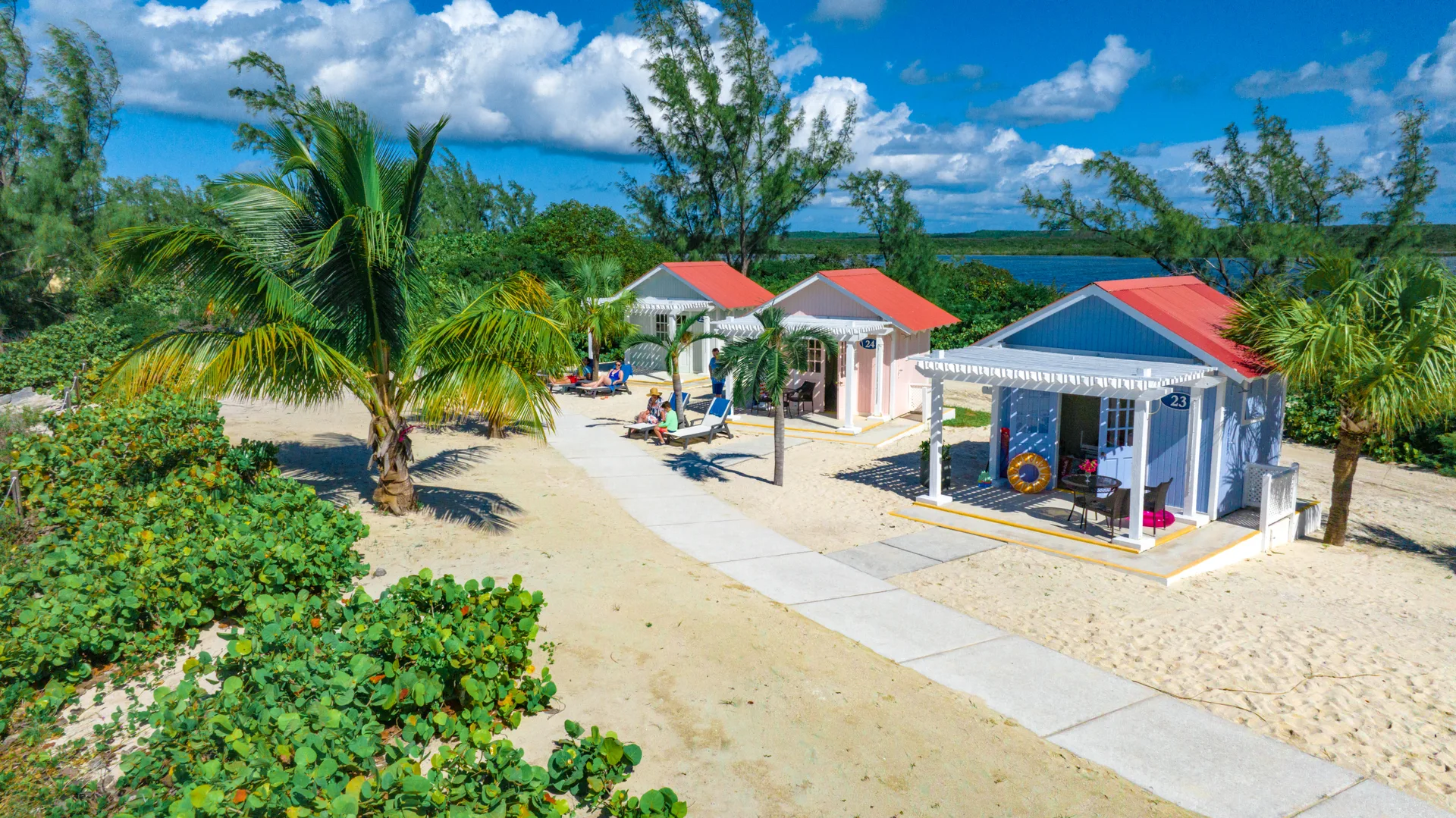
A private beach resort at the southern tip of Eleuthera in the Bahamas, owned by Carnival Corporation and shared by Carnival and Princess guests, with more than half a mile of white sand and a full menu of water sports.
Port highlights
More than half a mile of white-sand shoreline on a roughly 40-acre beach resort at Eleuthera's southern tip.
Snorkeling, kayaks, banana boats, and parasailing from the resort's water-sports center.
A complimentary beach barbecue lunch included with the call.
Interesting facts
Princess Cays is not an island: it is a private beach resort on Eleuthera, about 50 miles from Nassau.
Ships anchor offshore and guests ride tenders to the beach, and only one ship calls at a time.
Carnival Corporation owns the resort, and both Carnival and Princess ships stop here.
Something not everyone knows
The resort takes its name from Princess Cruises, but it has always been owned by the parent company Carnival Corporation, which sends its own Carnival ships there just as often.
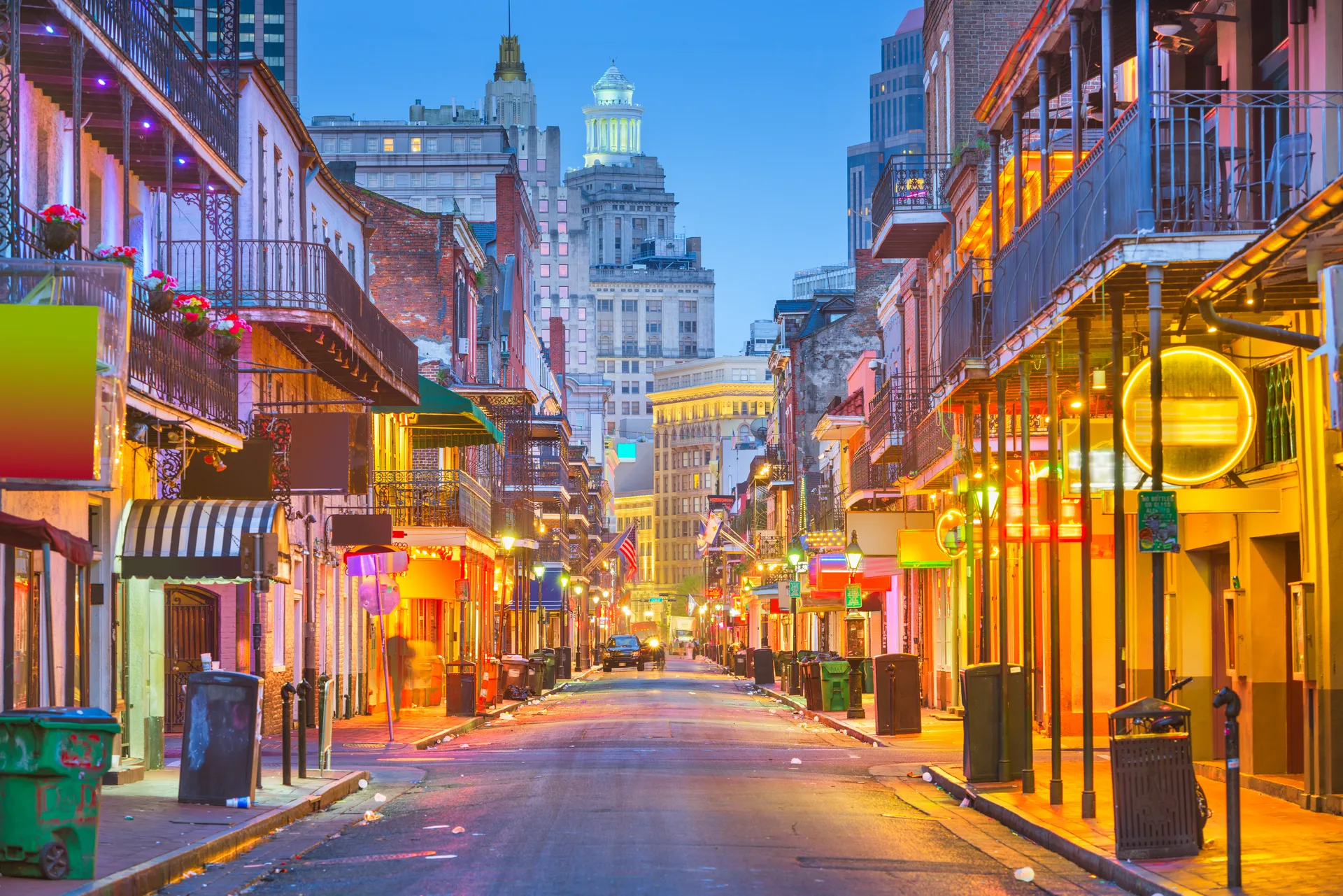
New Orleans, Louisiana
A Mississippi River homeport in the Warehouse District, where Carnival ships sail from the Erato Street terminal and the French Quarter's jazz, Creole kitchens, and streetcars are minutes from the gangway.
Port highlights
The French Quarter, from Jackson Square to Bourbon and Royal Streets, about five minutes from the terminal.
Café du Monde's beignets and café au lait, and the Creole and Cajun restaurants spread across the city.
The oak-lined St. Charles Avenue streetcar line and the garden districts beyond the riverfront.
Interesting facts
Carnival's Erato Street Cruise Terminal sits on the Mississippi River in the Warehouse District, on the riverfront streetcar line.
Port NOLA's second terminal, on Julia Street, serves other lines including Norwegian and Royal Caribbean.
The city is the birthplace of jazz and the home of Mardi Gras, and its streetcar line is among the oldest in America.
Something not everyone knows
The Erato terminal stands on the site of the old riverfront wharves, and cruise passengers can walk from the ship to the heart of the French Quarter in the time it takes to finish an order of beignets.
Cruise lines sailing from here
Carnival
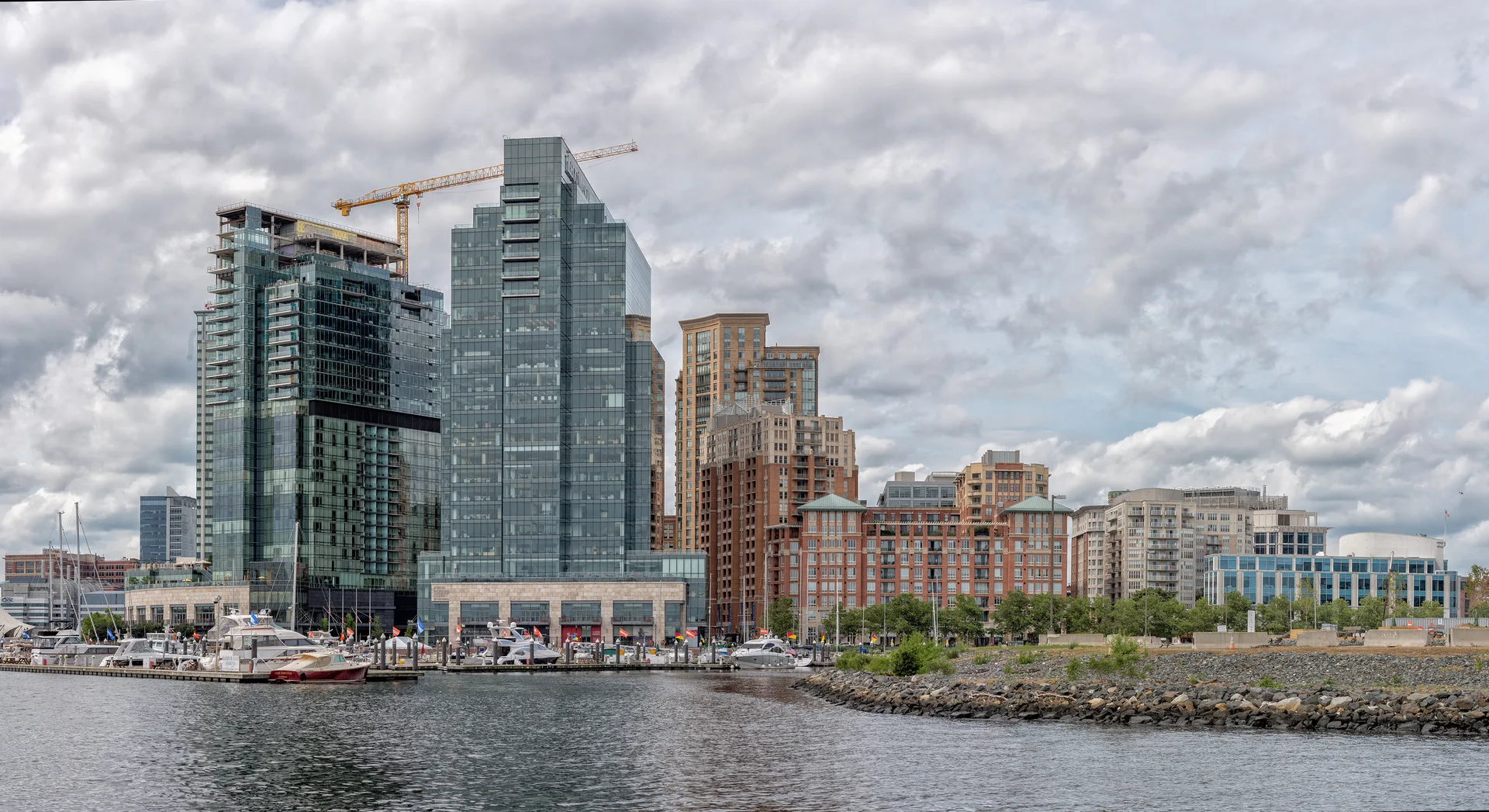
Baltimore, Maryland
A Chesapeake Bay homeport where Carnival Pride sails from the South Locust Point terminal on the Patapsco River, with the Inner Harbor, Fort McHenry, and crab-cake neighborhoods just up the shore.
Port highlights
The Inner Harbor, with the National Aquarium, historic ships, and waterfront promenades.
Fort McHenry, the star-shaped fort whose flag inspired the national anthem, about a mile and a half from the terminal.
Fells Point and Federal Hill, brick neighborhoods of restaurants, pubs, and harbor views.
Interesting facts
The Cruise Maryland terminal opened in 2006 at South Locust Point, converted from a former paper warehouse on the Patapsco River.
Bridge air-clearance limits mean the port is served by mid-size ships such as Carnival Pride.
Baltimore's waterside neighborhoods are renowned for blue-crab cuisine, from crab cakes to Maryland crab soup.
Something not everyone knows
The sail-away from Baltimore passes the mouth of the Patapsco where Francis Scott Key watched the 1814 bombardment of Fort McHenry that inspired the Star-Spangled Banner.
Cruise lines sailing from here
Carnival
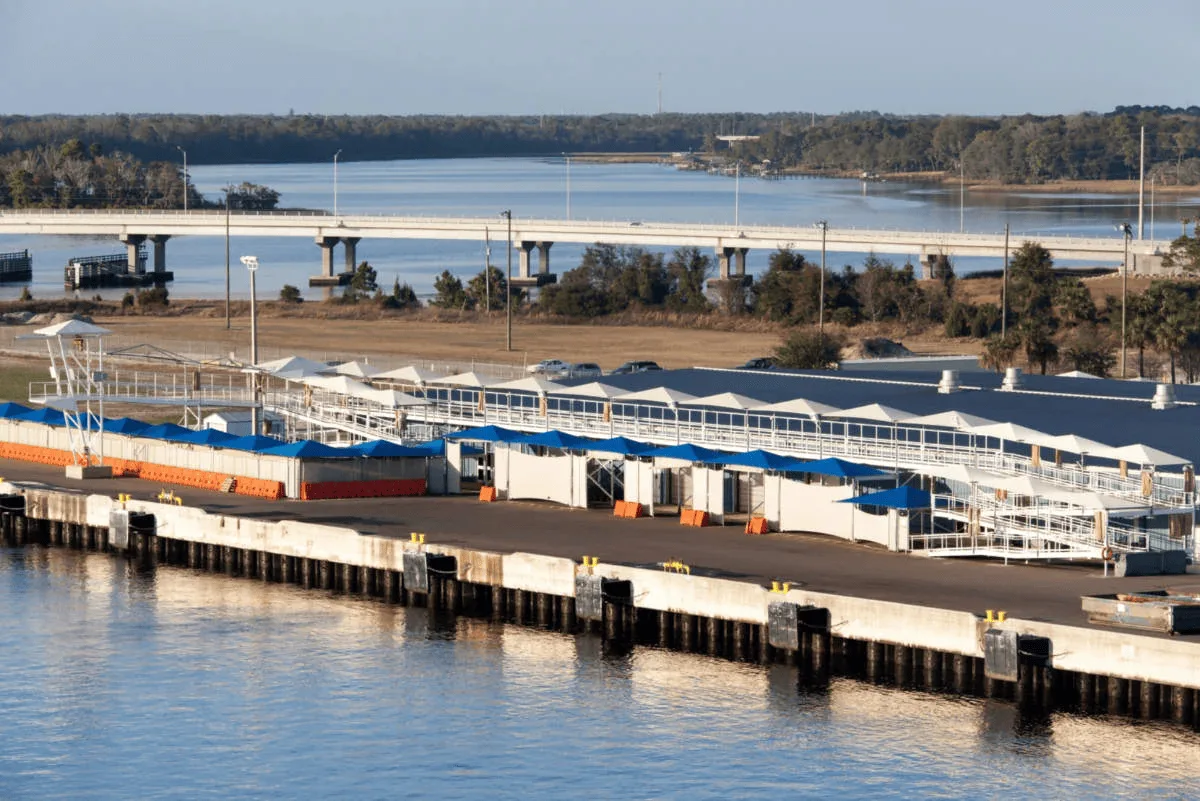
Jacksonville, Florida
A St. Johns River homeport in northeast Florida where Carnival Elation sails year-round Bahamas cruises from the Dames Point Marine Terminal, minutes from the riverfront city and the Atlantic beaches.
Port highlights
Jacksonville Beach and the Atlantic shore, about 30 minutes from the terminal.
Downtown's riverfront, the Riverside and San Marco neighborhoods, and the historic Friendship Fountain on the Southbank.
The St. Johns River, one of the few major rivers in North America that flows north, wide and blue at Dames Point.
Interesting facts
The JAXPORT cruise terminal sits beside the Dames Point Bridge on the St. Johns River, about 20 to 25 minutes from downtown.
Carnival is the only line homeporting at JAXPORT, with Carnival Elation sailing year-round Bahamas round trips.
Jacksonville is the largest city in Florida by area, and its port handles the region's cruise and cargo traffic.
Something not everyone knows
The cruise terminal is tucked at the northwest corner of the Dames Point Marine Terminal, directly under the Dames Point Bridge, officially the Napoleon Bonaparte Broward Bridge, whose twin towers leap the river.
Cruise lines sailing from here
Carnival
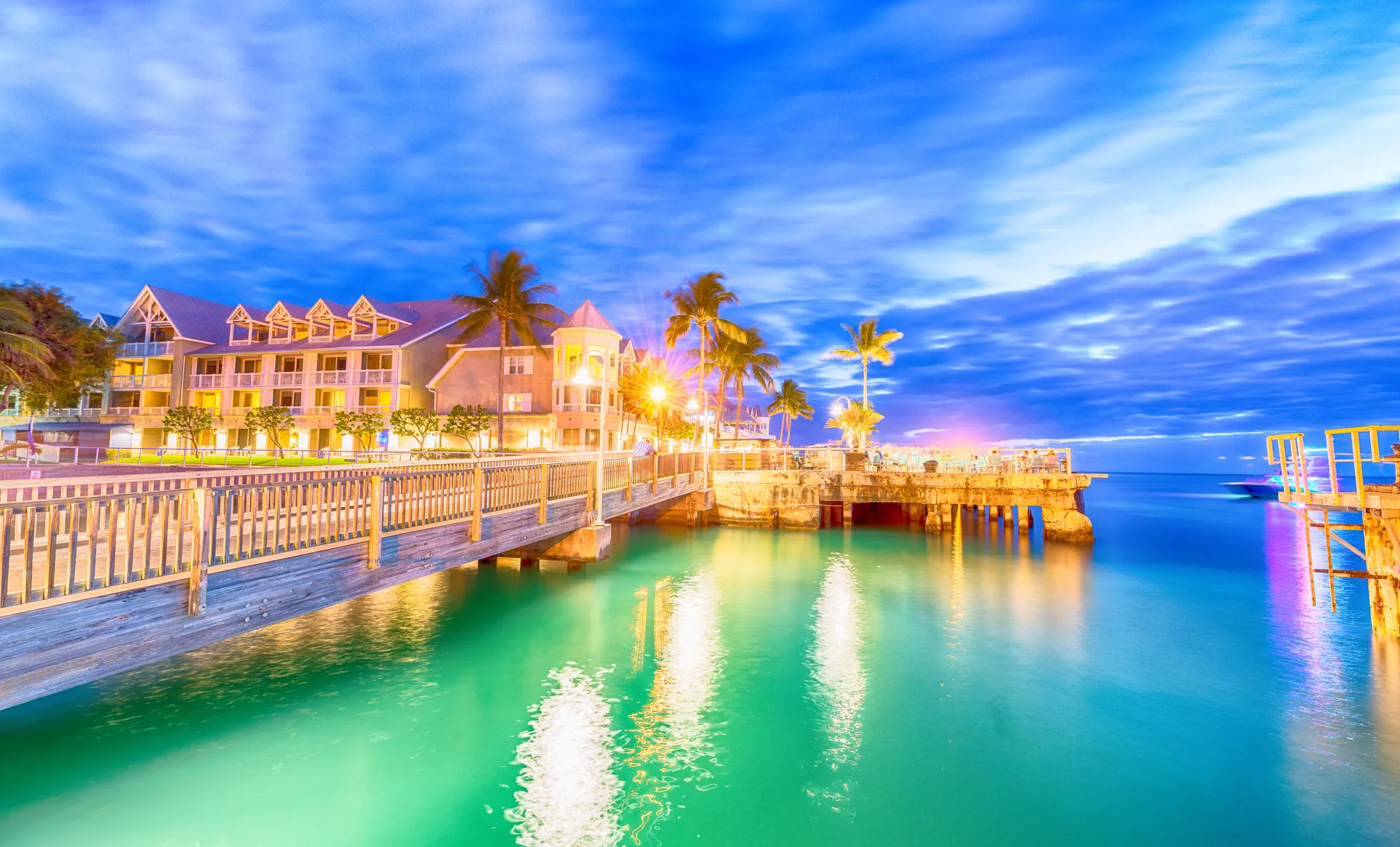
Key West, Florida
Florida's southernmost city, where cruise ships tie up at piers on the edge of Old Town and Duval Street's bars, Hemingway's house, and Mallory Square's nightly sunset show sit within walking distance of the gangway.
Port highlights
Duval Street and the gingerbread houses of Old Town, a stroll from the cruise piers that sit inside the historic district.
The Ernest Hemingway Home & Museum, the 1851 house where the author lived from 1931 to 1939 and kept his famous six-toed cats.
Mallory Square's nightly sunset celebration and the Southernmost Point buoy, about 90 miles from Cuba.
Interesting facts
Key West is the southernmost city in the continental United States, lying about 90 miles off the coast of Cuba.
Shipwreck salvaging made the island one of the richest cities in America for its size in the 1800s.
The island welcomed its first cruise ship call in 1969 and now receives hundreds of calls a year.
Something not everyone knows
One of the port's three berths, the Navy Outer Mole pier, sits inside a naval base and is not walkable to town; passengers there ride a shuttle into the historic district.
Bimini, Bahamas
The Bahamian island closest to Florida, a slim chain of limestone and white sand where the Resorts World Bimini pier, sport fishing in the Gulf Stream, and the ghost of Ernest Hemingway set the pace for a day ashore.
Port highlights
Resorts World Bimini, the beach club and casino complex that opened around the island's pier in 2021, with lagoon pools, shops, and a single-berth port that stays uncrowded.
World-class sport fishing at the edge of the Gulf Stream; Bimini bills itself as the sport-fishing capital of the world.
Hemingway's Bimini: the author lived on the island in the 1930s and drew on it in The Old Man and the Sea and Islands in the Stream.
Interesting facts
Bimini is a chain of islands about 50 miles east of Miami, the closest of the Bahamas to Florida.
During Prohibition in the 1920s, Bimini ran a brisk trade shipping liquor to a dry United States.
The current cruise pier was built for the defunct Bimini Superfast ferry and was later expanded to handle cruise ships.
Something not everyone knows
Just offshore lies the Bimini Road, an underwater formation of large limestone blocks discovered in 1968 that some claim is part of Atlantis; geologists say it is natural beachrock.
Road Town, Tortola, BVI
The largest of the British Virgin Islands, a green ridge of mountains whose capital, Road Town, welcomes ships at the Cyril B. Romney pier park, steps from rum distilleries, botanical gardens, and the turquoise coves of Cane Garden Bay.
Port highlights
Cane Garden Bay, a calm half-moon of white sand on the island's north shore lined with beach bars.
Sage Mountain National Park, the highest point in the British Virgin Islands, with rainforest trails and island views.
A day-trip to the Baths at Virgin Gorda, where giant granite boulders form tidal pools along the beach.
Interesting facts
Road Town takes its name from the nautical term 'the roads,' a safe anchorage more sheltered than open water.
The Cyril B. Romney Tortola Pier Park was expanded in 2015 to take ships of up to 180,000 gross tons and can handle two large ships at once.
Callwood Rum Distillery, working on the island since the 1700s, is one of the Caribbean's oldest continuously operating rum distilleries.
Something not everyone knows
The modern waterfront and pier park stand on Wickhams Cay, land reclaimed from the sea in the 1960s; the dock passengers step off onto is man-made seabed.
Colón, Panama (Panama Canal)
The Panama Canal's Caribbean gateway, where ships dock at the Colón 2000 terminal and shore days revolve around the Gatún Locks, the rainforest, and the fortress ruins that guard the old river route.
Port highlights
The Gatún Locks, the three-step flight that has lifted ships into Gatún Lake since the canal opened in 1914, with a visitor center on the water's edge.
The Agua Clara visitor center, overlooking the newer Neopanamax locks built in the canal's 2016 expansion.
Fort San Lorenzo, the 1590s Spanish fortress guarding the mouth of the Chagres River, part of a UNESCO-listed fortification.
Interesting facts
Colón grew as the Atlantic terminus of the trans-isthmian railway and became the canal's Caribbean gateway when the waterway opened in 1914.
The canal's three-step Gatún flight raises ships about 85 feet into Gatún Lake, the artificial lake at the heart of the crossing.
The Colón Free Trade Zone, near the city, is one of the largest duty-free zones in the world.
Something not everyone knows
Around the city lie the ruins of Little Fort Sherman, a U.S. base built in 1912 to defend the canal's Atlantic entrance, which later hosted the U.S. Army's jungle training center nicknamed Green Hell.
Cartagena, Colombia
Colombia's walled city by the sea, a Spanish colonial treasure of balconied streets, plazas, and the great hilltop fortress of San Felipe, reached from the cruise terminal on Manga Island.
Port highlights
The Walled City, entered through the Clock Tower Gate, with its centuries of colonial churches, plazas, and flower-decked balconies.
Castillo San Felipe de Barajas, the massive 17th-century fortress whose ramparts tower over the old city.
The colorful district of Getsemaní and the cafés and plazas of the old port, within walking or taxi distance of the terminal.
Interesting facts
Cartagena was founded in 1533 and became the Spanish Empire's most important fortified port for shipping gold and silver across the Atlantic.
The city's walls and fortifications, built over roughly 200 years, were inscribed as a UNESCO World Heritage site in 1984.
Pirates and privateers attacked the city again and again; Francis Drake sacked it in 1586.
Something not everyone knows
Right beside the cruise terminal is Port Oasis, a conservation garden holding more than 700 rescued animals, from flamingos to sloths, sent by environmental authorities for rehabilitation, an unexpected wildlife sanctuary most cruisers walk straight past.
St. George's, Grenada
The Isle of Spice, whose terraced capital of St. George's curves around a horseshoe harbor beneath an old fort, with falls, rainforests, and the world's first underwater sculpture park within a short sail or drive.
Port highlights
Grand Anse Beach, the two-mile ribbon of white sand a few minutes from the cruise terminal.
Fort George, the fortress begun by the French in 1705, with wide views over the harbor and town.
The Grenada Underwater Sculpture Park in Molinere Bay, the world's first, and the spice market stalls piled with nutmeg, mace, and cinnamon.
Interesting facts
Grenada is one of the world's largest producers of nutmeg and the leading producer of mace, which earned the island its nickname, the Isle of Spice.
The British seized Grenada from the French in 1763, during the Seven Years' War, and the island became a British colony.
The underwater sculpture park, created in 2006 by British sculptor Jason deCaires Taylor, doubles as an artificial reef.
Something not everyone knows
At Fort Frederick the cannons face inland, not out to sea: the British aimed them at the island's interior for fear the French would sneak attack down from the hills.
Castaway Cay, Bahamas
Disney's first private island, a 1,000-acre cay in the Abaco Islands of the northern Bahamas where ships tie up at a walk-off pier and trams loop between a family beach, an adults-only beach, snorkeling lagoons, and an island barbecue.
Port highlights
A dedicated walk-off pier with free trams looping the island, from Family Beach at the main cove to Pelican Point and Serenity Bay, the quiet adults-only beach at the far end.
The snorkeling lagoon with sunken Disney art: underwater statues of Mickey and friends resting on the sandy bottom just off the beach.
Castaway Ray's Stingray Adventure, Pelican Plunge's in-lagoon slides and floating platform, and the beach barbecue at Cookie's served mid-day on the sand.
Interesting facts
Disney leased the island, then known as Gorda Cay, from the Bahamian government in 1997 and welcomed its first guests in 1998, during the maiden season of the Disney Magic.
The cay covers roughly 1,000 acres in the Abaco Islands, but only a small portion is developed; a crew of around 140 keeps the island running for guests.
It was Disney Cruise Line's first private island destination and remains the anchor beach stop on most Disney Bahamas and Caribbean sailings.
Something not everyone knows
The island's Castaway Cay 5K fun run winds past a full-size fake pier built during the island's development, complete with a dredged channel and movie-style dock that no real ship has ever used.
Lookout Cay at Lighthouse Point, Bahamas
Disney's second Bahamian island destination, opened in June 2024 on a long peninsula at the southern tip of Eleuthera, where pink-sand beaches, Bahamian art, and a pier built for the line's newest ships greet every call.
Port highlights
The powdery pink-sand beaches of South Eleuthera, with a family beach near the pier and a separate adults-only stretch for quieter days.
Triton's Trumpet, the Junkanoo-inspired cultural pavilion by the pier, and the handcrafted Bahamian art and sculptures from local makers placed along the island's walkways.
Guided nature walks, biking paths through the coastal coppice, and snorkeling in the calm shallows off the peninsula.
Interesting facts
Lookout Cay sits on a roughly 700-acre parcel at the south end of Eleuthera; Disney agreed on the site with the Bahamian government in 2019 and set aside more than 190 acres as a nature park.
It opened in June 2024 with the Disney Magic making the inaugural call, Disney's first new island destination since Castaway Cay opened in 1998.
The destination lies about 120 miles southeast of Castaway Cay, on Eleuthera, the long thin Bahamian island whose name comes from the Greek word for freedom.
Something not everyone knows
The art program is the first of its kind in the cruise industry: Disney commissioned Bahamian artists to create the sculptures, murals, and pavilion designs, so the island doubles as an open-air gallery of Bahamian creativity.
Ocho Rios, Jamaica
Jamaica's best-known cruise town on the north coast, where ships tie up beside the Island Village complex and Dunn's River Falls, the island's most iconic waterfall, tumbles into the sea a few minutes west.
Port highlights
Dunn's River Falls, the terraced cascade of limestone about two miles west of the pier, where a guided climb up the flowing steps is Jamaica's signature shore excursion.
Mystic Mountain, the rainforest adventure park above town, with its gravity bobsled, zip line, and chairlift views over the north coast.
Blue Hole (Island Gully Falls), a terraced swimming hole in the hills with rope swings and jumping ledges, plus the Island Village shops, jerk food, and beach right at the port.
Interesting facts
Despite its name, which means "eight rivers," the town was named for Las Chorreras, the Spanish word for the waterfalls, mispronounced by the British.
Ships tie up at Turtle Bay Pier beside the town; the older Reynolds Pier, built in 1961 for bauxite exports, lies about 15 minutes west and is used when two ships call at once.
Tourism overtook bauxite as Ocho Rios' chief source of income by the late 1970s, and locals now call the town simply Ochi.
Something not everyone knows
The Reynolds bauxite pier was a filming location for the 1962 James Bond film Dr. No, which put Ocho Rios on the map long before the cruise boom: Bond's beach scene was shot on the sands beside the pier.
Puerto Limón, Costa Rica
Costa Rica's chief Caribbean port, where a slow Afro-Caribbean rhythm, jungle canals and a century of banana history sit at the end of the rail line from San José.
Port highlights
The Tortuguero canals, a web of jungle waterways reachable by day boat, where manatees, monkeys and river turtles glide past rainforest banks.
Cahuita National Park, a short ride south, where the protected reef and rainforest start a snorkel's kick from the beach.
The October carnival, a week of reggae, calypso and costumed parades rooted in the city's Afro-Caribbean heritage.
Interesting facts
Puerto Limón was Costa Rica's first Atlantic port city, opened to foreign commerce in the 1860s and linked to the capital when the Atlantic Railway was completed in 1890.
The railway was built to export coffee, and its builder, Minor Keith, later helped found the United Fruit Company, long the engine of the port's banana trade.
Limón is the heart of Costa Rica's Afro-Caribbean culture, where Spanish mixes with an English-based creole and calypso fills the air during carnival week.
Something not everyone knows
The carnival was started by a local community leader nicknamed Mister King, who launched the parade to celebrate the Afro-Caribbean culture that defines Limón, timed each October to Christopher Columbus' 1502 landfall on the coast nearby.
Îles du Salut (Devil's Island), French Guiana
Three small jungle islands off French Guiana that once formed one of the most feared prison complexes in the world, now a quiet nature stop where ruins and history share the shore with monkeys and seabirds.
Port highlights
Île Royale, the visitor island, where the restored colonial hospital, the former chapel and the guards' quarters sit beneath mango trees.
Île du Diable, Devil's Island itself, the tiny islet that gave the whole place its legend as the setting of the Papillon story.
Interesting facts
The penal colony operated from 1852 to 1953, and some 80,000 prisoners were shipped to the islands over its history.
Political prisoner Alfred Dreyfus was held on Devil's Island after his 1894 treason conviction, arriving in 1895.
Henri Charrière's 1969 memoir Papillon made the islands famous, though historians dispute parts of his escape story.
Something not everyone knows
Ships anchor off Île Royale rather than Devil's Island itself: the smallest islet never held permanent prison buildings, and today only wildlife, ruins and the Dreyfus Tower receive visitors.
Santarém, Brazil
A broad Amazon riverside city at the meeting of two great rivers, where the blue Tapajós flows into the muddy Amazon and jungle lodges, beaches of white sand and river cruises set the pace.
Port highlights
The Meeting of the Waters of the Tapajós and the Amazon, where the blue and brown currents run side by side without mixing.
Alter do Chão, the village upriver whose white-sand river beaches are nicknamed the Caribbean of Brazil.
The Tapajós National Forest and the river tours that run from the city into flooded forest and lake country.
Interesting facts
Santarém was founded in 1661 as a Jesuit mission on the site of a Tapajó indigenous settlement at the rivers' confluence.
It is the third-largest city in the Brazilian Amazon and a working river port with a past in the rubber trade.
The port sits far up the Amazon system from the Atlantic, which is why river cruises and riverboats, not ocean shipping, supply most of its visitors.
Something not everyone knows
The river beaches shift with the seasons: in the dry months the water falls and Alter do Chão's sandbars emerge like a patchwork of lakes, which is why the same river looks different on almost every visit.
Parintins, Brazil
An island town in the heart of the Amazon that turns into one of Brazil's great street parties every June, when two rival folk teams battle in the Bumbódromo arena.
Port highlights
The Parintins Folklore Festival, three nights in late June when the red Boi Garantido and the blue Boi Caprichoso compete before tens of thousands in the Bumbódromo.
The Boi-Bumbá legend staged at the festival, a tale of a resurrected ox that mixes Indigenous, African and Portuguese traditions.
The riverside setting on Tupinambarana Island, where the Amazon runs wide and rich with wildlife just beyond town.
Interesting facts
The municipality was founded in 1852 and grew from the Vila Nova da Rainha mission on Tupinambarana Island in the Amazon River.
It is the second-largest city in the state of Amazonas.
The festival grew out of long-standing street celebrations and moved into the covered Bumbódromo arena as its crowds swelled.
Something not everyone knows
The town's biggest spectacle is decided by judges, not just a show: the two ox teams compete on music, dance and costume, and for three nights the entire island picks sides between red and blue.
Manaus, Brazil
The boldest city in the Amazon, a jungle capital whose Belle Époque opera house and painted rubber-boom mansions rise a thousand miles upriver from the sea.
Port highlights
The Teatro Amazonas, the opera house opened in 1897 with a dome tiled in the colors of the Brazilian flag and interiors shipped in from Europe during the rubber boom.
The Meeting of the Waters, where the black Rio Negro and the sandy Rio Solimões flow side by side for miles without merging.
The port's floating docks and the river excursions that leave straight from the city into the surrounding rainforest.
Interesting facts
Manaus began in 1669 as the Fort of São José da Barra do Rio Negro and took its name from the Manaós people.
The natural-rubber boom of roughly 1890 to 1920 made it the opulent Paris of the Tropics, funding the grand buildings that still stand today.
It was one of the first cities in Brazil with electric streetcars, introduced during the boom years.
Something not everyone knows
When the Teatro Amazonas opened in January 1897, artists, materials and even the dome's tiles had traveled up the Amazon by riverboat from Europe, and the city's rubber barons dressed for opening night in full European finery.
Belém, Brazil
The gateway to the lower Amazon, a waterfront capital of mango-shaded avenues, the vast Ver-o-Peso market and the giant procession of Círio de Nazaré.
Port highlights
The Ver-o-Peso market, the pillar-lined riverside market whose iron hall has anchored Belém's waterfront trade since 1901.
The Cidade Velha historic quarter, where the 17th-century Forte do Presépio and baroque churches mark the oldest European settlement on the Amazon.
Açaí, which locals eat daily with fish and farinha: Belém is the world capital of the berry.
Interesting facts
Belém was founded in January 1616 as Feliz Lusitânia, the first Portuguese colony on the Amazon River.
Círio de Nazaré, held on the second Sunday of October, is one of the largest Catholic processions in the world.
Pará produces most of Brazil's açaí and Belém is its biggest market, with the dockside açaí fair running before dawn.
Something not everyone knows
The market's name means see the weight: since the 1600s, goods were weighed and taxed at the customs house here, and the old iron hall still reads Ver-o-Peso, see the weight, above the stalls.
Scarborough, Tobago
The capital of Tobago, a hillside town that climbs above a curved bay, crowned by the old British fort that has watched over the harbor for more than two centuries.
Port highlights
Fort King George, the hilltop fort whose restored barracks, cannons and panorama overlook the town and the Atlantic.
The Tobago Museum, housed in the fort's old officers' quarters, tells the island's story from the Amerindians onward.
The town's waterfront and market, plus the reefs and beaches of Buccoo and Pigeon Point a short drive along the coast.
Interesting facts
Scarborough became Tobago's capital in 1769, when the House of Assembly moved here from Georgetown.
Tobago is the smaller island of the twin-island republic of Trinidad and Tobago.
Fort King George was authorized in 1777, during the era when control of the island changed hands repeatedly between European powers.
Something not everyone knows
The fort flew several flags before the British finally kept it: the French seized it in 1781 and renamed it Fort Castries, and only after years of back-and-forth was it given the name Fort King George, for Britain's King George III, in 1804.
Port card
CCL = Carnival · CEL = Celebrity · RCCL = Royal Caribbean · NCL = Norwegian · DIS = Disney · VV = Virgin · VIK = Viking · EXP = Explora · MSC = MSC · PCL = Princess · HA = Holland America
The itineraries are subject to change at the discretion of the Cruise Company.
The lists of ships and itineraries are not complete and are only illustrative. Reach out to us for a personal no-charge consultation.
Cruise inquiry
Let's plan your next cruise.
Tell us the cruise line or ship you have in mind, when you would like to sail, and anything else we should know. A travel advisor will follow up with a personal, no-charge consultation.
No charge and no obligation. A travel advisor will follow up to plan your sailing.
Ports of call
Twenty-two ports that make the Caribbean unforgettable.
Caribbean itineraries follow a few classic shapes, each with its own family of
ports. From San Juan's ramparts to the reefs of Cozumel and the Dutch ABC islands,
here is what makes each stop worth the trip.
Florida & U.S. Homeports
Most Caribbean cruises begin at one of these U.S. homeports: four Florida terminals in Miami, Tampa, Fort Lauderdale, and Port Canaveral, plus Jacksonville on the St. Johns River, Galveston on the Texas Gulf coast, New Orleans on the Mississippi, Baltimore on the Chesapeake Bay, and Royal Caribbean's New York-area pier. They are the launch pads for nearly every itinerary in this guide.
Miami, Florida
The world-renowned Cruise Capital of the World: PortMiami, where Royal Caribbean homeports Icon of the Seas and Wonder of the Seas, rises over Biscayne Bay beneath the skyline of downtown Miami.
Port highlights
PortMiami, long billed as the Cruise Capital of the World, has been the busiest cruise port on Earth, with more than a dozen terminals along Dodge Island.
South Beach's Art Deco District, a mile of pastel hotels and neon along Ocean Drive, is the classic pre- or post-cruise stroll.
Wynwood's murals, Little Havana's cigar shops and cafecito stands, and the bayfront views of Brickell and downtown Miami.
Interesting facts
Miami was incorporated in 1896, making it one of the youngest major cities in the United States.
PortMiami sits on Dodge Island, an artificial island joined to the mainland by two bridges.
The city's name is thought to come from the Mayaimi, a Native American people who lived around Lake Okeechobee.
Something not everyone knows
The cruise terminals at PortMiami are built on an island that did not exist until the 1960s: Dodge Island was created from dredged bay bottom, and the port gradually moved there from the downtown riverfront.
Cruise lines sailing from here:
Royal Caribbean (Icon of the Seas, Wonder of the Seas), Norwegian, MSC, Carnival, Celebrity, Virgin Voyages
Tampa, Florida
A Gulf-coast homeport on Florida's west coast, where cruise ships sail from Port Tampa Bay while Ybor City's cigar heritage, the riverfront Riverwalk, and nearby Gulf beaches fill the days before and after the voyage.
Port highlights
Ybor City, the historic cigar district founded in the 1880s, now a lively quarter of brick storefronts, cafés, and nightlife.
The Tampa Riverwalk, a waterfront promenade linking museums, parks, and the channelside district along the Hillsborough River.
The Gulf beaches of St. Pete and Clearwater, white-sand strands a short drive across the bay.
Interesting facts
Port Tampa Bay is one of the largest cruise homeports on the Gulf of Mexico, with ships sailing from the downtown-channel terminals.
Ybor City was founded in 1886 by Vicente Martinez-Ybor, and Tampa grew into a cigar-making capital that drew thousands of immigrant workers.
Cruise ships heading to sea pass beneath the Sunshine Skyway Bridge, the cable-stayed span across the mouth of Tampa Bay.
Something not everyone knows
Tampa's deep history includes a 13th-century Native American village called Mocozo, and the fort and town built in 1824 on the site took the name Fort Brooke, an ancestor of the modern city.
Cruise lines sailing from here:
Royal Caribbean (Enchantment of the Seas), Carnival, Celebrity, Norwegian
Fort Lauderdale, Florida
A south-Florida homeport known as the 'Venice of America' for its canals, where Port Everglades ranks among the world's busiest cruise ports and the beachfront promenade and Las Olas Boulevard set the pace between voyages.
Port highlights
Port Everglades, one of the busiest cruise homeports on Earth and the base for several major cruise brands.
Las Olas Boulevard, the downtown boulevard of galleries, boutiques, and al fresco restaurants running toward the beach.
Fort Lauderdale Beach, a wide boulevard of white sand, and the jungle waterways of the Everglades a short drive inland.
Interesting facts
Port Everglades is consistently ranked among the world's top three cruise homeports by passenger traffic.
Fort Lauderdale is threaded by more than 165 miles of navigable waterways, canals, and rivers, earning the city its Venetian nickname.
The city took its name from a fort built in 1838 during the Seminole Wars beside the New River.
Something not everyone knows
Much of Fort Lauderdale's canal system was dug during the 1920s Florida land boom, which is why so many canals run straight through residential neighborhoods today.
Cruise lines sailing from here:
Royal Caribbean (Allure of the Seas), Princess, Celebrity, Carnival, Holland America, Disney, Viking (Viking Mars)
Port Canaveral, Florida
Florida's Space Coast homeport, where some of the world's largest cruise ships tie up a few miles from the launch pads of Kennedy Space Center and the beaches of Cocoa Beach.
Port highlights
The cruise terminals sit at the northern end of the Space Coast, minutes from the Atlantic beaches of Cocoa Beach and Cape Canaveral.
Kennedy Space Center Visitor Complex, with the Space Shuttle Atlantis exhibit and its rocket garden, is a short drive from the port.
Jetty Park's fishing pier and beach, right beside the port entrance, where locals watch ships sail and rockets launch.
Interesting facts
Port Canaveral is one of the busiest cruise ports in the world and the homeport for some of the largest ships afloat, including Royal Caribbean's Icon-class vessels.
The port lies just south of Cape Canaveral, the historic rocket-launch site that gave the region its Space Coast name.
Cargo, fuel, fish, and container shipping share the port with the cruise terminals.
Something not everyone knows
Because the port sits beside an active rocket range, cruise departures occasionally pause for a launch: sailings are scheduled around the space calendar, and passengers have been known to watch liftoffs from the ship's top decks.
Cruise lines sailing from here:
Royal Caribbean (Star of the Seas, Utopia of the Seas, Explorer of the Seas, Adventure of the Seas), Carnival (Mardi Gras), Disney, Norwegian
Galveston, Texas
An island city on the Texas Gulf coast where Victorian sea captains' houses line the historic East End, the Strand shopping district fills the downtown, and cruise ships sail from one of the busiest ports on the Gulf.
Port highlights
The Strand, the National Historic Landmark district of iron-front commercial buildings that was once called the 'Wall Street of the Southwest.'
The East End Historic District, where ornate Victorian mansions and cottages recall the island's 19th-century heyday.
Galveston Island Historic Pleasure Pier, a family boardwalk of rides and games above the beach, plus Moody Gardens' attractions nearby.
Interesting facts
Galveston was Texas' largest city in the late 19th century, a cotton and banking port that rivaled Houston.
The Port of Galveston is one of the busiest cruise ports on the Gulf of Mexico, with Royal Caribbean ships homeporting there seasonally.
The island is a barrier island about 50 miles south of Houston, linked to the mainland by bridge and causeway.
Something not everyone knows
After the great hurricane of 1900, workers jacked up hundreds of Galveston buildings and pumped sand beneath them to raise the city, while a 17-foot seawall was built along the shore.
Cruise lines sailing from here:
Royal Caribbean (Liberty of the Seas, Icon of the Seas 2027-28), Carnival (Jubilee), Norwegian, Disney (Disney Magic)
Cape Liberty, Bayonne, New Jersey
Royal Caribbean's New York-area homeport, tucked into the industrial waterfront of Bayonne, New Jersey, with the Statue of Liberty and the Manhattan skyline on the horizon.
Port highlights
The cruise port sits on the waterfront with direct views across the harbor to the Statue of Liberty and Lower Manhattan.
Downtown Manhattan is a short ride away, making Cape Liberty the launch point for pre-cruise days in New York.
The New Jersey Turnpike and Bayonne Bridge connect the port to the region's airports and highways.
Interesting facts
Cape Liberty Cruise Port opened in May 2004 on the grounds of the former Military Ocean Terminal at Bayonne (MOTBY), a World War II-era Navy facility.
It is one of the principal cruise homeports for the New York metropolitan area, handling Royal Caribbean's largest ships on Caribbean sailings.
The port's berths face the Upper Bay, one of the busiest shipping lanes in the United States.
Something not everyone knows
The massive pier at Cape Liberty was once part of a U.S. military terminal that loaded troops and supplies in two world wars; the cruise terminal sits directly on the concrete structure of the old naval base.
Cruise lines sailing from here:
Royal Caribbean (Oasis of the Seas), Celebrity
Baltimore, Maryland
A Chesapeake Bay homeport where Carnival Pride sails from the South Locust Point terminal on the Patapsco River, with the Inner Harbor, Fort McHenry, and crab-cake neighborhoods just up the shore.
Port highlights
The Inner Harbor, with the National Aquarium, historic ships, and waterfront promenades.
Fort McHenry, the star-shaped fort whose flag inspired the national anthem, about a mile and a half from the terminal.
Fells Point and Federal Hill, brick neighborhoods of restaurants, pubs, and harbor views.
Interesting facts
The Cruise Maryland terminal opened in 2006 at South Locust Point, converted from a former paper warehouse on the Patapsco River.
Bridge air-clearance limits mean the port is served by mid-size ships such as Carnival Pride.
Baltimore's waterside neighborhoods are renowned for blue-crab cuisine, from crab cakes to Maryland crab soup.
Something not everyone knows
The sail-away from Baltimore passes the mouth of the Patapsco where Francis Scott Key watched the 1814 bombardment of Fort McHenry that inspired the Star-Spangled Banner.
Cruise lines sailing from here:
Carnival (Carnival Pride)
New Orleans, Louisiana
A Mississippi River homeport in the Warehouse District, where Carnival ships sail from the Erato Street terminal and the French Quarter's jazz, Creole kitchens, and streetcars are minutes from the gangway.
Port highlights
The French Quarter, from Jackson Square to Bourbon and Royal Streets, about five minutes from the terminal.
Café du Monde's beignets and café au lait, and the Creole and Cajun restaurants spread across the city.
The oak-lined St. Charles Avenue streetcar line and the garden districts beyond the riverfront.
Interesting facts
Carnival's Erato Street Cruise Terminal sits on the Mississippi River in the Warehouse District, on the riverfront streetcar line.
Port NOLA's second terminal, on Julia Street, serves other lines including Norwegian and Royal Caribbean.
The city is the birthplace of jazz and the home of Mardi Gras, and its streetcar line is among the oldest in America.
Something not everyone knows
The Erato terminal stands on the site of the old riverfront wharves, and cruise passengers can walk from the ship to the heart of the French Quarter in the time it takes to finish an order of beignets.
Cruise lines sailing from here:
Carnival (Carnival Valor, Carnival Liberty)
Jacksonville, Florida
A St. Johns River homeport in northeast Florida where Carnival Elation sails year-round Bahamas cruises from the Dames Point Marine Terminal, minutes from the riverfront city and the Atlantic beaches.
Port highlights
Jacksonville Beach and the Atlantic shore, about 30 minutes from the terminal.
Downtown's riverfront, the Riverside and San Marco neighborhoods, and the historic Friendship Fountain on the Southbank.
The St. Johns River, one of the few major rivers in North America that flows north, wide and blue at Dames Point.
Interesting facts
The JAXPORT cruise terminal sits beside the Dames Point Bridge on the St. Johns River, about 20 to 25 minutes from downtown.
Carnival is the only line homeporting at JAXPORT, with Carnival Elation sailing year-round Bahamas round trips.
Jacksonville is the largest city in Florida by area, and its port handles the region's cruise and cargo traffic.
Something not everyone knows
The cruise terminal is tucked at the northwest corner of the Dames Point Marine Terminal, directly under the Dames Point Bridge, officially the Napoleon Bonaparte Broward Bridge, whose twin towers leap the river.
Cruise lines sailing from here:
Carnival (Carnival Elation)
Eastern Caribbean
The classic first cruise: a steady string of ports from Florida through the Bahamas and the Greater and Lesser Antilles, where colonial fortresses, duty-free harbors, and some of the region's most celebrated beaches sit within minutes of the pier.
Nassau, Bahamas
The Bahamas' bright waterfront capital on New Providence island, where pirates once ruled the harbor and where Atlantis, Parliament Square, and the Straw Market set the pace.
Port highlights
Atlantis Paradise Island, the ocean-themed resort whose vast marine habitat and Aquaventure water park anchor a day just across the bridge from downtown.
Parliament Square's pink-and-white government buildings, laid out in a tidy colonial row and shaded by a statue of Queen Victoria worn smooth by the sea-salt air.
The Straw Market's woven hats and bags, the Junkanoo-style crafts, and the rum distilleries whose gift shops sit a short stroll from where the ship ties up.
Interesting facts
Nassau was founded as Charles Town in 1670 and renamed in 1695 in honor of the Dutch royal House of Nassau.
More than 70 percent of the Bahamas' people live on New Providence, an island only about 21 miles long.
Pirates made Nassau their base in the early 1700s until a royal governor drove them out in 1718, offering pardons to those who surrendered.
Something not everyone knows
The island's name is said to honor a governor's thanks for surviving a shipwreck, and the 'New' was later added to tell it apart from Old Providence, the pirate stronghold off the coast of Belize.
San Juan, Puerto Rico
Puerto Rico's 500-year-old capital, where the blue-cobblestone streets of Old San Juan sit beneath the ramparts of some of the oldest European-built defenses in the Americas.
Port highlights
El Morro, the six-level fortress begun in the 1500s that has guarded San Juan Bay for more than four centuries, so stoutly built it is now a national historic site and UNESCO World Heritage site.
The color-splashed lanes of Old San Juan: blue cobblestones, balconies heavy with bougainvillea, and painted churches and plazas in the oldest continuously inhabited settlement on U.S. soil.
Bars and cafés along Fortaleza Street, where local rum and a slow island rhythm meet cruise passengers who walked in from the nearby pier.
Interesting facts
San Juan is that rare Caribbean port where you can walk off the ship and, within minutes, be inside a colonial city that has stood since 1521.
El Morro and the city walls are part of the San Juan National Historic Site, one of the oldest fortification systems in the New World.
The city's signature half-blue, half-white cobblestones were cast from iron-smelting slag, which gives them their unusual color and weight.
Something not everyone knows
El Morro was never taken by a naval assault. The one time it fell, in 1598, attackers seized it from the land side while Spain was weak, then lost it again to a dysentery epidemic before the garrison could even reclaim it.
St. Thomas, U.S. Virgin Islands
The busiest harbor in the U.S. Virgin Islands and a long-established free port, whose hilly capital of Charlotte Amalie and beaches like Magens Bay have welcomed cruisers for over a century.
Port highlights
Magens Bay, the sheltered horseshoe of white sand on the island's north shore, donated to the public in 1946 by a Wall Street financier.
Paradise Point, reached by the Skyride cable car above the harbor, with rum drinks and a panoramic view over Charlotte Amalie's rooftops and the anchored ships.
Duty-free shopping along Charlotte Amalie's narrow streets, built on the slopes of three volcanic spurs and home to one of the Caribbean's best-known cruise piers.
Interesting facts
St. Thomas was a Danish colony for more than two centuries, until Denmark sold the islands to the United States in 1917.
Charlotte Amalie began in 1666 as a settlement literally named Taphus, Danish for a beer hall or tap house, and was renamed in 1691 for the queen of Denmark.
It is a free port, which is why jewelry and watches dominate the storefronts within a few blocks of the dock.
Something not everyone knows
Charlotte Amalie's first name gives away its origin: 'Taphus' means tap house or beer hall in Danish, a drinking spot that grew into a settlement and, in time, a territorial capital.
St. Kitts
One of the Leeward Islands' loveliest calls, where sugar-train rides, a majestic hilltop fortress, and the clock tower of Basseterre's Circus frame the harbor.
Port highlights
The narrow-gauge sugar train that loops the island's coast, once carrying cane, now a scenic ride past rainforest and sea.
Brimstone Hill, the 'Gibraltar of the West Indies,' a volcanic-stone fortress set high above the water and so well built it is a UNESCO World Heritage site.
The Circus, Basseterre's green roundabout centered on an ornate cast-iron clock tower from 1883.
Interesting facts
Brimstone Hill was nicknamed the Gibraltar of the West Indies for its commanding position and near-impregnable defenses.
The fortress was built by British military engineers with stone quarried from the volcano it sits on, over several decades beginning in the 1690s.
St. Kitts is the larger of the two islands forming the federation of St. Kitts and Nevis.
Something not everyone knows
The Circus clock honors not a monarch but Thomas Berkeley, a local legislator and estate owner, and for a long time it was the island's only public memorial to a single person. Its layout drew on London's Piccadilly Circus.
St. John's, Antigua
Antigua's low-rise capital, a calm entry point to an island ringed by coral and white sand, classic yacht anchorages, and the lovingly restored Georgian naval base at English Harbour.
Port highlights
Nelson's Dockyard in English Harbour, the world's only working Georgian-era naval dockyard, now a UNESCO World Heritage site where wooden warships were once hauled ashore for repairs.
St. John's Cathedral, whose twin-towered silhouette rises over the capital and whose stone walls were twice rebuilt after earthquakes.
Sailing, Antigua's great sport: the island hosts two of the Caribbean's celebrated regattas, and an afternoon at the dockyards means wandering among classic yachts.
Interesting facts
Nelson's Dockyard is named for Horatio Nelson, who commanded HMS Boreas here in the 1780s while enforcing Britain's Navigation Acts.
It is part of the Antigua Naval Dockyard UNESCO World Heritage site, inscribed in 2016.
The island's beloved boast of '365 beaches, one for every day of the year' is a proud slogan rather than a precise count.
Something not everyone knows
Antigua's identity runs deep on the cricket field: the island has produced some of the West Indies' greatest cricketers, and the national stadium is named for the legendary fast bowler Viv Richards.
Perfect Day at CocoCay, Bahamas
Royal Caribbean's private island in the Berry Islands of the Bahamas, unveiled in 2019 as Perfect Day at CocoCay, with the region's largest freshwater pool and a record-setting waterpark.
Port highlights
Thrill Waterpark, home to Daredevil's Peak, the 135-foot slide billed as the tallest waterslide in North America, plus a wave pool and a family raft ride.
The largest freshwater pool in the Caribbean, ringed by swim-up bars and cabanas.
Coco Beach Club, the adults-leaning beach with overwater cabanas, and Up, Up and Away, the island's hot-air-balloon-style helium ride.
Interesting facts
CocoCay sits in the Berry Islands, about 55 miles north of Nassau, and has been Royal Caribbean's private island since the late 1980s.
The island was transformed into Perfect Day at CocoCay and reopened in 2019.
Most Royal Caribbean Bahamas and Caribbean sailings from Florida build a full beach day at CocoCay into the itinerary.
Something not everyone knows
Daredevil's Peak, the tallest waterslide in North America, begins with a trapdoor drop from a 135-foot tower, so riders get a clear view across the whole island before the plunge.
Philipsburg, St. Maarten
The Dutch-side capital of a single island shared by two nations, where duty-free shopfronts line Front Street, Great Bay's beach hugs the harbor, and planes skim the sand at Maho Beach.
Port highlights
Front Street's duty-free shops and galleries, a short walk from the cruise pier at the edge of Great Bay.
Maho Beach, at the island's Dutch-French border, where arriving jets pass just above the sand at Princess Juliana International Airport.
A day on the French side: the restaurants of Grand Case, the beach at Orient Bay, and the hilltop views of Marigot.
Interesting facts
St. Maarten is the smallest landmass in the world shared by two sovereign nations: the Dutch side, Sint Maarten, and the French side, Saint-Martin.
Philipsburg was founded in 1763 by a Scottish captain, John Philips, and grew around the salt ponds that once drove the island's economy.
The island is a long-established duty-free port, which is why jewelry, liquor, and electronics crowd the shop windows.
Something not everyone knows
Maho Beach's famous plane-spotting is so close that jet blast from departing flights can knock people over, and signs on the sand warn sunbathers to hold on during takeoffs.
Fort-de-France, Martinique
The French Caribbean's most Gallic capital, a harbor city beneath green mountains where rum distilleries, Creole markets, and the shadow of Mount Pelée shape the island's rhythm.
Port highlights
The covered market of Fort-de-France, piled with tropical fruit, spices, and the madras fabrics of the French Antilles.
Rhum agricole distilleries, where fresh sugarcane juice is distilled on the spot, a style of rum born on the island.
Balata Garden's treetop walkways and, on the horizon, Mount Pelée, the volcano that destroyed Saint-Pierre in 1902.
Interesting facts
Martinique is a French overseas department and part of the European Union, so the currency is the euro and the language is French.
Fort-de-France is the largest city in the French Antilles and the island's commercial capital.
Mount Pelée's 1902 eruption wiped out Saint-Pierre, then the island's largest city, in a matter of minutes.
Something not everyone knows
Martinique's rum is different from most Caribbean rum: rhum agricole is distilled directly from fresh sugarcane juice rather than molasses, a French tradition that gives the island's rums a grassy, floral character.
Western Caribbean
Shorter flights, bigger ships, and a week that mixes Maya culture, barrier-reef snorkeling, and the friendly beach clubs of Mexico and the Caymans.
Cozumel, Mexico
Mexico's island of reefs and ruins sits squarely on the Mesoamerican Barrier Reef, the second-largest reef system in the world, with Maya temples inland and superb diving offshore.
Port highlights
Palancar Reef, Cozumel's signature wall-and-canyon dive site, brought worldwide fame by Jacques Cousteau and now protected as a national park.
San Gervasio, the largest Maya ruins on the island, once home to a temple honoring Ixchel, the Maya goddess of fertility and medicine.
Chankanaab, the island's treasured nature park with its lagoon, beaches, and an underwater snorkel trail, a short ride from the piers.
Interesting facts
Cozumel is counted among the great diving and snorkeling islands of the Caribbean, standing on the Mesoamerican Barrier Reef.
San Gervasio was occupied and used for centuries, from the early first millennium into the Spanish era.
Most ships dock at San Miguel de Cozumel, the island's lively town, whose shops and beach clubs are steps from the terminal.
Something not everyone knows
The Maya crossed from the Yucatán mainland on pilgrimage to Cozumel, whose name descends from the Maya word for 'island of the swallows.' San Gervasio honored Ixchel, and women especially came here to seek the goddess's blessing.
Grand Cayman, Cayman Islands
A British Overseas Territory of friendly shores and easy extravagance, where Seven Mile Beach and a shallow sandbar full of docile stingrays anchor a classic western-Caribbean day.
Port highlights
Seven Mile Beach, Grand Cayman's celebrated crescent of coral sand, which despite its name runs closer to six miles along the island's southwest shore.
Stingray City, a one-to-three-foot-deep sandbar in North Sound where southern stingrays gather by the dozen and can be fed and snorkeled with in calm, protected water.
The Cayman Turtle Centre and rum-tasting rooms in George Town, plus the handsome stone Parliament buildings beside the waterfront.
Interesting facts
Stingray City grew out of local fishermen who cleaned their catch on the shallow sandbars, drawing the rays the tours later made famous.
Grand Cayman is the largest of the three Cayman Islands, a British Overseas Territory that has never levied its own income tax.
Seven Mile Beach has been ranked among the region's best beaches year after year, and the Caymans stay warm and reasonably dry outside hurricane season.
Something not everyone knows
Stingray City began by accident as a fisherman's clean-up spot: generations of fishermen cleaned conch and fish on these shallow sandbars, and the curious stingrays kept coming back until the sandbar became one of the Caribbean's signature wildlife encounters.
Roatán, Honduras
Honduras' Bay Island of reefs and rainforest, where the Mesoamerican Barrier Reef wraps the coast, West Bay's white sand meets reef snorkeling, and sloths and iguanas greet visitors in island parks.
Port highlights
The Mesoamerican Barrier Reef, the second-largest reef system on earth, runs right along Roatán's shore, with wall dives and shallow snorkeling a boat ride from the piers.
West Bay Beach, the island's signature stretch of white sand, backed by reef and lined with beach bars.
Gumbalimba Park and the island's sloth and iguana sanctuaries, where visitors meet rescued animals face to face.
Interesting facts
Roatán is the largest of Honduras' Bay Islands, lying about 40 miles north of the mainland coast.
Cruise ships dock at Coxen Hole and at Mahogany Bay, the island's purpose-built cruise center.
The island's population blends Spanish-speaking Hondurans with English-speaking communities whose roots go back to British, Garifuna, and Caribbean settlers.
Something not everyone knows
Roatán's English-speaking communities trace back to pirates, Caymanian settlers, and the Garifuna, and many islanders switch easily between English and Spanish, a living legacy of the island's frontier past.
Puerto Costa Maya, Mexico
The Yucatán's southern cruise gateway, a purpose-built port at Mahahual where Mayan ruins, reef snorkeling, and a laid-back beach village meet the western Caribbean.
Port highlights
Chacchoben, the great Maya ruin site about an hour inland, with its towering temple pyramids rising from the jungle.
The reef at Mahahual, part of the Mesoamerican Barrier Reef, with snorkel trips setting out from the village beach.
The port's own Maya-styled village, with a pool, shops, and a beach club steps from the ship.
Interesting facts
Puerto Costa Maya opened in 2001 as a purpose-built cruise port on Mexico's southern Caribbean coast.
The port sits on the Costa Maya, the name given to the southern stretch of Mexico's Caribbean shoreline.
Chacchoben, whose name means 'place of red corn' in the Maya language, was opened to visitors in the early 2000s after decades overgrown by jungle.
Something not everyone knows
Chacchoben was still largely buried when the cruise port opened: the temple complex was recorded by a local farmer in the 1940s but only cleared and opened to visitors around the same years the Costa Maya piers welcomed their first ships.
Southern Caribbean
Longer voyages that run south of the usual track, past the Dutch ABC islands of Aruba, Bonaire, and Curaçao and the lush Windward islands of Barbados, St. Lucia, and beyond, rewarding travelers who want more time at sea and a deeper sense of distance.
Oranjestad, Aruba
Aruba's capital, a tidy Dutch-flavored town on the island's south coast, steps from Eagle Beach's wide white sand and the desert-sculpted landscape of Arikok National Park.
Port highlights
Eagle Beach, one of the best strands in the Caribbean, sweeping white sand punctuated by the crooked divi-divi trees that have become the island's welcome sign.
Arikok National Park, guarding nearly a fifth of the island, from cactus and iguanas to ancient Indigenous rock art and a natural pool pounded by the sea.
Oranjestad's candy-colored colonial row, the open-air markets, and the duty-free shopfronts, all within a short walk of the pier.
Interesting facts
Aruba sits well south of the main hurricane track, so direct strikes are extraordinarily rare and the island enjoys some of the Caribbean's steadiest sunshine.
It is part of the Kingdom of the Netherlands, one of the 'ABC' islands along with Bonaire and Curaçao.
Arikok covers roughly one-fifth of the island, preserving desert terrain, cactus forest, and the rock art of Aruba's first people.
Something not everyone knows
The divi-divi tree is permanently bent by the trade winds: its trunk stands straight while the crown leans hard to the southwest, so nearly every one of these iconic trees on Eagle Beach points the same way.
Willemstad, Curaçao
Willemstad's UNESCO-listed canal-side town of rainbow-colored Dutch gables is unlike any other in the Caribbean, wrapped around one of the region's most striking natural harbors.
Port highlights
The Handelskade, the photogenic row of pastel merchant houses along the waterfront that has become the island's postcard image.
Queen Emma, the wooden pontoon bridge that floats across St. Anna Bay and swings open to let ships pass, a draped marvel in service since 1888.
The colorful lanes of Punda and Otrobanda, with street murals, local galleries, and kitschy souvenir shops a short walk or ferry hop apart.
Interesting facts
Willemstad's inner city and harbor were inscribed as a UNESCO World Heritage site in 1997 for their Dutch colonial architecture and working waterfront.
Curaçao is a constituent country of the Kingdom of the Netherlands, and Dutch shares official status with Papiamentu.
The Queen Emma pontoon bridge is one of the only floating wooden swing bridges in the world still in daily service.
Something not everyone knows
The trademark blue liqueur begins with the bitter laraha orange, which thrives in Curaçao's dry climate and lends Curaçao liqueur its flavor. The blue color came later, when a Dutch distiller tinted its version as a marketing play.
Bonaire
The diver's island: a Dutch outpost whose whole coast is a marine park, whose salt flats turn pink with flamingos, and whose quiet charm wins travelers who want more reef and less crowd.
Port highlights
Shore diving along the coast, from the yellow-stone entry points that earned Bonaire its reputation as the shore-dive capital of the Caribbean.
Flamingos feeding in the Pekelmeer salt pans, protected from visitors yet visible from the road, set against white salt flats and the blue sea.
The salt flats and windmills of the island's deep south, reminders of the solar-evaporation industry that still works Bonaire's pans.
Interesting facts
The Bonaire National Marine Park, established in 1979, was the world's first marine park devoted to coral-reef protection, and it rings the whole island and its neighbor Klein Bonaire.
Bonaire is a special municipality of the Netherlands in the Caribbean, along with Saba and St. Eustatius.
The brine shrimp and algae of the salt flats color the flamingos pink, and the island has long been a sanctuary for the birds.
Something not everyone knows
Nearly all of Bonaire's best diving is shore diving: with a tank and weight belt, you simply walk in from the beach or roadside at more than 50 marked sites, no boat needed, which is exactly why the island prizes its quiet.
Bridgetown, Barbados
Bridgetown, the historic capital of the eastern Caribbean's 'Little England,' blends crisp Georgian architecture, rum heritage, and the calm turquoise curve of Carlisle Bay.
Port highlights
Historic Bridgetown and its Garrison, a UNESCO World Heritage site that preserves one of the best intact colonial towns in the Caribbean.
The Mount Gay rum distillery, the world's oldest commercial rum house, whose 1703 deed makes it the oldest on record, with tastings and tours.
Carlisle Bay, a protected arc of clear water right beside downtown, with sunken wrecks, sea turtles, and glass-bottom boats a stone's throw from the port.
Interesting facts
Bridgetown's name traces to a bridge built by the island's early Amerindian settlers, so old it was long known as the Indian Bridge.
Barbados is the easternmost island of the Caribbean and, since November 2021, a republic within the Commonwealth.
Rum was born in the region, and the earliest known written use of the word appears on a Barbados plantation document from the 1600s.
Something not everyone knows
So strongly did English customs, cricket, and afternoon tea take root here that Barbados earned the lasting nickname 'Little England,' a compliment the island wears with plenty of its own Bajan pride.
Castries, St. Lucia
The capital of St. Lucia, a port tucked between forested peaks, whose greatest sights lie an hour away by road or boat: the twin Pitons and the world's only drive-in volcano.
Port highlights
The Pitons, the two volcanic plugs that rise side by side from the sea near the village of Soufrière and anchor a UNESCO World Heritage-listed landscape.
The Sulphur Springs at Soufrière, the world's only drive-in volcano, where you can park, walk the steam vents, and drop into a warm mud bath.
Castries' colorful market and the rainforest, waterfalls, and banana groves of the island's mountainous interior.
Interesting facts
Gros Piton and Petit Piton stand around 2,600 feet and 2,400 feet above the sea and are among the most photographed peaks in the Caribbean.
The Sulphur Springs are the only in the Eastern Caribbean you can drive into, venting steam and hot springs rather than lava.
Castries is a port of call rather than a homeport, so a ship usually arrives in the morning and sails in the evening, leaving a full day for the island.
Something not everyone knows
St. Lucia's 'volcano' last erupted in 1766, so the steaming flat at Soufrière is really a geothermal field: you can soak in the hot springs and smear on the mineral mud exactly where the island's famous steam rises.
St. George's, Grenada
Grenada's Spice Island capital, a horseshoe harbor ringed by red-tiled roofs and green hills, from which nutmeg, chocolate, rum, and an underwater art gallery tell the island's story.
Port highlights
The spice trade: nutmeg, mace, and cinnamon scent the markets of St. George's, whose Carenage hugs a drowned volcanic crater.
Grand Anse beach, a two-mile arc of white sand a short drive south and one of the most beautiful beaches in the eastern Caribbean.
The Molinere Underwater Sculpture Park, the world's first underwater sculpture park, where sculpted figures rest on the seafloor for snorkelers and divers.
Interesting facts
Grenada is nicknamed the Spice Island, and a nutmeg appears on its national flag; it has long ranked among the world's largest producers of nutmeg.
Molinere, created in 2006 by sculptor Jason deCaires Taylor, was the first underwater sculpture park in the world and has since grown to more than 100 pieces.
The horseshoe harbor of St. George's is the flooded crater of an ancient volcano.
Something not everyone knows
Nutmeg is so central to Grenada that the island has at times supplied roughly a third of the world's supply, and the spice's sweet scent still drifts through the market stalls and rum shops of St. George's.
Cartagena, Colombia
A walled colonial city on Colombia's Caribbean coast, Cartagena is the region's great cultural jolt: ramparts, cathedral alleys, and the most extensive fortifications in the Americas.
Port highlights
The walled old city's neighborhoods of San Pedro, San Diego, and Getsemaní, filled with wrought-iron balconies, bougainvillea, and restored plazas.
Castillo San Felipe de Barajas, the immense stone fortress on San Lázaro hill, considered the largest fortification the Spanish raised in the Americas.
A stroll along the sea walls at sunset, when the old city glows gold and the harbor fills with sailboats.
Interesting facts
Cartagena's historic center was inscribed by UNESCO in 1984 as 'Port, Fortresses and Group of Monuments,' recognizing some of the most extensive ramparts in the Americas.
San Felipe de Barajas towers above the city, its network of tunnels built for siege defense, and helped repel a huge British attack in 1741.
Colombia's Caribbean coast means Afro-Caribbean culture, fresh tropical fruit, and lively beats that set Cartagena apart.
Something not everyone knows
Cartagena's great walls are built largely of coral stone quarried from the bay, so they glow soft and warm in the sun, the ramparts literally carved out of the very water they guard.
Planning advice
Costs, cabins, and packing for the islands.
Mid-December through April is the classic sweet spot: drier, calmer weather and the lowest hurricane risk, though it is peak season with higher fares and fuller ships.
Hurricane season runs June 1 through November 30, with September and October the most active months. Fares are at their lowest then, and lines reroute around storms as needed.
Miami and Port Canaveral are the two busiest Florida home ports, joined by Fort Lauderdale. Western routes also sail from Galveston, Tampa, and New Orleans.
Pack light and warm: swimwear, cover-ups, and one nicer outfit for specialty dining. Reef-safe sunscreen matters in the islands, and a power strip with no surge protector is handy for cabin outlets.
Caribbean fares are generally the most accessible in cruising, with the widest
range of cabin types and price points of any region. Your Destination Engineer can
match a ship and itinerary to your group, from a value interior to a suite with a
private balcony.
This guide gives you the ideas; the best vacation starts with a conversation. Tell us who is traveling, when you would like to go, and how you prefer to travel, and we will shape every detail around you.
No obligation and no planning fees. A travel advisor will follow up with you to plan a personalized vacation.
A dedicated travel advisor, not a call center.
Itineraries, lines, hotels, and excursions chosen and booked for you.
Tell us about the trip you have in mind
Ready to trade the desk for a deck chair?
Tell us who is traveling and what a perfect island day looks like, and a Destination
Engineer will match you to the right route, ship, and cabin, at no cost and with no
obligation to book.