
Destination Guide · Madeira
Madeira: the Pearl
of the Atlantic.
A volcanic island that blooms all year.
This is a guide to Madeira the way I met it: riding the wicker toboggans of Monte down a mountain, walking levada trails where stone channels hug sheer green cliffs, swimming in lava pools on the north coast as the Atlantic rolls in, and watching Funchal's old town glow at golden hour. The island is a volcanic peak in the Atlantic, roughly 520 kilometers west of the Moroccan coast, warmed by a subtropical climate that keeps it green year-round and earned it the name the Pearl of the Atlantic. If you love dramatic coastlines, mountain walking, and quiet fishing towns, Madeira is the place to plan next.
Below is the Madeira I would build any Atlantic dream around: the six essentials that pull most travelers here, the levadas and the Laurisilva, the best times to go, three- and five-day routes, and where to stay and eat in Funchal. I will tell you exactly where to go and what to pack, so your only job is choosing a flight.
The places that pull you to the island
Six essentials, from Funchal to the north coast.
Most Madeira itineraries orbit the same six landmarks, and for good reason. You can meet them on foot, by cable car, or from the deck of a boat, and each one earns its spot on any shortlist, however much time you have.
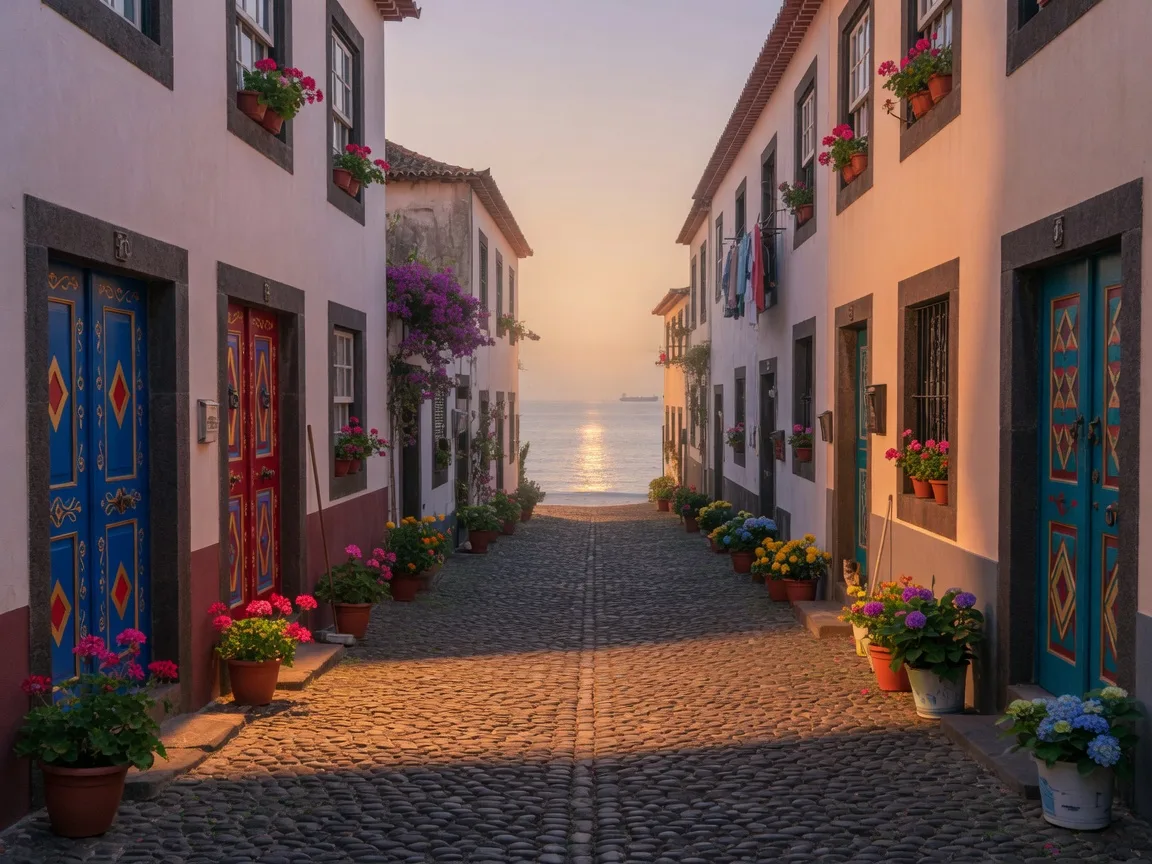
Funchal old town, a gallery of painted doors
The Zona Velha is Funchal at its warmest: winding lanes, wine bars, and the Art of Open Doors project, which turned hundreds of house doors along Rua de Santa Maria into canvases for local and international artists. It is a living neighborhood, not a museum, and the best way in is hungry.
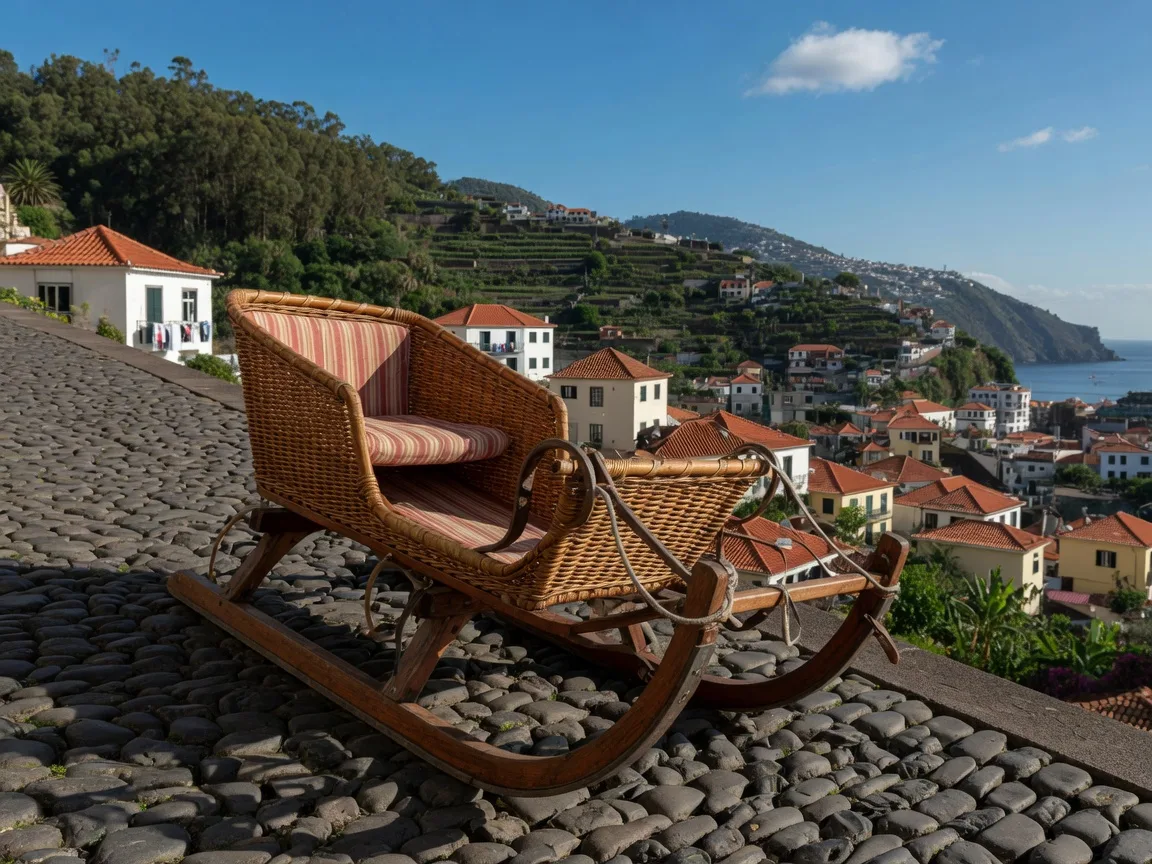
The Monte toboggan ride
For more than a century, wicker basket sleds called carros de cesto have carried riders down a steep 2-kilometer course from Monte to the edge of Funchal, steered by two carreiros in white with straw hats and rubber-soled boots. Ten minutes of laughter, and a tradition that will not feel like a theme park at all.
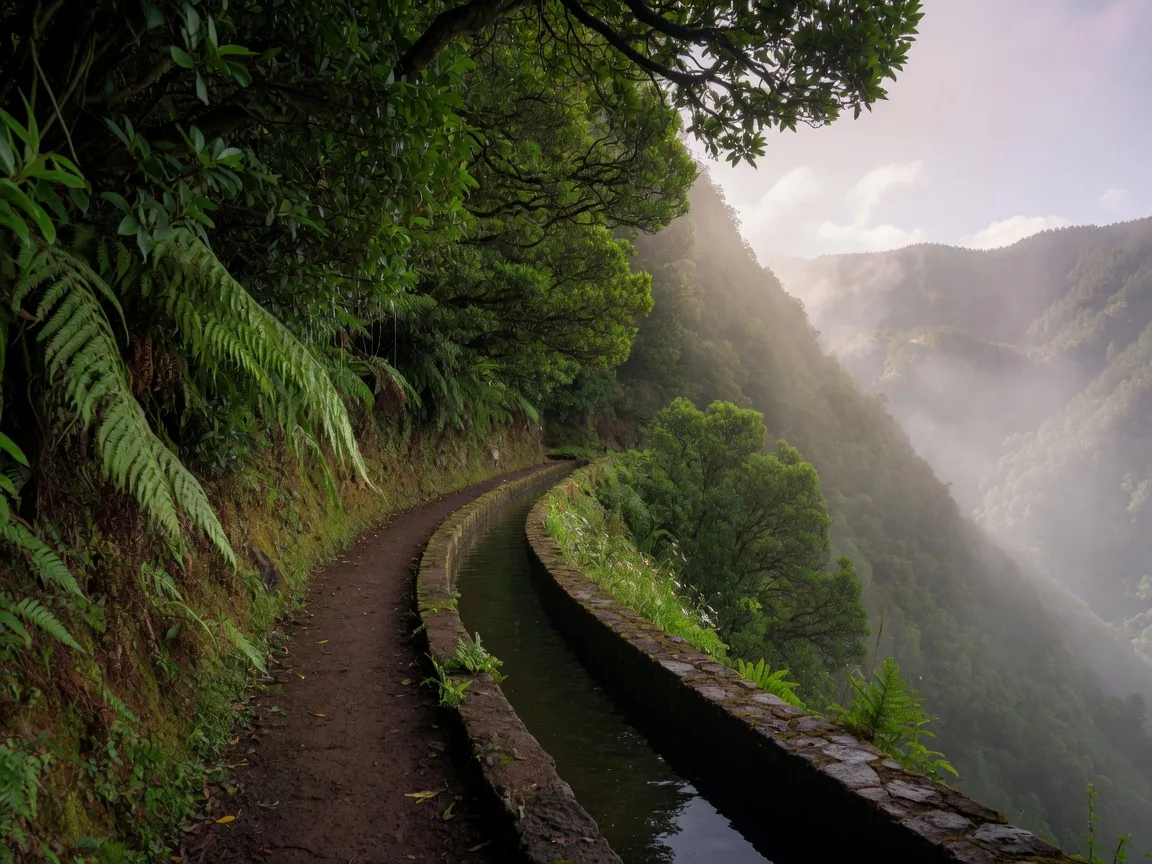
Levada walking trails
Madeira is laced with levadas, the stone irrigation channels that carry mountain water across the island, and walking beside them is the island's signature pursuit. Paths range from gentle hour-long rambles to full-day routes through tunnels and along sheer cliffs, ending at waterfalls like the Levada das 25 Fontes and the Levada do Caldeirão Verde.
The Laurisilva laurel forest
The island's misty interior holds the largest surviving area of primary laurel forest in the world, a UNESCO World Heritage Site since 1999. The Laurisilva drapes about 15,000 hectares of the north of the island in ancient trees, ferns, and moss, home to birds and plants found nowhere else on Earth.
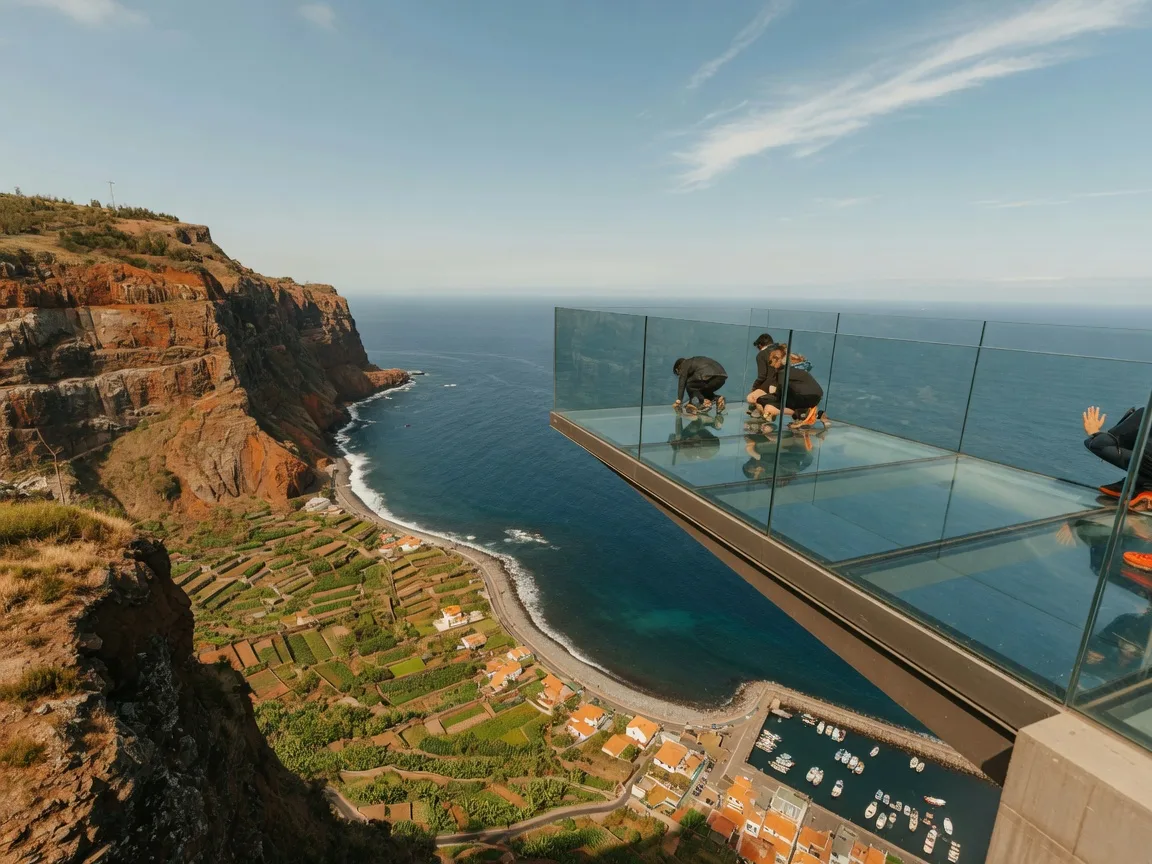
Cabo Girão skywalk
The glass platform at Cabo Girão juts out over one of the highest sea cliffs in Europe, about 580 meters above the Atlantic. Below, the terraced fields of Câmara de Lobos fall away like stairs to the sea, and the sensation of standing on air is one of the great free thrills of the island.
Porto Moniz volcanic pools
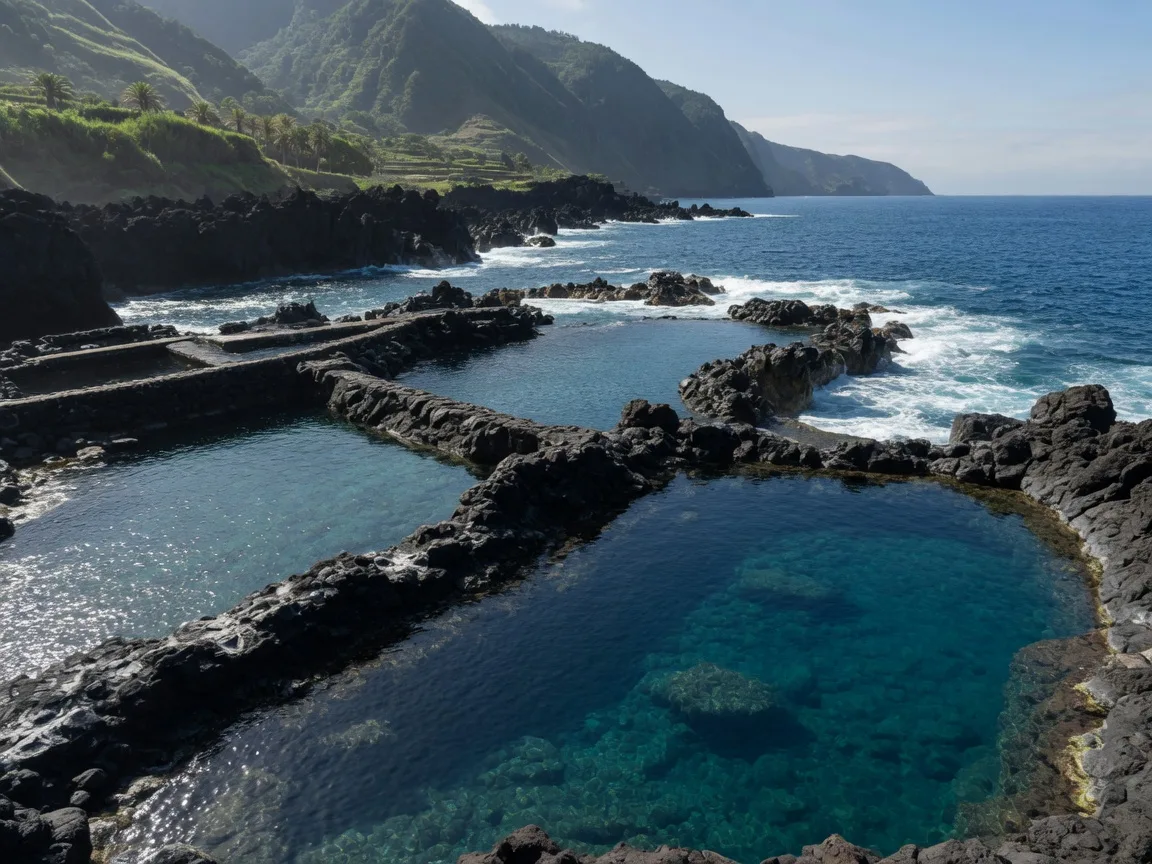
On the rugged northwest coast, ancient lava flows have formed natural seawater pools that the tide refreshes twice a day. The managed complex at Porto Moniz adds changing rooms and lifeguards to nature's handiwork, while wilder free pools nearby keep the raw Atlantic feel.
Funchal, Monte, the levadas & the cliffs
The places that define Madeira.
No account of Madeira is complete without the places where the island feels biggest: a harbor city of painted doors, a mountain village of toboggan runners, a forest of ancient laurel, and cliffs that drop straight into the Atlantic. These are the stops I go back to, cameras or no.
01
Funchal, the harbor city with a thousand painted doors
Start where the island starts: the old town of Funchal, where the Art of Open Doors project has painted the house fronts of Rua de Santa Maria into an open-air gallery, and where the 1940 Art Deco hall of the Mercado dos Lavradores still brims with tropical fruit, flowers, and fresh fish. From the seafront promenade the whole bay opens up, ringed by green mountains, with the cable car climbing to Monte overhead.
02
Monte: up by cable car, down by toboggan
The Teleférico do Funchal glides from the old town up to Monte in about fifteen minutes, climbing from the harbor to the green heights where the Monte Palace Tropical Garden and the church of Nossa Senhora do Monte sit. Then comes the part nobody forgets: the carreiros and their wicker toboggans, which have been running since the 1850s, steering riders on wooden runners down the steep cobbled descent at a clip that feels far faster than the kilometers suggest.
03
Levadas through the Laurisilva
The levadas are Madeira's hidden geography: hundreds of kilometers of stone channels hacked out of the mountainsides over the centuries to carry water from the rainy north to the dry south. Walking them is the island's great outdoor ritual. From the Rabaçal car park, the Levada das 25 Fontes crosses the Laurisilva to a basin fed by dozens of springs; from Queimadas, the Levada do Caldeirão Verde passes through four tunnels to a waterfall dropping into a deep green pool. Either way, you walk inside the UNESCO forest itself.
04
Cabo Girão and the valley of the nuns
A short drive west of Funchal, the skywalk at Cabo Girão hangs 580 meters over the Atlantic, its glass floor giving way to the blue far below and the terraced farms of Câmara de Lobos. Continue inland and the road climbs to Eira do Serrado, a viewpoint that plunges into Curral das Freiras, the valley of the nuns, where sisters once fled for refuge centuries ago and where a village still farms the steepest green bowl on the island.
05
Porto Moniz and the north coast pools
The north coast is a different Madeira: black basalt cliffs, thundering surf, and villages tucked into the folds of the mountains. At Porto Moniz, natural lava enclosures hold calm swimming pools that the Atlantic keeps filling and flushing, warm enough for a long afternoon. The managed pools add showers and lifeguards; the free wilder ones next door keep the raw Pacific-style drama, if you would rather swim with the swell.
Beyond the big six
More ways to fall for Madeira.
Once the classics are covered, the island keeps giving: a windswept peninsula, a glass-bottomed ride over the rooftops, a glass of centuries-old fortified wine, and the whales and dolphins that cruise the deep water beyond the bay.
Ponta de São Lourenço, the wild east
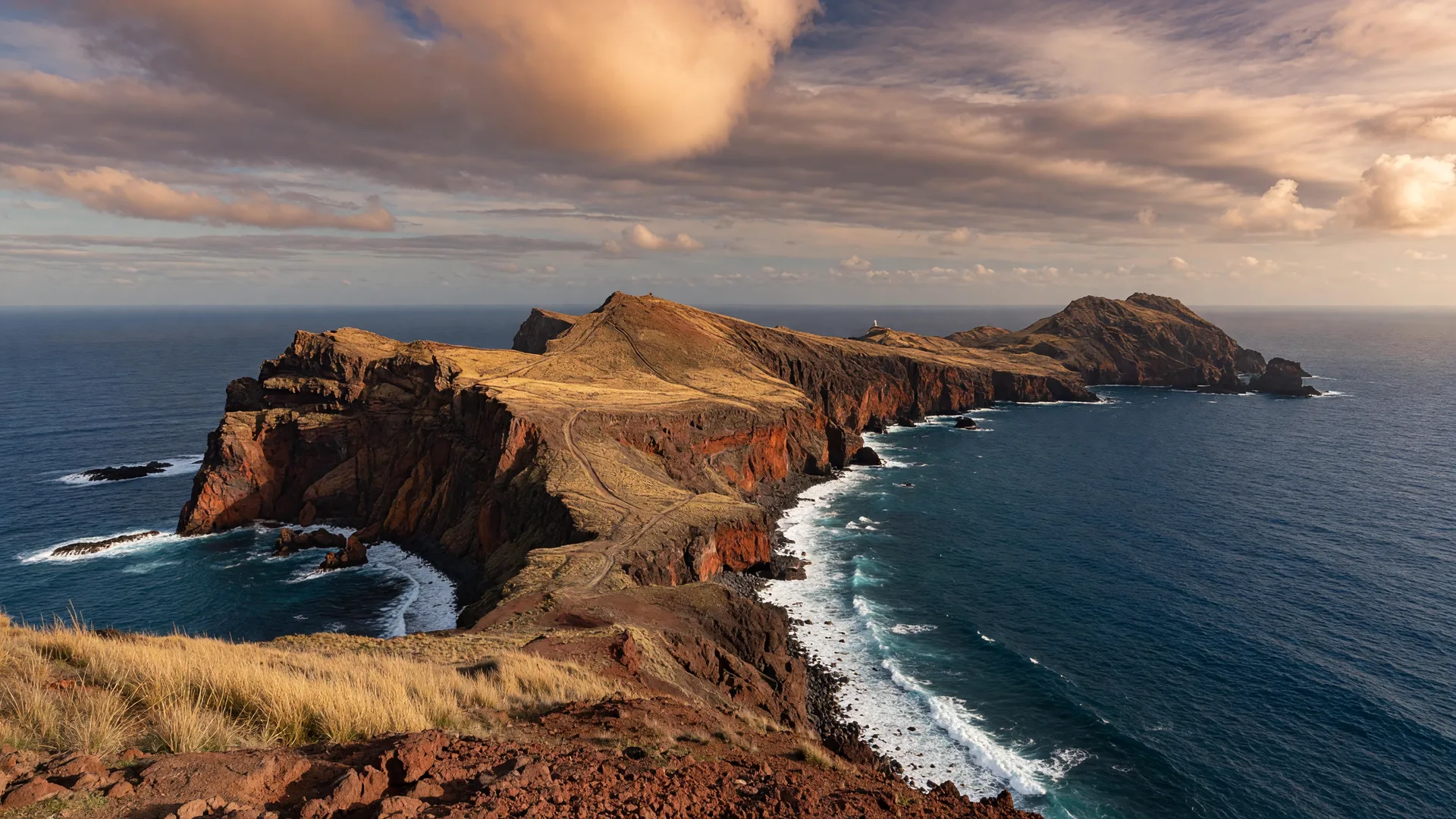
The island's far eastern tip is a bare, windswept peninsula of red-brown volcanic rock that juts into the Atlantic, laced with a trail that feels like walking the spine of a dragon. The Vereda da Ponta de São Lourenço starts near Caniçal and rewards an easy half-day with one of the most photographed coastlines in Madeira.
The Funchal cable car, the classic way up
The Teleférico do Funchal is an experience in its own right, lifting eight-person cabins from the seafront over the rooftops of the old town to Monte in about fifteen minutes. Book it as part of a morning with the toboggan, and you have the island's most iconic loop in one outing.
Madeira wine, tasted at the source
Madeira wine is one of the world's great fortified wines, aged in four styles from dry Sercial to sweet Malvasia, and the place to meet it is Blandy's Wine Lodge on Avenida Arriaga, where the Blandy family has aged it in oak casks for seven generations. Guided tours take you through the cellars, and tastings range from three-year-old blends to rare vintage pours.
Whale and dolphin watching
The waters around Madeira are home to about 28 species of cetaceans, making it one of Europe's best whale-watching destinations and a recognized Whale Heritage Area. Bottlenose, spotted, and pilot dolphins are resident, and sperm whales are seen year-round, with the richest months generally spring through autumn. Operators sail from Funchal Marina, and many use land-based lookouts and marine biologists.
Flights and the island airport
How to reach the Pearl of the Atlantic.
Madeira is closer than it feels. The flight from Lisbon is barely longer than a movie, the approach lands you on a runway built over the sea, and within half an hour of touchdown you can be ordering poncha in Funchal.
Fly direct to Madeira Airport
Madeira's gateway is Cristiano Ronaldo Madeira International Airport (FNC), in Santa Cruz about twenty minutes east of Funchal by car. There is no regular passenger ferry from the mainland, so nearly everyone arrives by air.
The runway on stilts
The airport is famous for good reason: its single runway is a tabletop built out over the Atlantic, with a viaduct-style extension on tall pillars above the sea, opened in stages since 1964 and reaching 2,781 meters today. The approach sweeps over the water before touching down on the platform, one of the most striking landings in Europe, and one that widebody jets can now handle.
Short hops from Lisbon and beyond
Lisbon to Funchal takes about an hour and forty minutes, with several direct flights a day on TAP Air Portugal, easyJet, and Ryanair. There are also direct flights from Porto and year-round or seasonal services from London, Paris, Frankfurt, Amsterdam, and Madrid, so the island works beautifully tagged onto a mainland Portugal trip.
Timing your trip
When is the best time to visit Madeira?
Madeira's subtropical climate keeps every month pleasant, so the real question is what kind of trip you want: flower carpets in spring, firework skies in winter, or a warm, uncrowded sea in autumn.
Spring: the flower season
March to May brings warm, dry days around 20-22°C, the island at its greenest, and the Flower Festival in late April, when Funchal's streets fill with floats, costumes, and flower carpets. The trails are open and clear, and the crowds are still gentle. Many regulars call May the single best month.
Summer: the classic season
June to August is the driest, warmest stretch, with highs of 24-27°C and sea swimming at its best. The Atlantic Festival lights up Funchal Bay with concerts and fireworks through June, and the island hums with holidaymakers. Book flights and hotels early.
Autumn: warm sea, fewer crowds
September and October are many regulars' favorite months: the sea is at its warmest, around 22-24°C, the Madeira Wine Festival runs from late August into early September, and the crush of summer eases. Rain returns gradually from October, but the light stays golden.
Winter: mild days and New Year fireworks
Winter is a relative word here: December and February still reach 19-20°C by day, making this the mild season, though also the rainiest. The reason to come is December 31, when Funchal's New Year fireworks over the bay turn the whole amphitheater of the city into a grandstand, one of the great displays in the world.
Itineraries
Two ways to do Madeira right.
Madeira rewards a base in Funchal and a car, or a good tour driver, for the day trips beyond. Here are the two routes we build most often: a brisk three-day first taste, and a five-day loop that sees the whole island.
The short version
Three days in Madeira
A long weekend based in Funchal: the cable car, the toboggan, one cliff day west, and one levada morning. Ideal for a first taste or a cruise stopover with a few extra days.
Day 1
Funchal and Monte
Start in the old town: coffee beside the painted doors of Rua de Santa Maria, then the Mercado dos Lavradores for its Art Deco hall and towers of tropical fruit. Ride the cable car up to Monte, wander the gardens and the church of Nossa Senhora do Monte, then sled back down by toboggan. Dinner in the Zona Velha, with espetada grilled on a laurel skewer.
Day 2
The south cliffs and the valley of the nuns
Drive west to the glass skywalk at Cabo Girão, hovering 580 meters over the sea, with the terraced farms of Câmara de Lobos far below. Stop in the fishing town itself for lunch, then climb to Eira do Serrado for the view down into Curral das Freiras.
Day 3
A levada morning and a wine afternoon
Give the morning to the island's signature walk: the Levada das 25 Fontes from Rabaçal, or the Levada do Caldeirão Verde from Queimadas. In the afternoon, taste fortified Madeira wine at Blandy's Wine Lodge on Avenida Arriaga, then watch the harbor light up for a final dinner.
The full loop
Five days in Madeira
The island in full: Funchal, a levada day, the south cliffs, the north coast pools, and the wild east. This is the itinerary we send first-time travelers who have a week to play with.
Day 1
Funchal on foot
Walk the old town and its painted doors, browse the Mercado dos Lavradores, ride the cable car to Monte, and let the toboggan bring you down. Dinner in the Zona Velha.
Day 2
A levada day
The classic: Levada das 25 Fontes from Rabaçal, a half-day walk through the Laurisilva to a basin fed by dozens of springs. Or take the Levada do Caldeirão Verde, with its four tunnels and a waterfall dropping into a deep green pool.
Day 3
West to Cabo Girão and the valley of the nuns
The skywalk at Cabo Girão, lunch in Câmara de Lobos, then up to Eira do Serrado and down into Curral das Freiras, the steep green bowl where nuns once took refuge.
Day 4
The north coast
Drive the mountain roads to Porto Moniz and swim in the volcanic lava pools, pause at the dark sands of Seixal, and stop for the traditional thatched houses of Santana on the way back.
Day 5
The wild east and the whales
Hike the Ponta de São Lourenço peninsula early, when the light is best and the trail is quiet, then take a whale-watching boat from Funchal and close the trip with Madeira wine tasting.
Funchal favorites
Classic stays and tables we send clients to.
Funchal is small enough that three nights is plenty of time to find your regulars. These are the hotels and restaurants we recommend first, chosen for the quality we can vouch for and the warmth the island is known for.
Where to stay
Belmond Reid's Palace
The island's iconic clifftop pink palace, welcoming guests since 1891, with terraced gardens spilling toward the sea and the old-world service that made it famous.
Where to stay
The Cliff Bay, PortoBay
A five-star clifftop hotel with direct sea access, a spa, and Il Gallo d'Oro, its two-Michelin-starred restaurant, one of the best tables on the island.
Where to stay
Quinta da Casa Branca
A boutique hotel set in botanical gardens just outside the center, where the fine dining room occupies a nineteenth-century manor house built on an old vineyard estate.
Where to eat
Armazém do Sal
Contemporary Portuguese tasting menus in a restored 200-year-old salt loft near the harbor, with Madeira wine pairings that make the most of the island's great fortified tradition.
Where to eat
Kampo by Chef Júlio Pereira
Central Funchal's celebrated meat-focused restaurant, with an open kitchen, matured cuts, and a refined Portuguese sensibility that locals and visitors both rave about.
Where to eat
O Tasco
A small, loyal old-town tavern known for espetada, beef grilled on a laurel skewer, and espada, the island's deep-water scabbard fish. Come hungry and order like a local.
For the food Madeira is proudest of, look for bolo do caco, the sweet-potato flatbread served warm with garlic butter, espetada grilled on laurel skewers, espada with banana, and a poncha to finish. Add a tasting at Blandy's Wine Lodge and a wander through the Mercado dos Lavradores, and you have eaten the island properly.
Practical tips
The details that make the journey comfortable.
The euro, and a little cash
Madeira uses the euro, and cards are accepted almost everywhere, from harbor restaurants to cable-car ticket desks. Keep some cash anyway for rural cafes, market stalls, and the toboggan, which still runs on the spot, cash only.
Portuguese, and plenty of English
The language is Portuguese, and English is widely spoken across the tourist areas, at hotels, restaurants, and tour desks. A friendly obrigado and bom dia go a long way, and the islanders are famously warm to visitors.
Driving the mountain roads
The expressways and tunnels make the island surprisingly easy to cover, but the country lanes are steep, narrow, and twisty, with gradients that demand low gears and a calm temperament. Sound your horn at blind corners, give way to uphill traffic, and let the buses and tours handle the hairpins if you would rather watch the view.
Pack layers, rain gear, and good shoes
The climate is subtropical but the mountains make their own weather: a sunny harbor can sit under clouds an hour inland, and it can rain on the levadas in July. Bring a light rain jacket, sturdy walking shoes, a swimsuit for the lava pools, and sun protection, and you will be ready for every side of the island.
One more reassurance: Madeira is a genuinely safe, easy destination. Petty crime is rare, the islanders are warm, and the only real hazard most visitors meet is the mountain driving. Stay alert on the hairpins, and the rest of the island takes care of itself.
Late autumn on the island
What is happening in Madeira right now.
Autumn is Madeira's quiet, golden window: the summer sailings have eased off, the sea keeps its warmth, and the island settles into the calm that precedes its biggest night of the year. Here is what the season is doing right now, and what to plan around.
The quiet season settles in
Summer crowds ease through October, and November brings mild, calm days around 19-21°C, easy tables in Funchal, and viewpoints you will often have to yourself. It is the gentlest window of the year for walking the levadas.
The sea keeps its warmth
The ocean holds much of its summer warmth into the fall: sea temperatures peak around 22-24°C in September and October, and swimming at Porto Moniz and the south-coast lidos stays pleasant well into November.
Whale watching is still rich
Sperm whales, pilot whales, and several dolphin species remain on the scene through the fall, and September through November are counted among the richest months for sightings. Mornings on the water are calm and uncrowded now.
Funchal lights up for Christmas
Madeira's festive season officially runs December 1 through January 10, and the famous Funchal Christmas lights are switched on around town from December 1, turning the bay amphitheatre and Avenida do Mar into a glowing bowl of colour. The Aldeia de Natal, the Christmas Village, opens at Praça do Município alongside the market along Avenida Arriaga, both running through early January, with stalls of regional products, handicrafts, and festive food. Noite do Mercado, Market Night, fills Funchal's Old Town on December 23 with late-night stalls, music, and poncha, the island's honey-laced drink, in the week before Christmas.
Planning for the year's biggest night
Funchal's New Year fireworks on December 31 are among the most spectacular in the world: at midnight a display fired from roughly 58 stations around the bay, some 26 of them in the bay amphitheatre itself, lights the whole city from every angle. Guinness World Records recognized the show in 2006 as the largest fireworks display on record, and boats and cruise ships anchor in the bay to watch. Rooms with a bay view sell out months ahead, so late autumn is exactly when to lock in your dates and your harbor view for the grandest night of the Madeiran year.
Ready for Madeira?
Madeira is one of the destinations we plan best: the flights, the levada walks, the cable car and toboggan loop, the north-coast pools, and the whale-watching mornings, all matched to how you like to travel. Tell us your dates, and a Destination Engineer will build the trip around you.